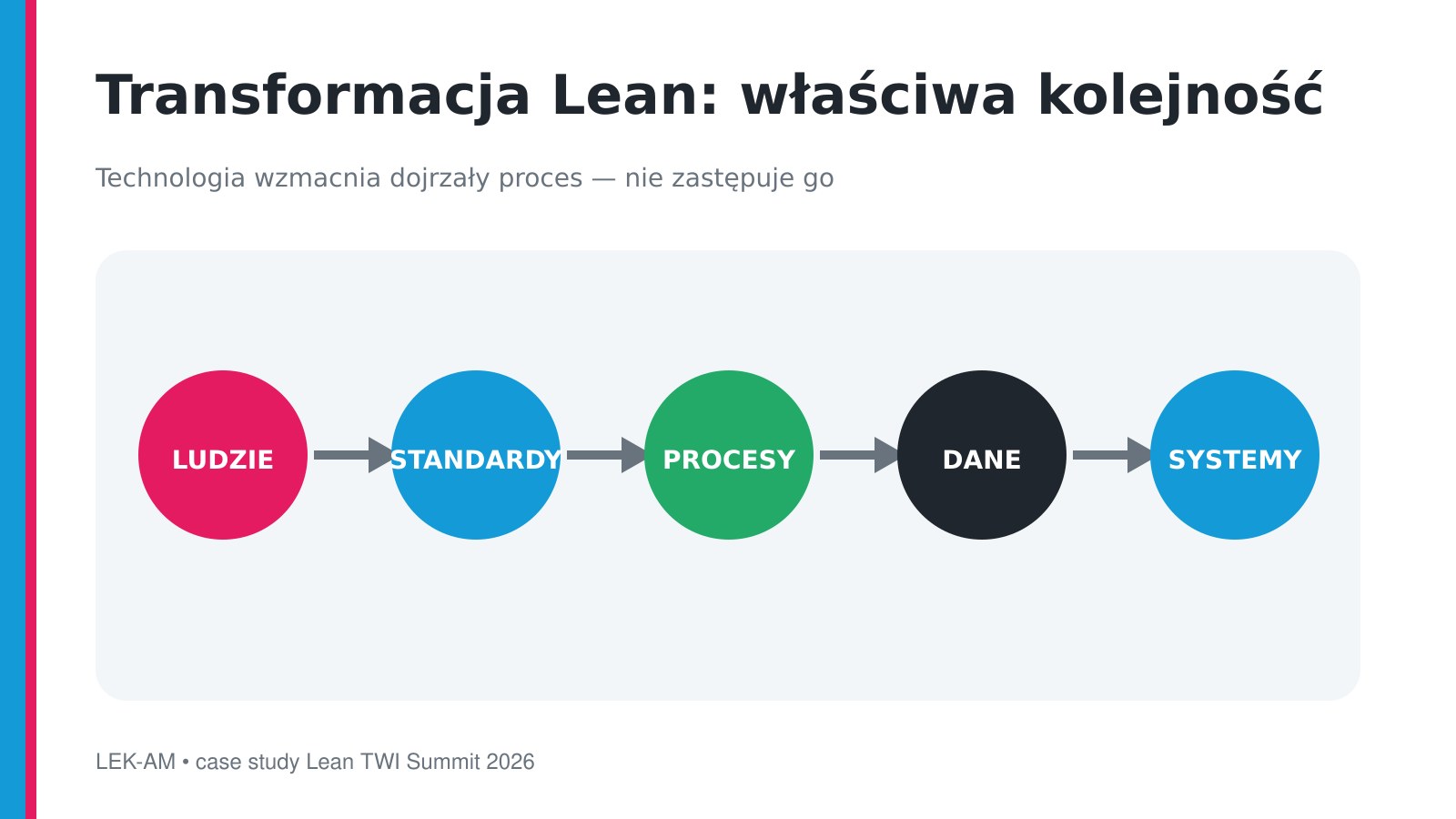
Lean Management transformation at LEK-AM followed the reverse of many digitalisation projects: people, capabilities and stable processes came first, followed by systems. In a pharmaceutical company, where quality, compliance and repeatability have regulatory significance, technology could not be allowed to reinforce unclear working practices.
This case study by Edyta Ostrowska describes a journey begun in 2024 with Entra Group. Its focus is not the purchase of a particular solution, but building an organisation capable of improving independently, with a common language, standards, process owners, a regular approach to working with data and internal capabilities.
Lean Management transformation at LEK-AM: why does the sequence matter?
A common question is: “Which system should we implement?” LEK-AM began by asking whether the organisation was ready to use a system effectively. A system does not solve problems on its own. If the process is unclear, technology exposes the chaos faster. If the process is mature, technology helps scale it.
The journey therefore involved engaging people, building trust, developing capabilities, standardising processes, continuous improvement and working with reliable data. Digital solutions were introduced only once this foundation was in place.
Lean Management transformation starts with people and process owners
5S, SMED, TPM, Kaizen and MES do not deliver results merely because they have formally been implemented. They work when employees understand their purpose, know how to use them and feel responsible for sustaining the new way of working.
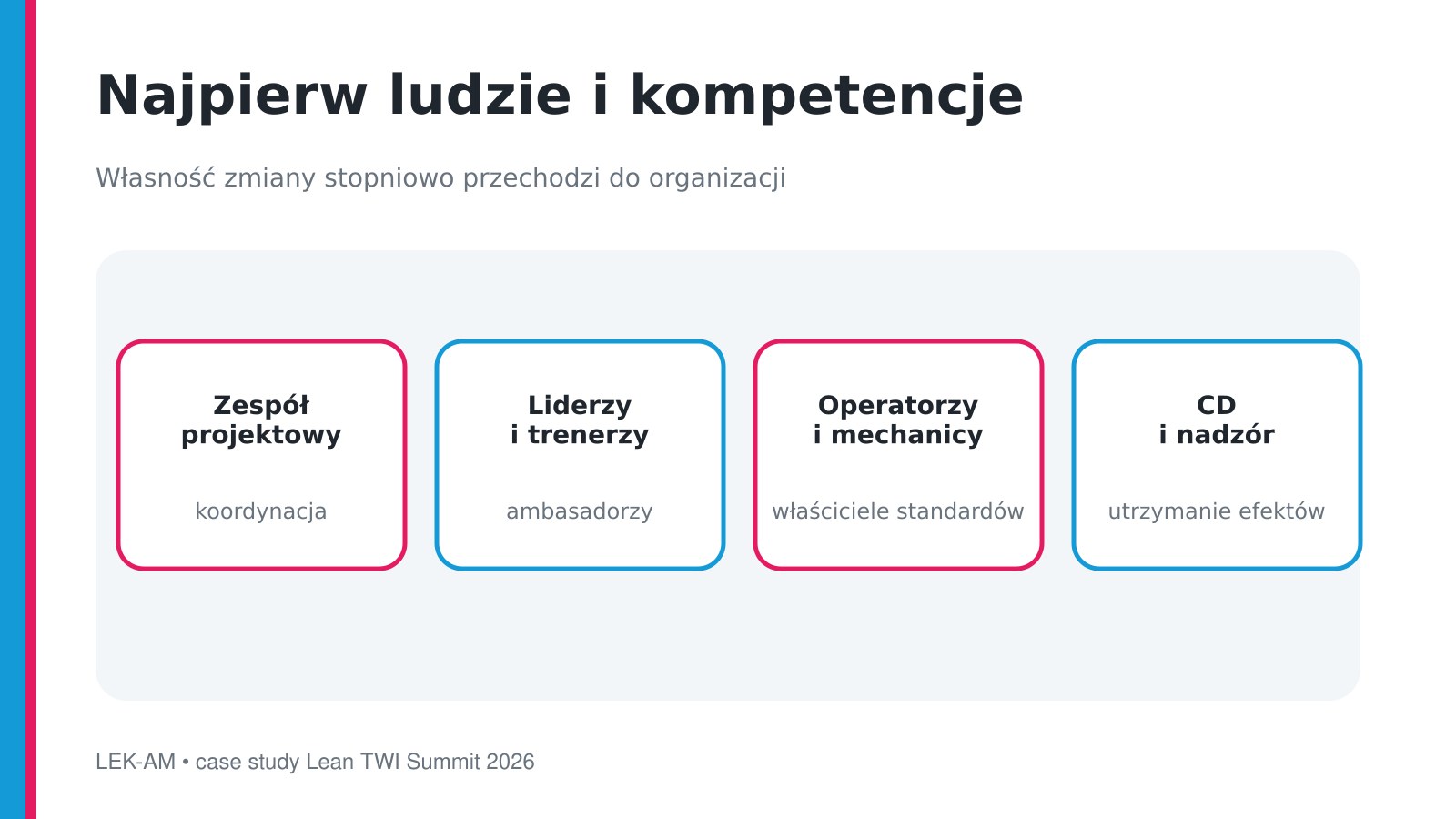
A project team responsible for coordination formed the core of the change. Leaders and trainers served as internal ambassadors. Operators and mechanics became owners of standards, while the people responsible for continuous improvement and oversight helped sustain results. Success was measured by how much work passed into the hands of LEK-AM employees, rather than the number of consultant workshops.
Lean Management transformation: 5S as a system
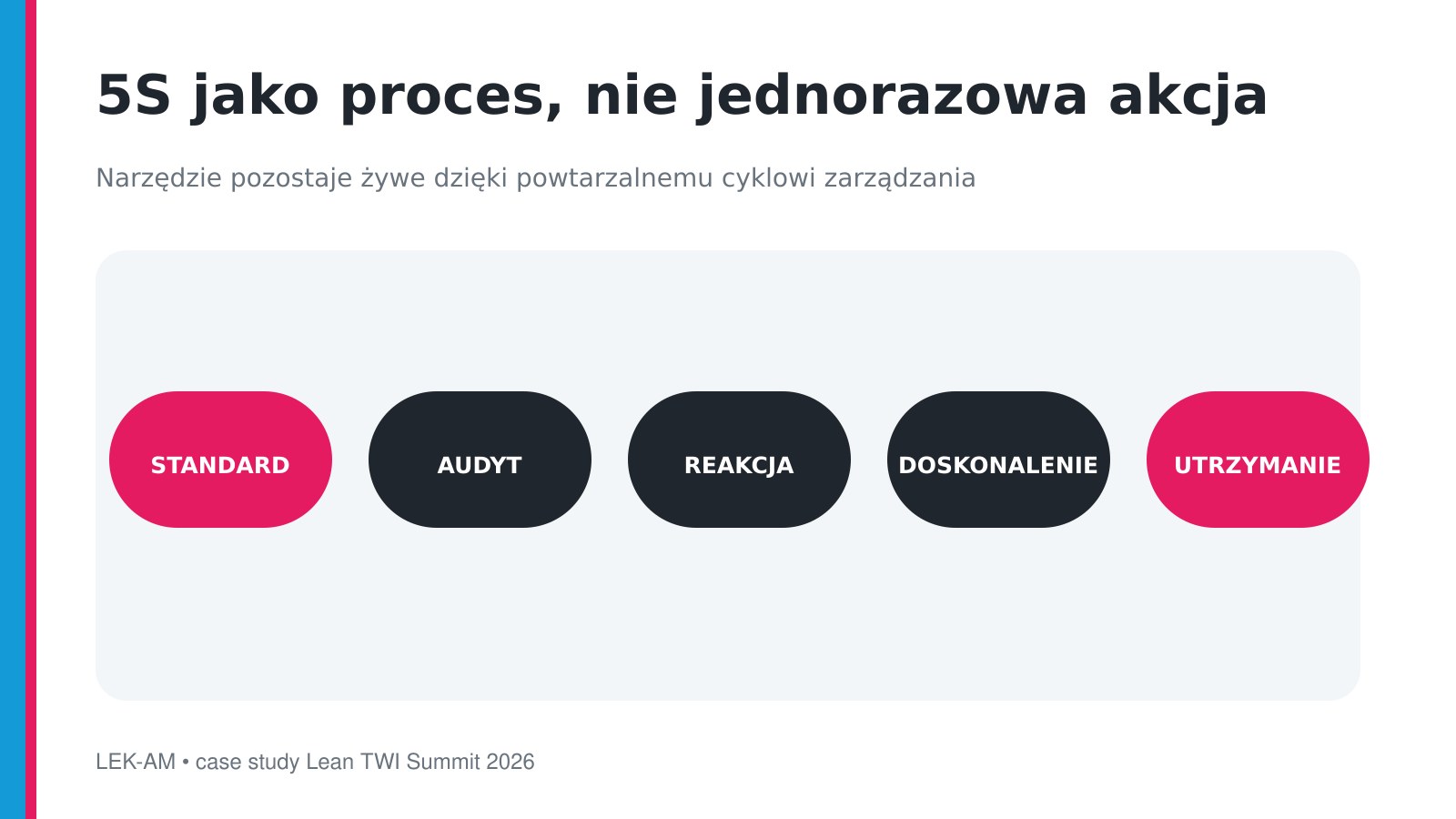
Implementing 5S went beyond organising workstations. The goal was a workplace management mechanism that would continue to function after the workshop. A standard leads to an audit, an audit to a response, and a response to improvement; the whole system requires sustained attention.
This distinction matters: the organisation builds a process that keeps the tool alive, rather than simply “implementing a tool”. Further practical guidance is available in the Leantrix article on implementing 5S in practice (in Polish).
Lean Management transformation and SMED: lasting improvement
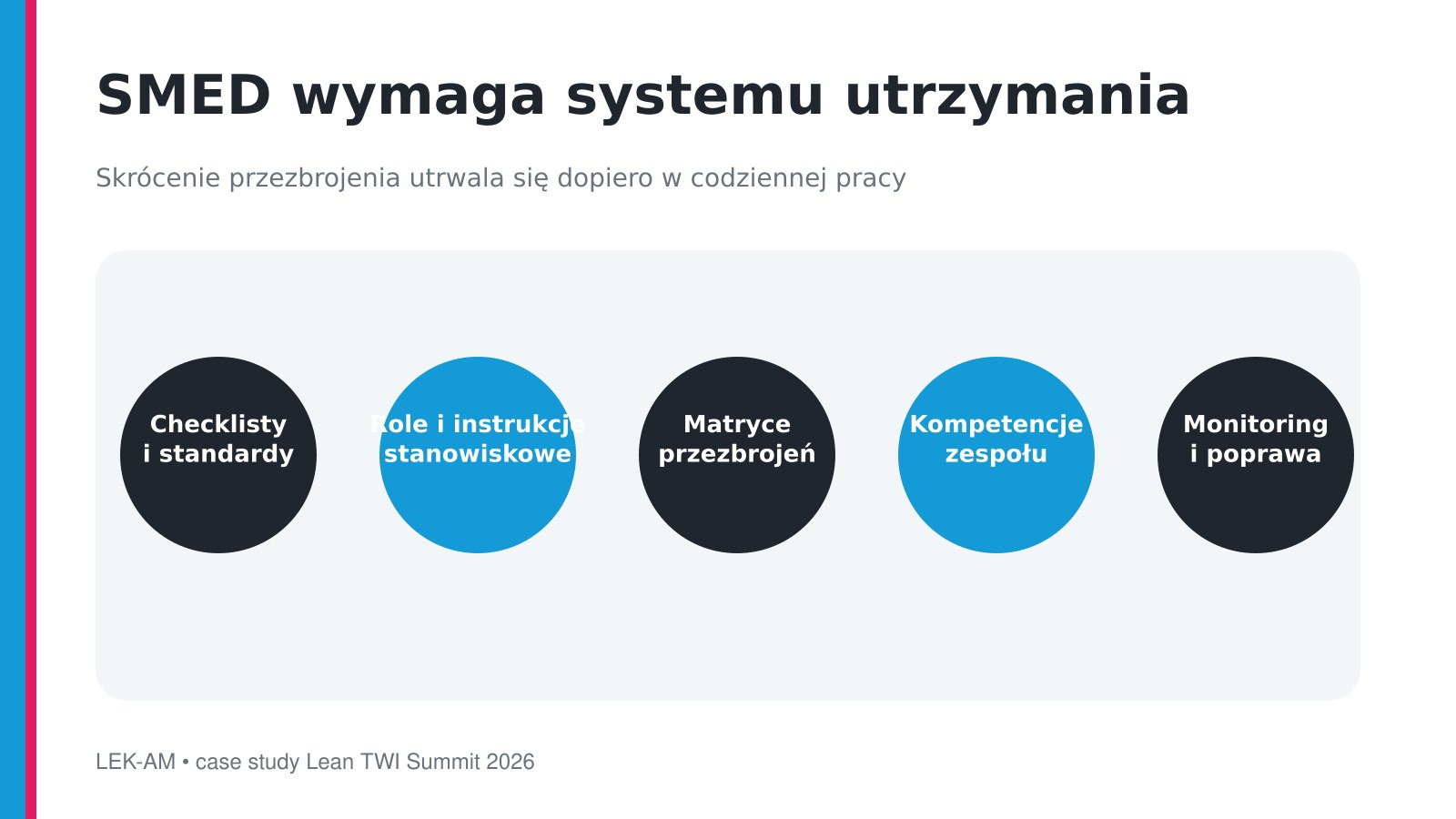
The same logic was applied to changeovers. A workshop alone may reveal potential, but lasting change requires checklists and standards, a clear division of roles, job instructions, changeover matrices, operator and mechanic capability development, and a mechanism for monitoring results.
This makes SMED part of the production system. The practical principles are explained on the Leantrix page devoted to reducing changeover times and improving production flexibility.
What made the Lean Management transformation difficult?
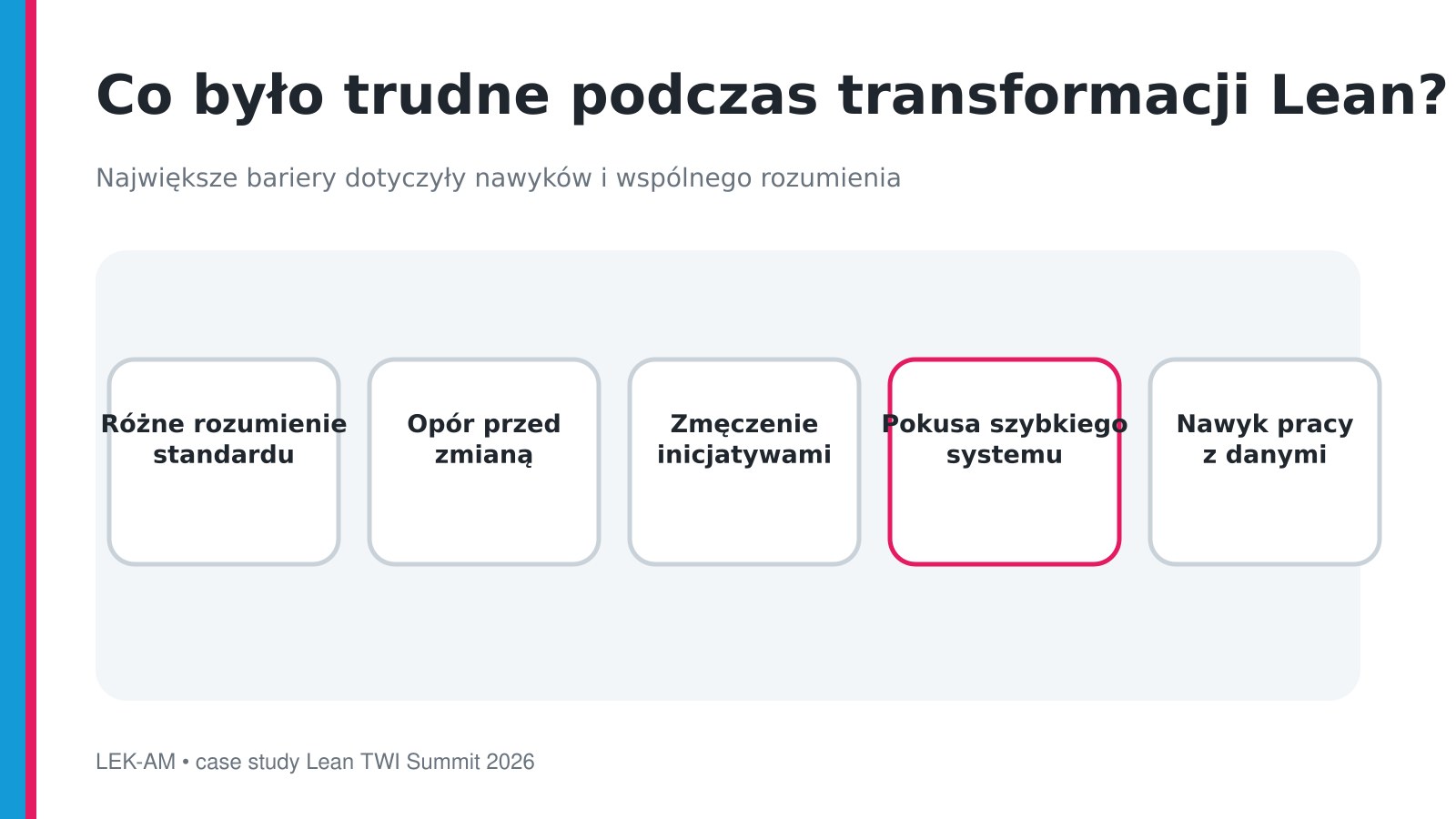
Learning the tools was not the biggest barrier. Different definitions of a standard existed within the organisation. Some people saw it as a document prepared for an audit, rather than a living reference for work and improvement.
There was natural resistance, fatigue with successive initiatives and a temptation to move quickly to a system. The team had to explain why the changes mattered as well as what was changing. Building a habit of working with data was equally important. Measurement alone does not change an organisation; change occurs when people regularly analyse deviations and make decisions based on facts.
Lean Management transformation through structured ERC projects
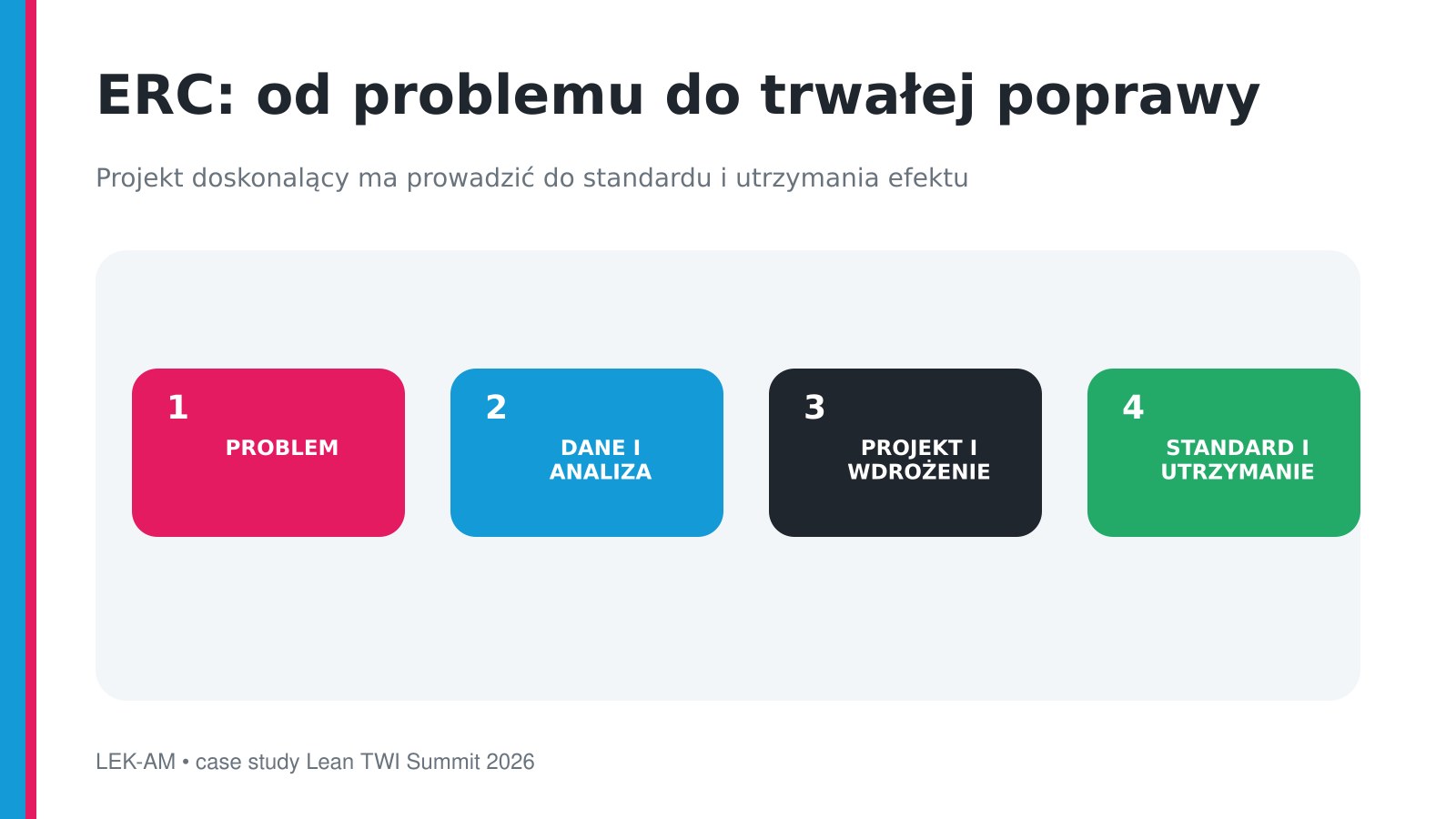
Once the foundations were established, the next stage was ERC—Entra Rapid Change. A project starts with a precise definition of the problem. The team then measures the actual situation and investigates root causes, designs and implements a solution, and finally embeds it in standards and monitors the result.
An organisation is ready for this work when it has people, standards, KPIs and a regular meeting routine. Improvement projects can then become a repeatable change-management process rather than spontaneous campaigns.
Lean transformation before automated data collection
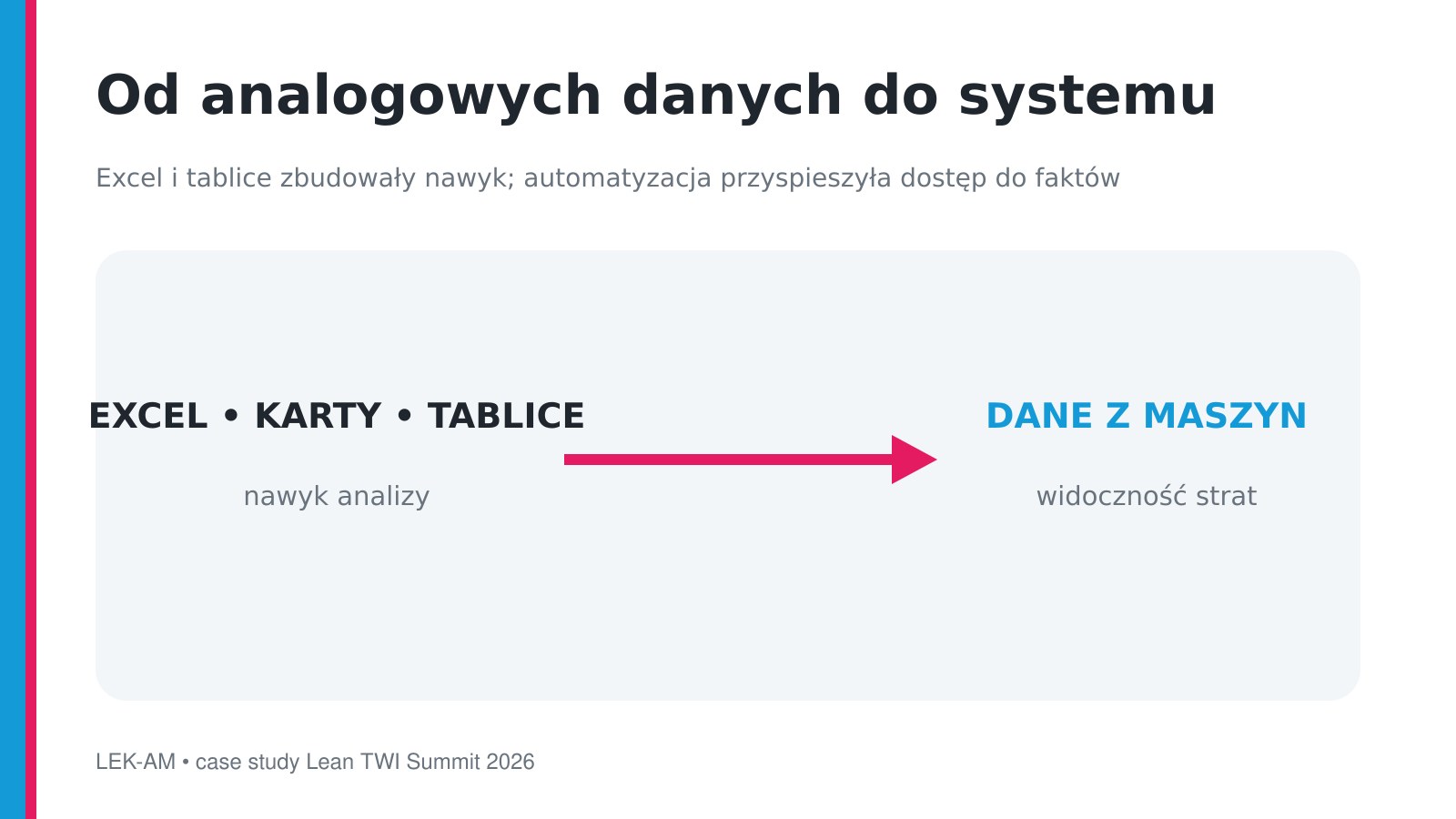
Before data was collected automatically from machines, the team analysed plan attainment, downtime and deviations in Excel, on paper records and at performance boards. This analogue stage was not wasted time. It created shared definitions of indicators, accountability for responding and a habit of discussing facts.
Only then was Compass by Entra introduced—a solution from ISCAS, Entra Group’s technology partner. The system automates machine data collection, improves visibility of stoppages, micro-stoppages and performance losses, and supports continuous improvement and maintenance.
Compass did not replace Lean Management. It strengthened processes that the organisation had already developed and documented. We explain the same mechanism in more detail in the Leantrix article Industry 4.0 in practice (in Polish): technology provides better feedback when the organisation understands flow, standards and waste.
What advantages come from the right sequence of Lean Management transformation?
- Sustainable change: knowledge remains embedded in standards, capabilities and working routines.
- Less resistance: the system is seen as support rather than a control mechanism.
- Better data quality: people know what to measure, why it matters and who must respond.
- Engagement: operators, mechanics and leaders help develop the solutions.
- Appropriate technology: the system addresses identified losses and process needs.
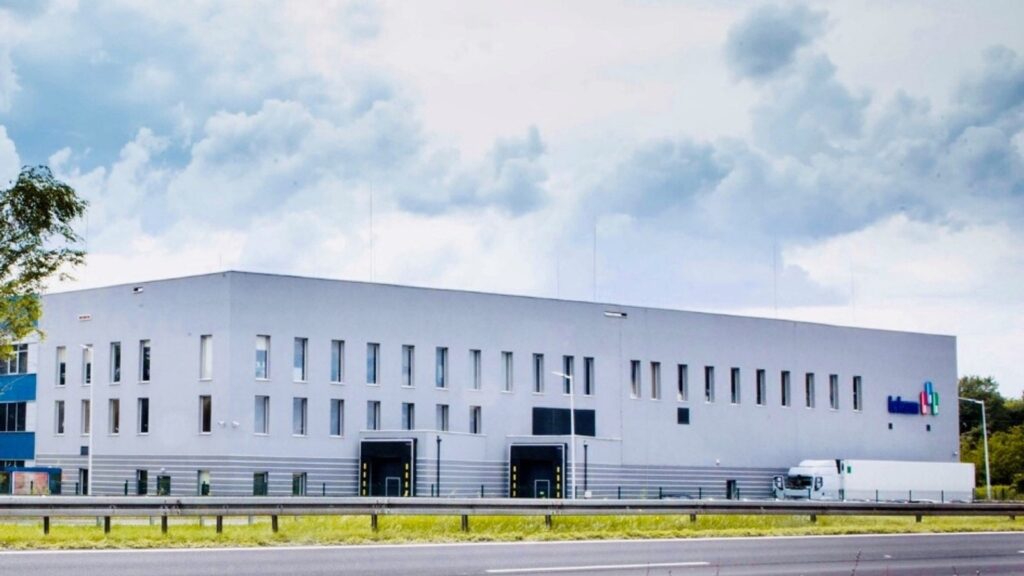
Information about the production facility, laboratories and the company’s operations is available on LEK-AM’s official website. The company describes its modern production facilities in Zakroczym and the growing scale of its operations there.
Three lessons from LEK-AM’s Lean Management transformation
- Start with people, processes and standards. A system cannot replace a common language or accountability.
- Build processes rather than campaigns. 5S, SMED, Kaizen and TPM need a mechanism to sustain them.
- Give data meaning through action. MES and automation create value when indicators lead to discussion and decisions.
About the case study presenter
Edyta Ostrowska is an Operational Excellence Expert at LEK-AM. She supports the development of the Lean Management system, combining employee capability building, process standardisation, continuous improvement and working with data. At Lean TWI Summit 2026, she presented LEK-AM’s practical journey from organisational foundations to digital solutions that support production.
This article is based on materials presented by Edyta Ostrowska of LEK-AM at Lean TWI Summit 2026 in Wrocław. It describes the approach and transformation stages presented by the speaker; it does not attribute undisclosed numerical results to the project.