




FRONT-LINE LEADER DEVELOPMENT SYSTEM · TRAINING WITHIN INDUSTRY

TWI implementation – a practical leadership system for daily work

Training Within Industry (TWI) is a practical system for developing front-line leaders where work happens. Its six complementary methods connect effective job instruction, work-method improvement, employee relations, safety, quality at source and structured problem solving into one coherent management standard. If you first need the fundamentals, start with About TWI.

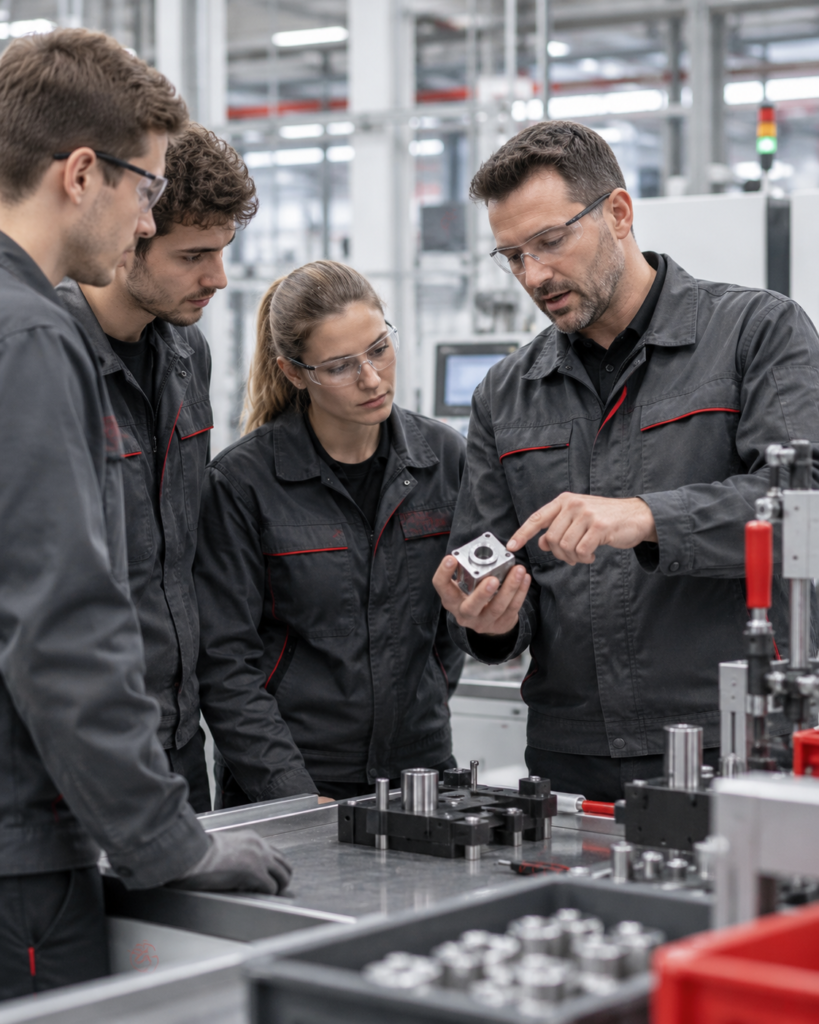
Training Within Industry coaching at the workplace

01

First, we stabilise the work standard and the way knowledge is transferred.

02

We develop practical capabilities for front-line leaders and internal instructors.

03

We match one of the six TWI methods to a real operational challenge.

04

Training, pilot work, coaching and sustainment become one implementation path.

SIX TWI METHODS

Choose the Training Within Industry method that fits your operational challenge

Training Within Industry is a family of six complementary methods. You can start with one concrete problem — onboarding, quality, safety, relations or recurring process failures — and then build a coherent system for front-line leadership.

TWI Job Instruction (JI)

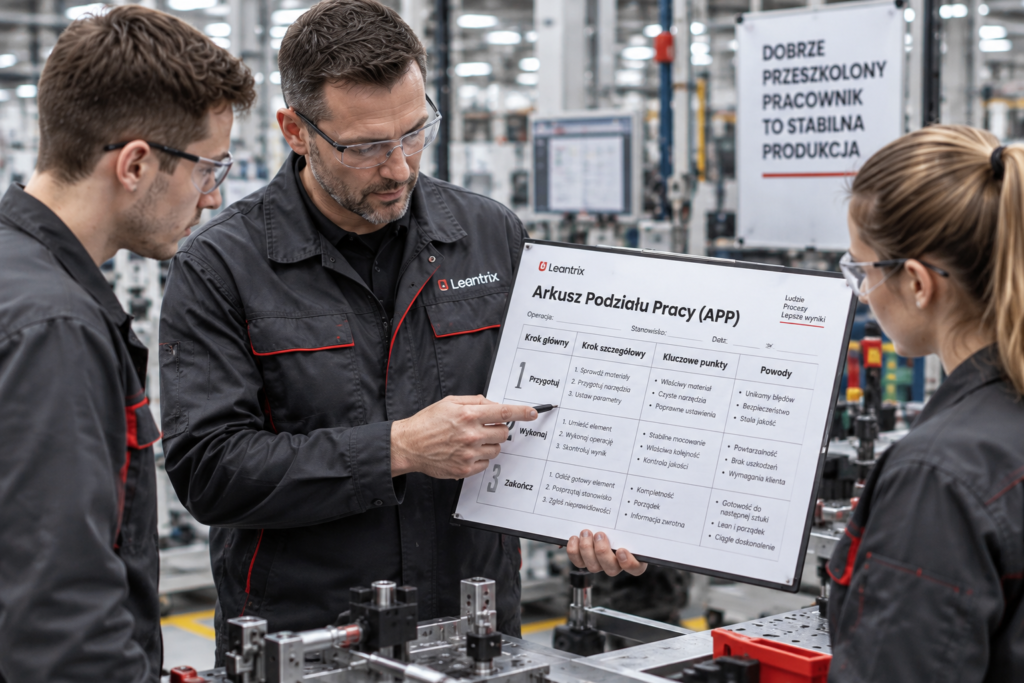
TWI Job Instruction (JI) teaches leaders how to prepare an employee to perform a job safely, correctly and independently, in line with the agreed standard.

  • Job Breakdown Sheet
  • four-step instruction method
  • faster onboarding and fewer errors
  • sustainment after training

TWI Job Methods (JM)

TWI Job Methods (JM) helps leaders and teams simplify work, remove waste and create a better method without beginning with major investment.

  • 5W1H analysis and ECRS thinking
  • daily Kaizen close to the process
  • higher productivity and better ergonomics
  • the improved method becomes the new standard

TWI Job Relations (JR)

TWI Job Relations (JR) develops a leader’s ability to build trust, prevent conflict and resolve people-related problems fairly and consistently.

  • foundations of good relations
  • decisions based on facts
  • effective conversations with employees and teams
  • stronger engagement and cooperation

TWI Job Safety (JS)

TWI Job Safety (JS) brings safety into daily work and strengthens the leader’s role in identifying hazards before an incident occurs.

  • risk recognition at the workplace
  • a safe method of doing the job
  • learning from near misses
  • prevention instead of reaction alone

TWI Job Quality (JQ)

TWI Job Quality (JQ) builds quality at source. It connects the work standard, quality requirements, operator self-checks and a clear response to deviation.

  • recognising OK and NOK output
  • critical characteristics and quality points
  • self-checks in the process
  • preventing errors before they travel downstream

TWI Problem Solving (PS)

TWI Problem Solving (PS) provides a disciplined route from a precise problem definition, through facts and root-cause analysis, to implementation and sustainment of the solution.

  • the problem as a deviation from standard
  • facts before opinions
  • root cause rather than symptom
  • the solution embedded in daily work

ONE FRONT-LINE LEADERSHIP SYSTEM

Six Training Within Industry methods, one management logic

TWI methods create most value when they do not operate as isolated courses. Together they connect the work standard, leader behaviour and problem solving, so capability grows exactly where operational results are created.

STANDARD AND QUALITY

TWI JI + TWI JQ

Effective instruction creates a stable standard; Job Quality helps people recognise and stop deviations at source.

PEOPLE AND SAFETY

TWI JR + TWI JS

Good relations and conscious prevention strengthen trust, responsibility and safe behaviour across the team.

IMPROVEMENT AND PROBLEMS

TWI JM + TWI PS

Job Methods removes waste from everyday work, while structured problem solving prevents recurring failures.

FROM A WORKSHOP TO A WORKING STANDARD

How we implement Training Within Industry

We do not stop when participants understand the method. We first select a business problem and a pilot process, develop instructors and leaders on real work, and then embed TWI into the daily management system.

DIAGNOSIS · 01

Diagnose the process and the objective

We clarify which problem TWI must solve, where the deviation is created and what evidence will show that implementation is working.

CAPABILITY · 02

Develop instructors and leaders

People learn the method on examples from their own organisation. Leaders practise instruction, conversations, work analysis or problem solving with feedback from an experienced trainer.

PILOT · 03

Run a focused TWI pilot

We implement the standard in a selected area, observe behaviours and results, and then adjust the solution using facts from the process.

SUSTAIN · 04

Sustain and expand the system

We establish coaching, review and improvement routines. TWI becomes part of the leader’s daily work instead of disappearing after training.

A PRACTICAL FIRST STEP

Match the TWI method to a real business problem

Not every organisation should start with the same method. For onboarding and work standards, begin with Job Instruction; for quality, Job Quality; for engagement and people issues, Job Relations. A short diagnosis identifies the right starting point, pilot scope and success measures.

Evidence before scale

Build capability on real work and measure what changes

A TWI rollout should change the time to competence, the stability of standard work and the way leaders respond to deviations. We define those measures before the pilot and review both results and leader behaviour.

60+automotive plants represented in the team’s implementation experience
6,500+certified TWI instructors and trainers developed through LeanTrix programmes
6 methodsconnected in one front-line leadership and improvement system

Selected implementations

Training Within Industry case studies

The examples below show different starting points: faster onboarding, quality and ergonomics, or a global leadership system spanning many plants.

VELUX TWI implementation case study

VELUX: restarting TWI

The renewed programme engaged management, supervisors, trainers and employees. Reported results included onboarding reduced from 30 to 10 days, 17% fewer quality errors and a three-point REBA/RULA improvement.

View the case-study library
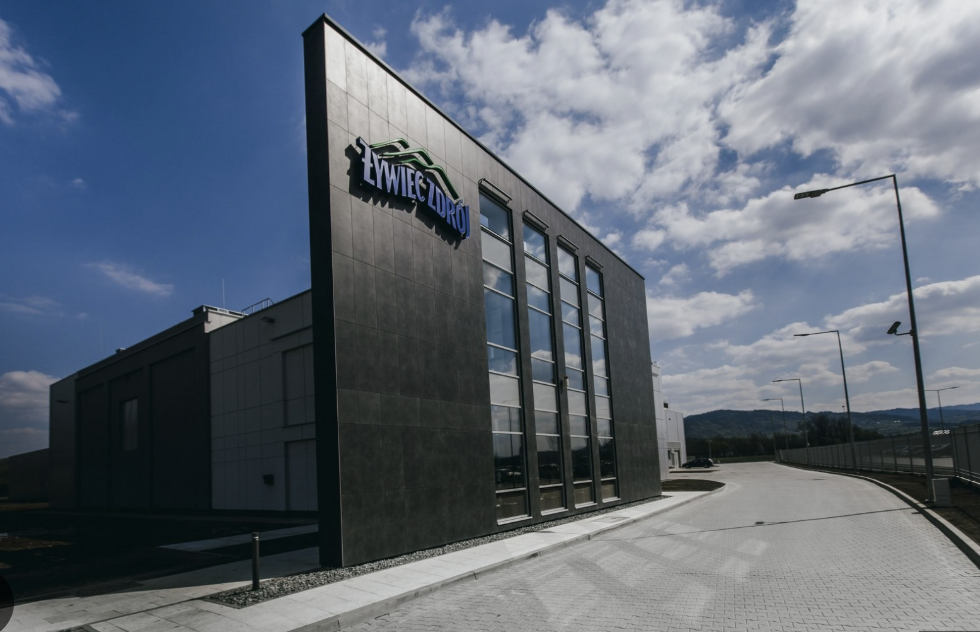
Danone team during a workplace-learning implementation

Danone: TWI in food production

The programme covered four Żywiec Zdrój plants and around 250 production and warehouse employees. Reported onboarding time fell by 37% in warehousing and 50% in production areas.

View the case-study library
Cooper Standard global Lean and TWI transformation

Cooper Standard: TWI at global scale

The Lean- and TWI-based BTO system reached 70 plants across four continents, connecting leader development, standard work and capability management.

View the case-study library

LeanTrix TWI team

Experienced practitioners who develop internal capability

We match trainers to the sector, TWI method and stage of implementation. The goal is not dependence on an external consultant, but a capable internal network of leaders, instructors and coaches.

Client references

Implementation is judged by what remains in the organisation.

See signed recommendations from LeanTrix clients and learn how they assess the practicality of our work, the preparation of our experts and the quality of cooperation.

1,200+ projects · signed client references

FREQUENTLY ASKED QUESTIONS

Training Within Industry — questions before implementation

What is Training Within Industry?

Training Within Industry is a system of practical methods for developing front-line leaders. It helps organisations teach work, improve methods, build sound relations, strengthen safety and quality, and solve problems directly in the process.

Which methods are included in the TWI system?

The system includes TWI Job Instruction, TWI Job Methods, TWI Job Relations, TWI Job Safety, TWI Job Quality and TWI Problem Solving.

Which TWI method should we start with?

Start with the method that addresses the most important business problem. Job Instruction supports onboarding and standard work; Job Methods improves productivity; Job Relations strengthens cooperation; Job Safety prevents incidents; Job Quality builds quality at source; Problem Solving addresses recurring deviations.

How is TWI implementation different from a one-off course?

A course introduces the method. Implementation changes the daily work of leaders. It therefore includes practice on real processes, pilot work, coaching, observation of leader behaviours, clear measures and sustainment of the standard.

Does TWI only work in manufacturing?

No. TWI can also be used in logistics, maintenance, quality, healthcare, services and administration — wherever work has repeatable steps, a standard, human interaction and a measurable outcome.

How long does a TWI implementation take?

The timeline depends on the selected method, the number of instructors, the pilot scope and the maturity of the management system. We agree the schedule after diagnosis; the priority is not a fast course, but leader independence and sustained results.

Who should become a TWI instructor?

A good instructor knows the process, has credibility with employees and can practise the method regularly. Typical candidates include team leaders, supervisors, internal trainers, experienced operators, quality specialists and process engineers.

How should we measure TWI results?

Measures must match the problem: time to competence, errors, productivity, improvement activity, absence, turnover, near misses, complaints or recurrence of problems. We combine outcome measures with observation of leader behaviours.

Build a coherent Training Within Industry system

During a free consultation we clarify the challenge, select the right TWI method and propose a practical pilot, instructor-development and scale-up plan.