


Tension grows for weeks because supervisors lack a structured way to recognise and address it early.
Training Within Industry · Job Relations
TWI Job Relations (TWI JR) gives leaders a preventive routine for building trust and a four-step method for handling people problems based on facts rather than impulse.
TWI Job Relations – a practical standard for frontline leadership
Help supervisors communicate expectations, recognise performance, anticipate change and resolve difficult situations in a consistent way—close to the work and before problems escalate.
4 foundationsprevent people problems every day
4 stepsfacts, options, action and follow-up
1 standardfor practical frontline leadership

Start with the operating problem
When technical promotion is not enough preparation for leadership
JR is designed for organisations where supervisors are expected to lead people but have never received a practical standard for everyday relationships and difficult situations.
Some leaders avoid conversations while others react quickly, creating inconsistent treatment and low trust.
People learn about decisions after the fact and do not understand what will change or why.
Decisions are made from the first version of a story instead of a complete view of the situation.
The working method
Four foundations for prevention and four steps for problems
Job Relations begins before a conflict. Daily leadership practices reduce avoidable problems; the four-step method provides discipline when one still occurs.
The complete JR system
The preventive foundations and problem-solving method work together. One creates trust; the other protects fairness and effectiveness under pressure.
- Let each person know how they are doing
- Give credit when it is due
- Tell people in advance about changes that will affect them
- Make the best use of each person's ability
- Get the facts, weigh and decide, take action, check results
From workshop to operating system
How we develop Job Relations in frontline leaders
The programme is built around actual situations, coached reflection and follow-up in the leader's normal operating rhythm.
Define the leadership moments
Identify recurring situations: feedback, conflict, change, attendance, performance and team cooperation.
Learn the preventive foundations
Translate the four foundations into specific behaviours for the organisation and its frontline reality.
Practise the four-step method
Work through real anonymised cases, test facts and options, and receive coaching on decision quality.
Embed leader routines
Use one-to-ones, daily management and reflection to reinforce the standard and monitor outcomes.
Management evidence
Measure the quality of leadership through team and process signals
JR should improve both human experience and the team's ability to perform. Use a balanced set of leading and lagging indicators.
| Measure | What it answers | Example |
|---|---|---|
| Early resolution | Are supervisors handling issues before formal escalation? | Cases resolved at team level and time to response |
| Leader behaviour | Are the four foundations visible in daily work? | Observed feedback, recognition and change communication |
| Team stability | Is trust reflected in retention and attendance? | Turnover, absence, transfer requests and pulse feedback |
| Problem recurrence | Did the action address the situation without creating another issue? | Repeated cases and follow-up checks |
Proof from real organisations
TWI works when people development and operating results reinforce each other
Large TWI transformations show that standards, instructor capability and frontline leadership must be developed as one system.
 Rolls-Royce · Lean HR and TWILeadership and culture connected with operating workA case focused on people systems, HR, leadership and organisational culture—the context where Job Relations creates practical value.Read the case study →
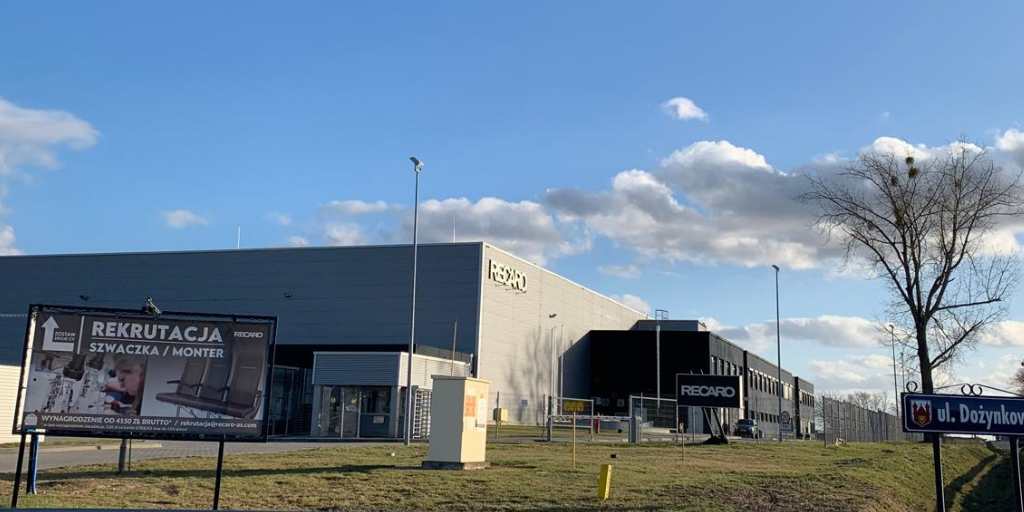 RECARO · standard workFaster learning with fewer errorsThe programme reduced onboarding time by 50%, rework-related errors by 25% and training-process costs by 20%.Read the case study →
 Tarczyński · JI, JM and JRLearning 25–30% fasterA multi-module TWI implementation combining employee instruction, improvement and frontline leadership capability.Read the case study →
Signed client references, not anonymous quotes
See original client documents and verified testimonials covering Lean, TWI, leadership development and operational transformation.
People behind the system
TWI practitioners who connect leadership with daily operations
Our approach combines the original JR logic with contemporary leader routines, psychological safety and real organisational situations.

Wiktor Wołoszczuk
Psychologist, Lean consultant and Toyota Kata & TWI Master Trainer with more than 20 years of management, change and leadership-development experience.
View expert profile →
Dr Bartosz Misiurek
TWI Master Trainer and author-practitioner. Global BTO coach in the Cooper Standard transformation and co-creator of scalable TWI systems.
View expert profile →Build a connected operating system
Continue with a related capability
Each method is stronger when it is connected to standard work, leader routines and measurable process performance.
FAQ
Frequently asked questions about TWI Job Relations
JR is a practical leadership method, not a general communication lecture.
Is Job Relations an HR programme?
It can be sponsored with HR, but it is primarily a method for frontline and middle leaders. Its value comes from use in daily work where relationships affect safety, quality and performance.
Does JR provide scripts for difficult conversations?
No. It provides a decision process: get the facts, weigh options, take action and check results. The conversation still needs to fit the person and situation.
How does JR support psychological safety?
The preventive foundations make expectations, recognition and change communication more predictable. Fact-based problem solving and follow-up reduce impulsive or unfair reactions.
Can senior leaders use the method?
Yes. The logic applies at every level, although examples and decision scope change. It is especially valuable for leaders who lead other leaders.
How is the programme practised?
Participants work with cases, including real anonymised situations, and receive feedback on fact gathering, options, timing and follow-up.
What does success look like?
Leaders address issues earlier, employees experience more consistent treatment, escalation is better prepared and teams recover more quickly from difficult situations.
Start with the business problem
Give frontline leaders a practical standard for working with people
Tell us which leadership situations consume the most energy today. We will help you define the right pilot, participant group and reinforcement routine.
Free consultation
We first understand the process, the expected result and the conditions for implementation. Then we propose the right expert and the next practical step.
Discuss your challenge