Small-scale digitalisation enabled Impel Group to address problems that were too small for major transformation programmes but too important to leave unresolved. In 12 months, the team created 54 tools and deliberately stopped 70 ideas that did not meet its criteria.
This case study goes beyond introducing another technology. It shows how to combine process thinking, a limited set of IT solutions and a fast decision path. This allows an organisation to test ideas, deliver small improvements and build capabilities for a larger digital transformation.
Why did Impel need small-scale digitalisation?
Impel is moving from a traditional service model to one based on data and technology. Large transformation programmes naturally attract attention, funding and specialists. Yet daily work contains many local problems: re-entering data manually, scattered files, repetitive tasks, missing simple integrations and ideas that need to be tested quickly.
These needs may be too small to rank highly in central IT’s backlog. At the same time, business teams creating ad hoc solutions independently introduce risks: inadequate security, difficult maintenance and a process dependent on one individual. A gap emerges between the digital present and an ambitious vision of the future.
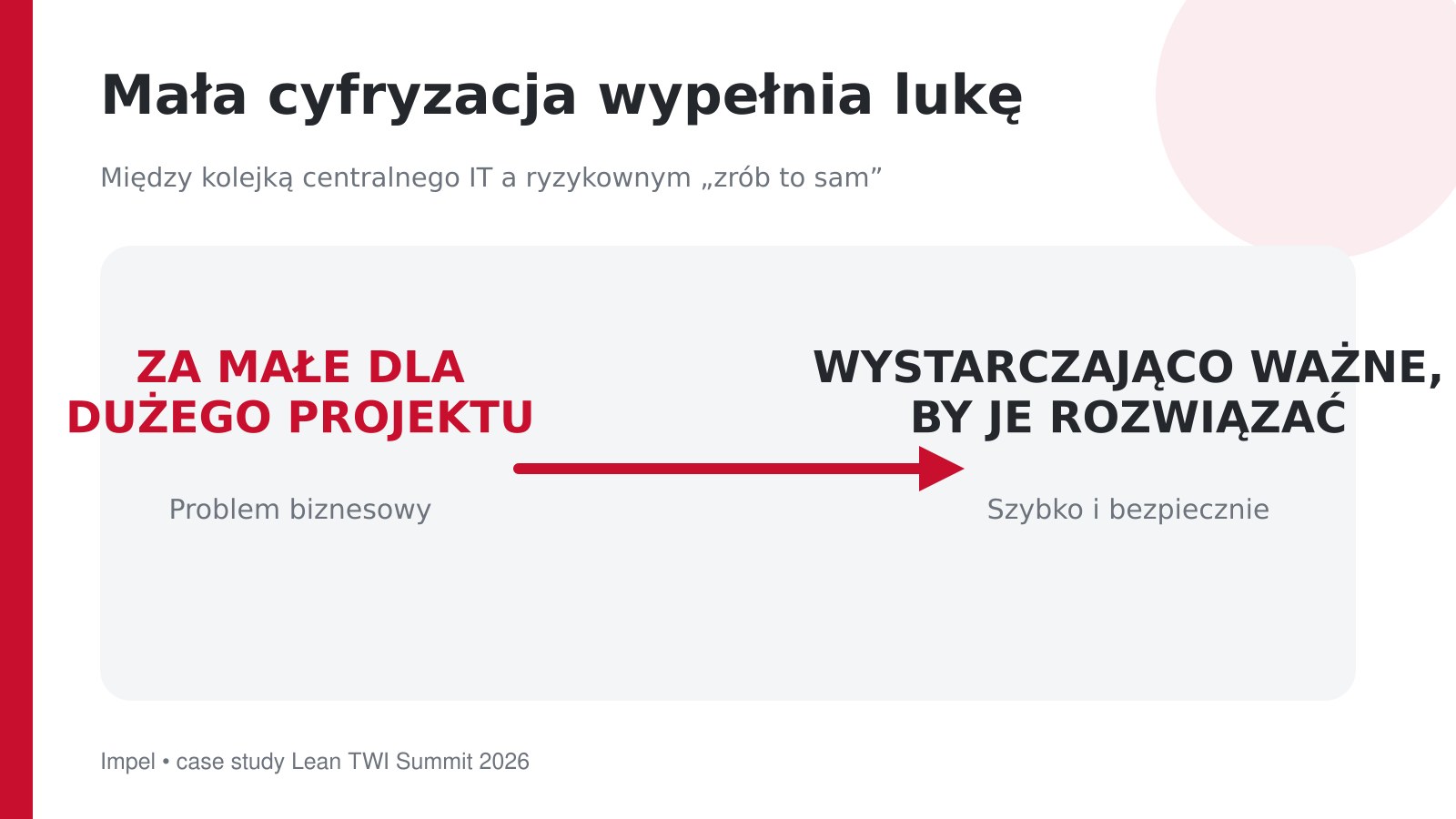
Small-scale digitalisation and major transformation complement each other
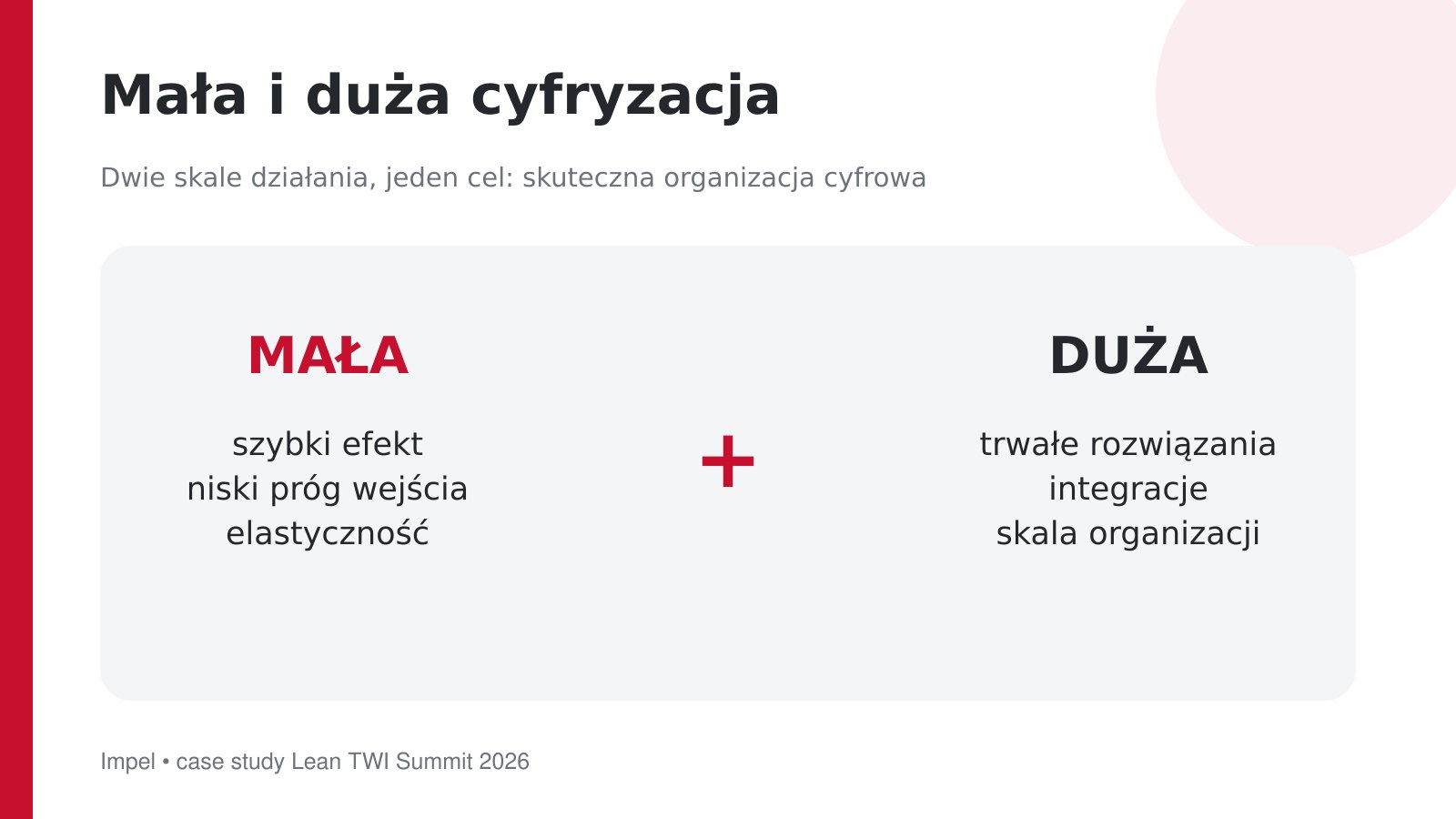
Impel’s presentation clearly distinguished two scales of activity. Large-scale digitalisation involves long cycles, higher costs, mature capabilities and complex, lasting solutions. Small-scale digitalisation has a lower entry threshold, is flexible and makes results visible sooner. Both serve the same goal: an effective digital organisation.
Small initiatives can prepare an organisation for larger changes. They teach people to describe a problem, organise a process, identify an owner and assess a solution’s value. We describe a similar approach—process first, automation second—in the Leantrix article AI and automation in office work (in Polish).
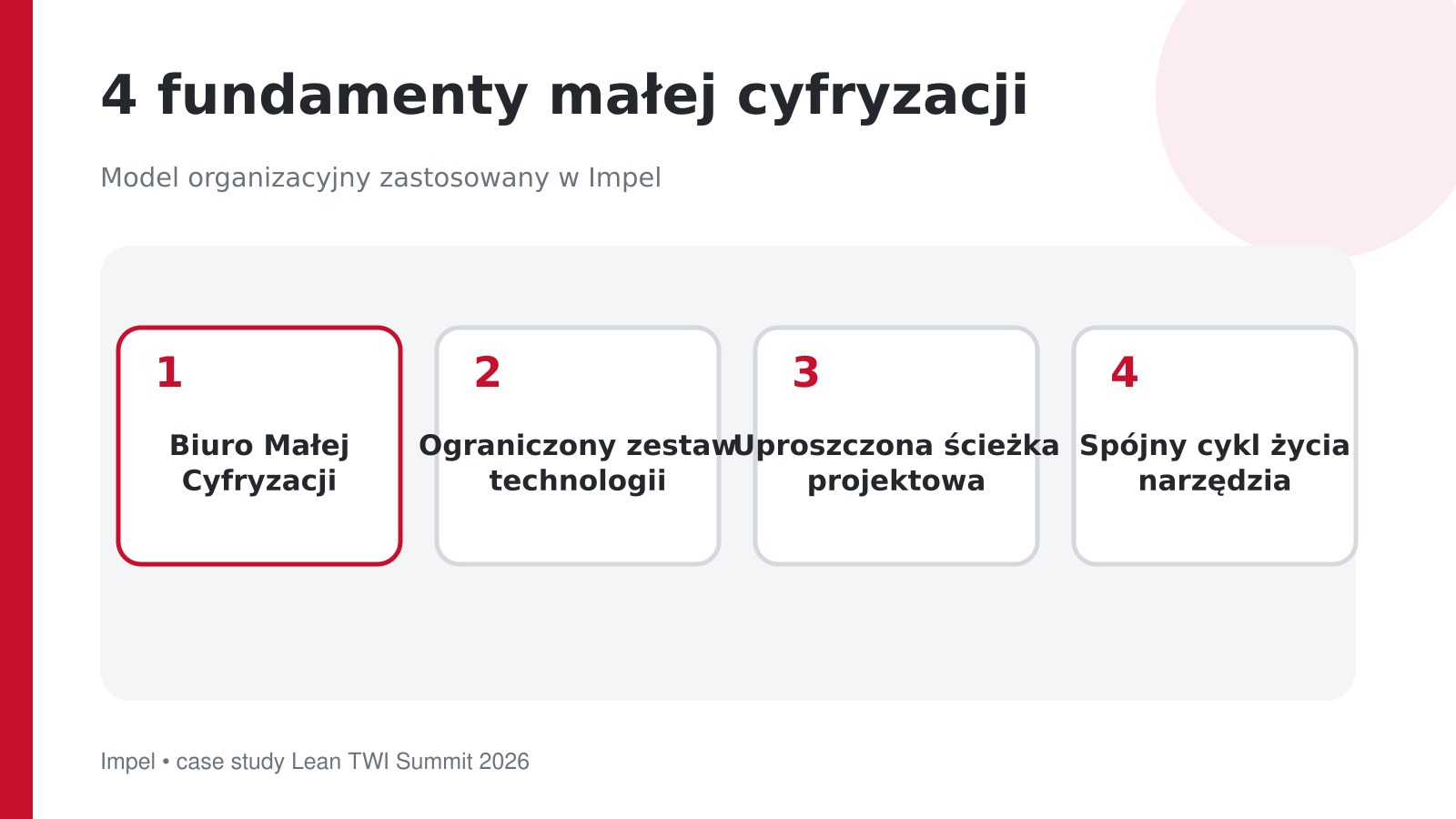
Four foundations of small-scale digitalisation at Impel
1. A Small-Scale Digitalisation Office close to the processes
The team was built within the organisation. Analysts combine a limited project-management role with business and systems analysis. Conversations therefore begin with the need, the user and the flow of work, rather than the selection of a tool.
2. A limited set of technologies
Deliberately restricting the technology portfolio simplifies maintenance, capability development and the assessment of whether a task fits this model at all. Small-scale digitalisation is not intended to handle every kind of project.
3. A simplified project path
A smaller initiative needs a proportionate decision-making process. An overly burdensome procedure would remove this approach’s main advantage: a short time from idea to validation.
4. A shared development and maintenance cycle
The same cycle applies regardless of the technology used. It covers creation of the solution as well as accountability, maintenance and decisions about its future. This protects the organisation from accumulating tools that nobody can develop further a few months later.
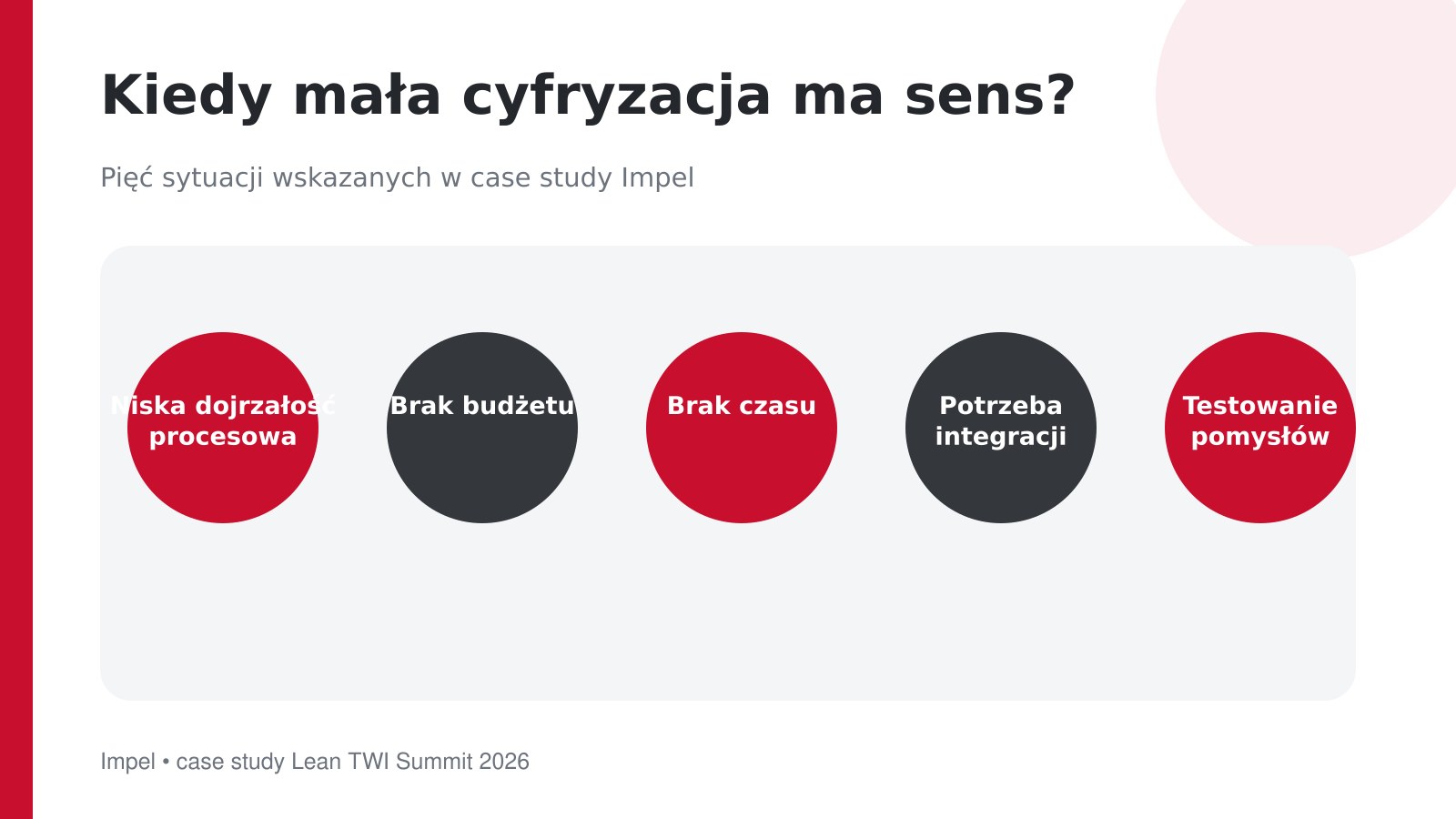
When does small-scale digitalisation work best?
The case identifies five situations where the small-scale format is particularly useful: low process or digital maturity, a limited budget, time pressure, a need for a simple integration, and testing an idea before a larger investment.
This does not mean automating disorganised work. The team should first establish whether the process is needed, where it creates value and who will own the solution. Process mapping (in Polish) helps reveal unnecessary steps, handovers and rework loops.
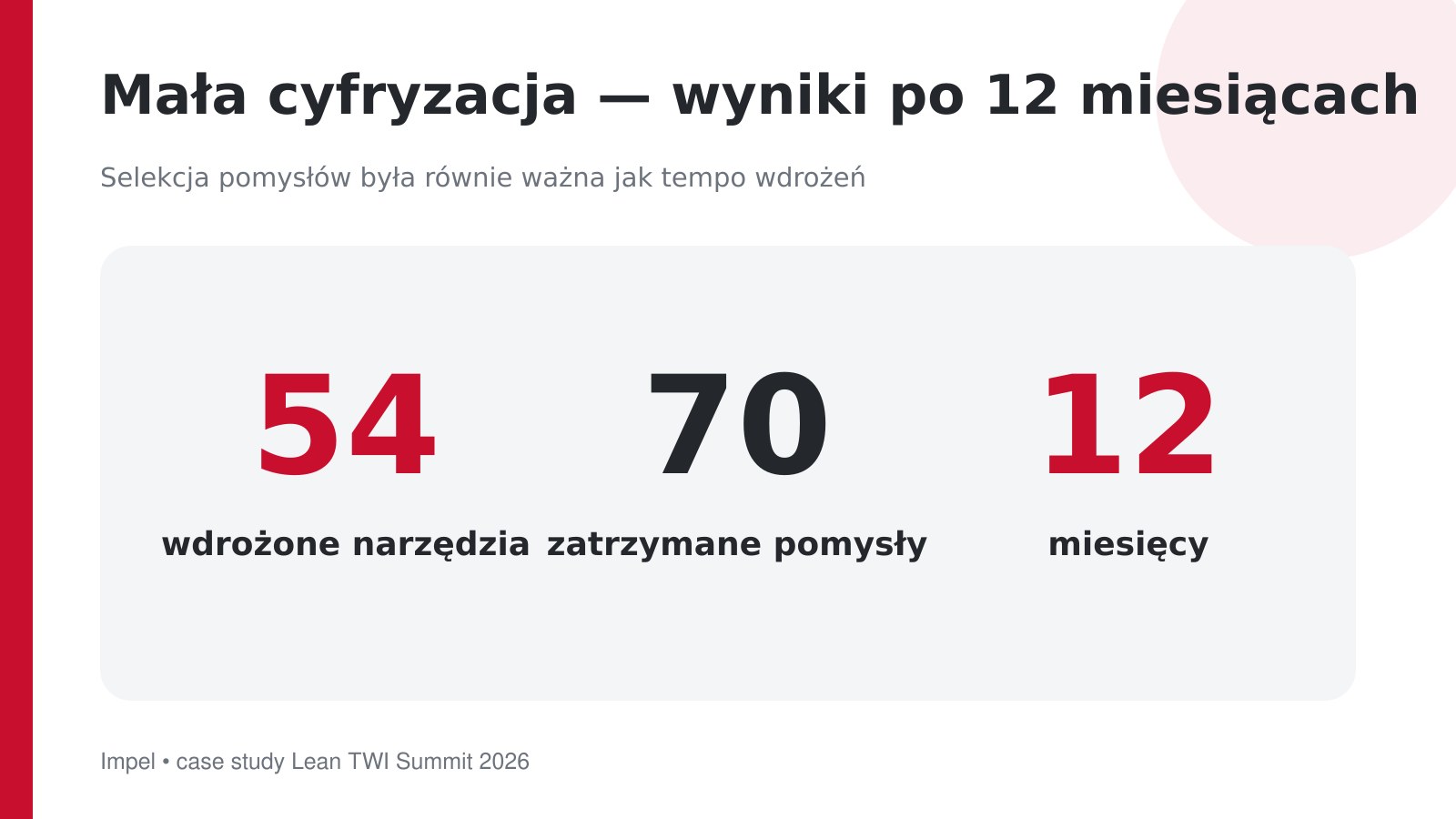
Small-scale digitalisation: 54 implementations and 70 stopped ideas
In 12 months, the Small-Scale Digitalisation Office created 54 tools. The second number is even more interesting: 70 ideas were stopped. This was a result of selection rather than a lack of effectiveness. The organisation avoided building solutions with insufficient value, a poor fit with the model or maintenance requirements it could not safely meet.
The ability to say “no” distinguishes a managed automation portfolio from an application factory. The number of implementations shows delivery speed, while the number of stopped initiatives says much about the quality of the entry criteria and the team’s discipline.
The hardest questions: ROI, ownership and old habits
The presentation acknowledged the difficulties. The first is the business case for small improvements. Benefits can be dispersed: a few minutes saved, fewer errors, faster access to information or greater predictability. They require a simple but consistent assessment method.
The second question is who commissions the automation and who is responsible for it after implementation. Without a business owner, a tool soon becomes nobody’s responsibility. The third challenge is changing established habits. Technology can be created quickly, but embedding a new way of working requires engagement from users and their managers.
What made small-scale digitalisation successful?
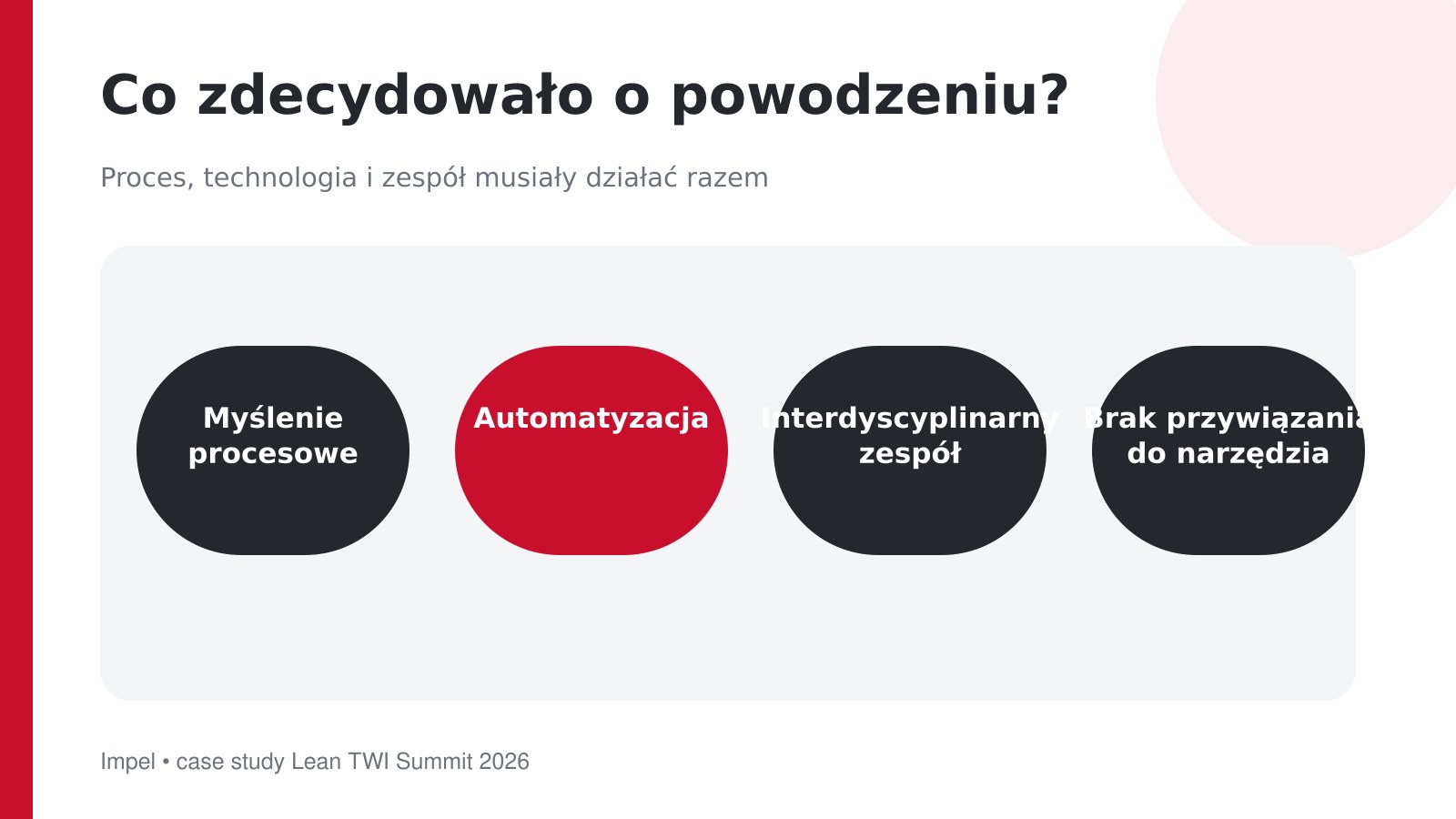
Combining process and technical capabilities was essential. The multidisciplinary team could examine a problem from different angles, while flexible roles supported work in a rapidly changing environment. A willingness to abandon the team’s own solution when it no longer met the need also mattered.
Small-scale digitalisation was organisationally placed outside the conventional IT model, but this did not mean operating without technology governance. Accountability was arranged differently: close to the process and user, with shared development and maintenance rules.
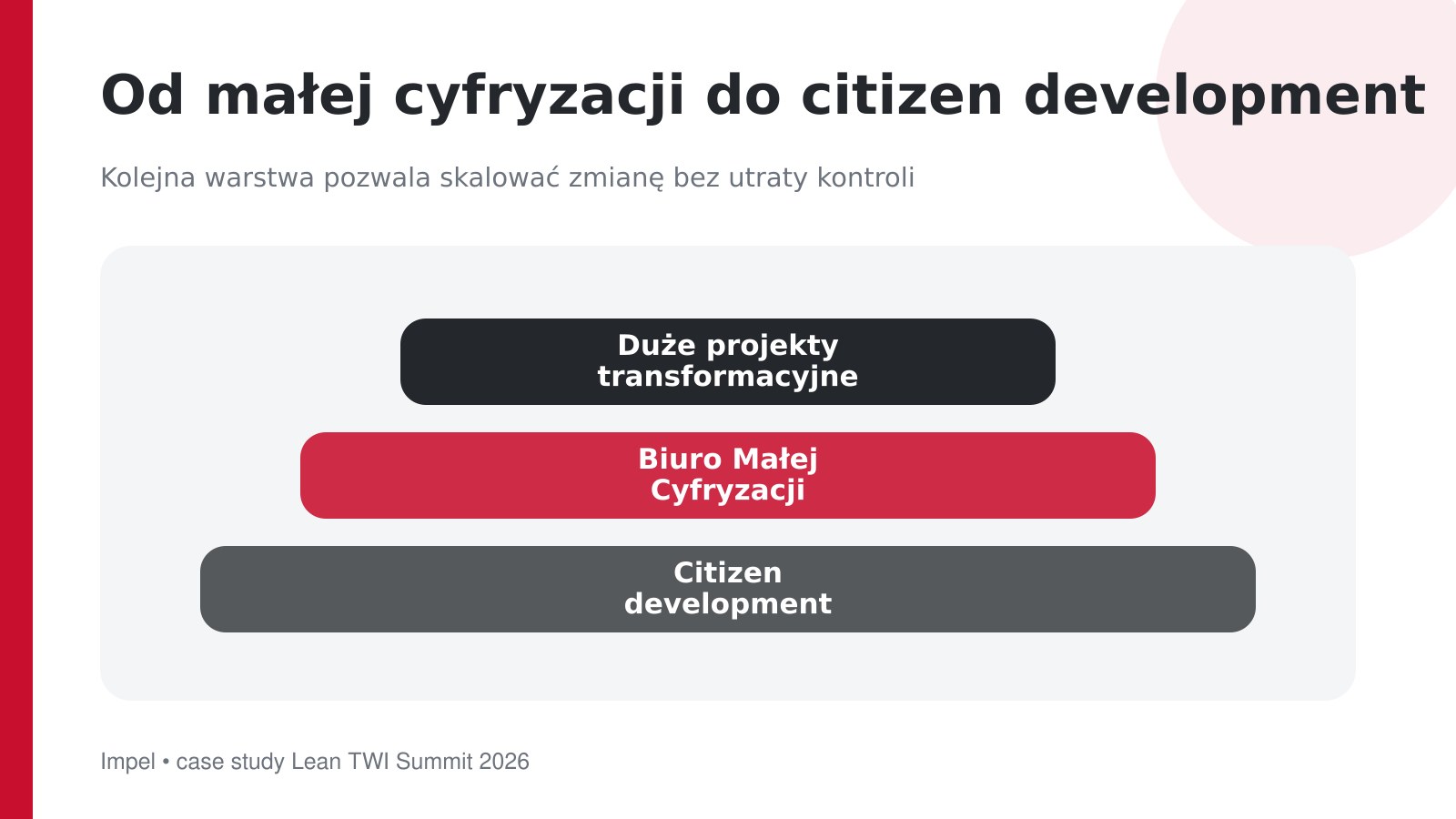
From small-scale digitalisation to citizen development
According to the presentation, 20–30% of projects exceed the Small-Scale Digitalisation Office’s intended scope. This is a natural signal that some initiatives should move onto a larger project path. The next steps are to expand the available technologies and introduce a third layer: citizen development.
Business employees can then create simple solutions themselves within a controlled environment. Governance is essential: clear boundaries, security standards, expert support and rules for taking over tools that grow beyond a local scale.
Lessons for service companies
- Start with a portfolio of real problems rather than a technology catalogue.
- Define the boundaries of small-scale digitalisation and a route for transferring larger initiatives.
- Combine process analysis with automation capabilities.
- Treat stopping a weak idea as a valuable decision.
- Establish ownership, maintenance and retirement criteria for the tool from the outset.
More information about Impel’s operations and the development of technology-based services is available on Impel Group’s official website.
About the small-scale digitalisation case study presenter
Katarzyna Międła is Director of the Small-Scale Digitalisation Office at Impel Group. She combines process and technology perspectives to develop a fast, controlled model for building tools that address everyday business needs. At Lean TWI Summit 2026, she presented Impel’s experience in establishing the office, selecting initiatives and preparing the organisation for citizen development.
This article is based on materials presented by Katarzyna Międła of Impel Group at Lean TWI Summit 2026 in Wrocław. The figures and conclusions relate to the case study presented by the speaker.