Lean implementation in a highly hierarchical organisation does not have to mean fighting the hierarchy. The real barrier is the illusion of control: expecting “green” reports, punishing deviations and making every decision dependent on the leader. Lean then becomes a performance of tools, and problems disappear only from presentations.
This case study by Sylwia Pawelczyk of Lear Corporation reveals the uncomfortable but practical mechanisms behind this situation. It promises neither an easy implementation nor a single project with a set of KPIs. It diagnoses organisational behaviour and presents solutions that help organisations move from micromanagement to developing people.
Lean implementation: hierarchy is not the problem
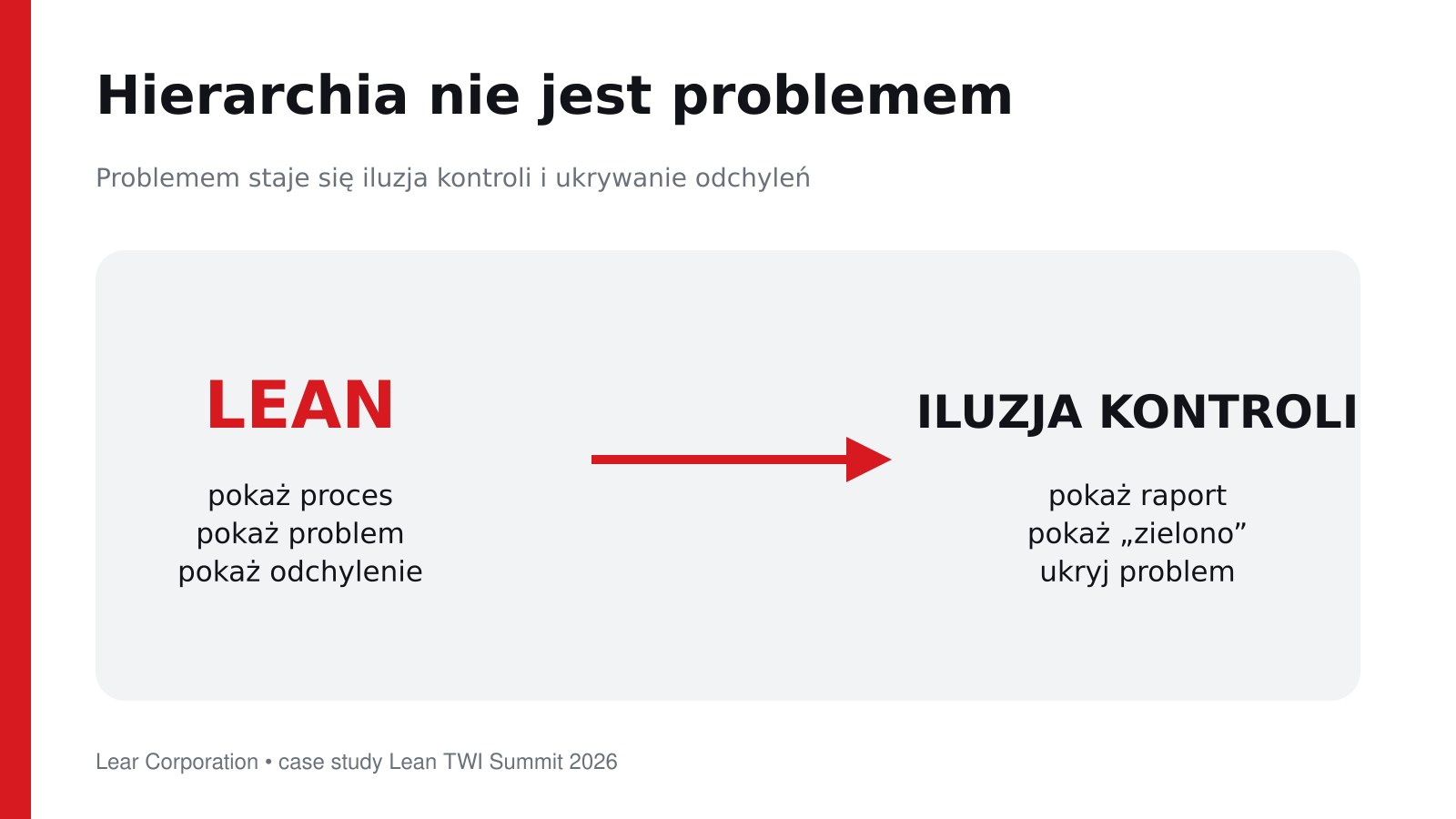
Hierarchy itself can clarify accountability and communication. The problem arises when its purpose becomes protecting an image of complete control. In Lean thinking, a leader wants to see the process, the problem and the deviation. In a system of apparent control, the leader wants a report, a “green” status and confirmation that everything is going to plan.
When reporting a difficulty is treated as a weakness, people learn to conceal problems instead of solving them. The organisation loses access to the truth, and management makes decisions based on a polished version of reality.
The Lean implementation companies want—and fear
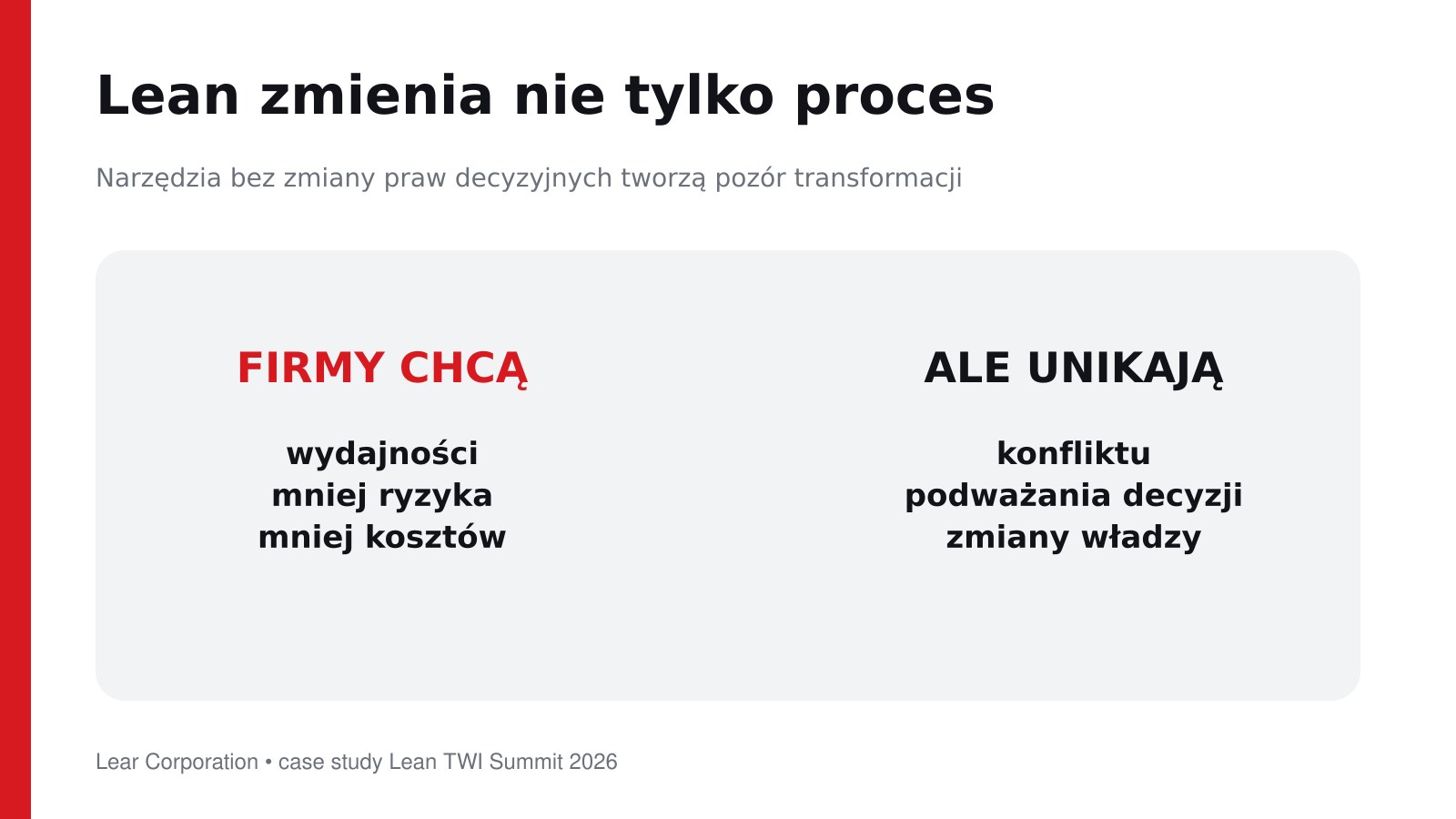
Companies readily embrace the promise of higher productivity, lower costs and reduced risk. It is much harder to accept conflict based on facts, challenges to decisions and a redistribution of authority. The organisation therefore adopts Lean tools while leaving its decision-making system untouched.
Boards, Kaizen, gemba and empowerment start to function as rituals. Employees quickly recognise the gap between declarations and practice. Cynicism and “Lean fatigue” emerge as a defence against another initiative that promises autonomy but ends in additional forms and approvals.
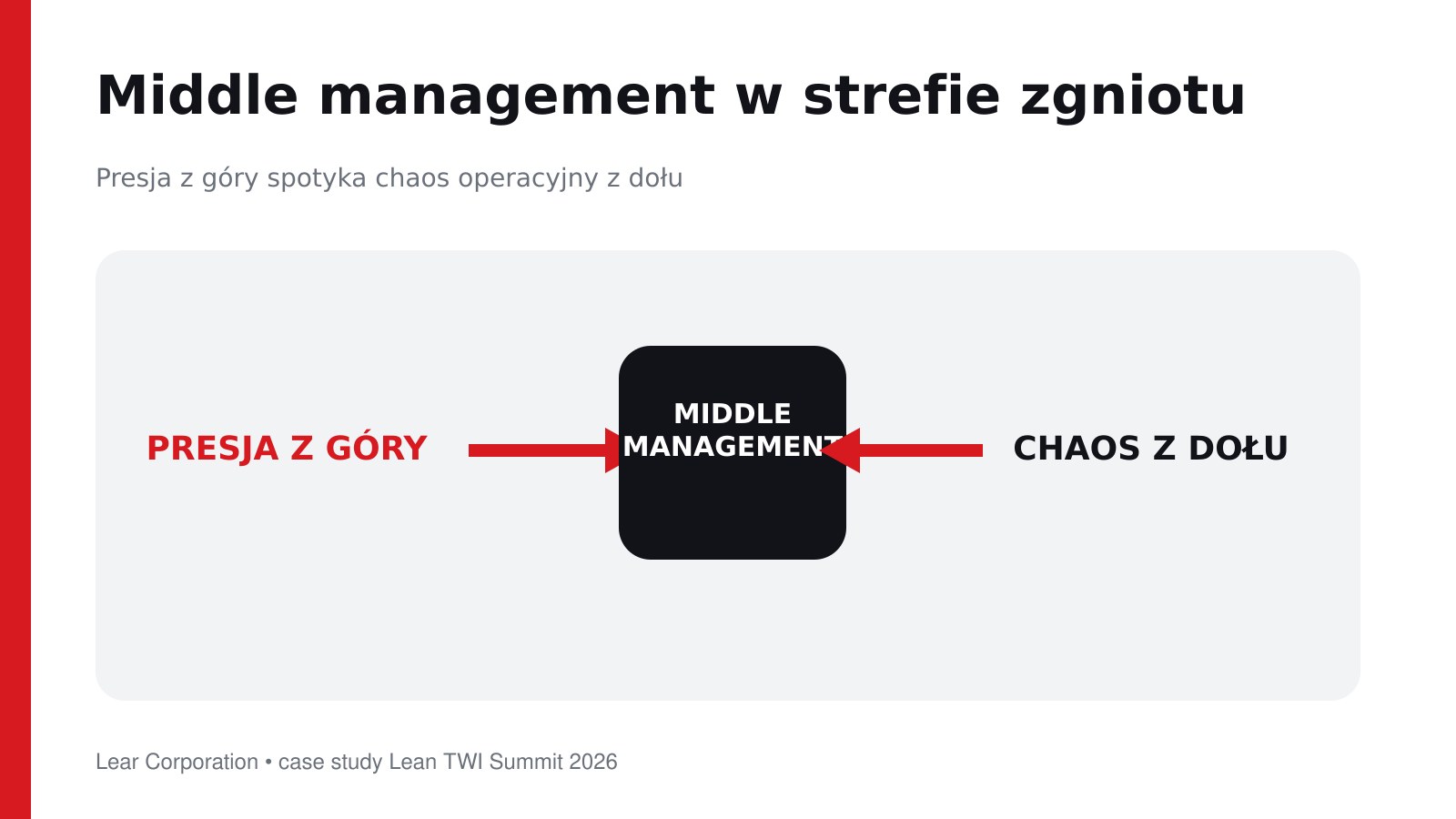
Middle management in the squeeze zone of Lean transformation
Middle managers operate between targets and reality. From above comes pressure for results and no surprises. From below come variability, resource shortages, quality problems and everyday chaos. Defensive management behaviour does not always reflect bad intentions. It is often an attempt to survive in a system that punishes the disclosure of deviations.
Lean transformation therefore cannot be limited to communication training for leaders. The conditions in which they make decisions must change: escalation, performance assessment, senior managers’ reactions to problems and the expected management routine.
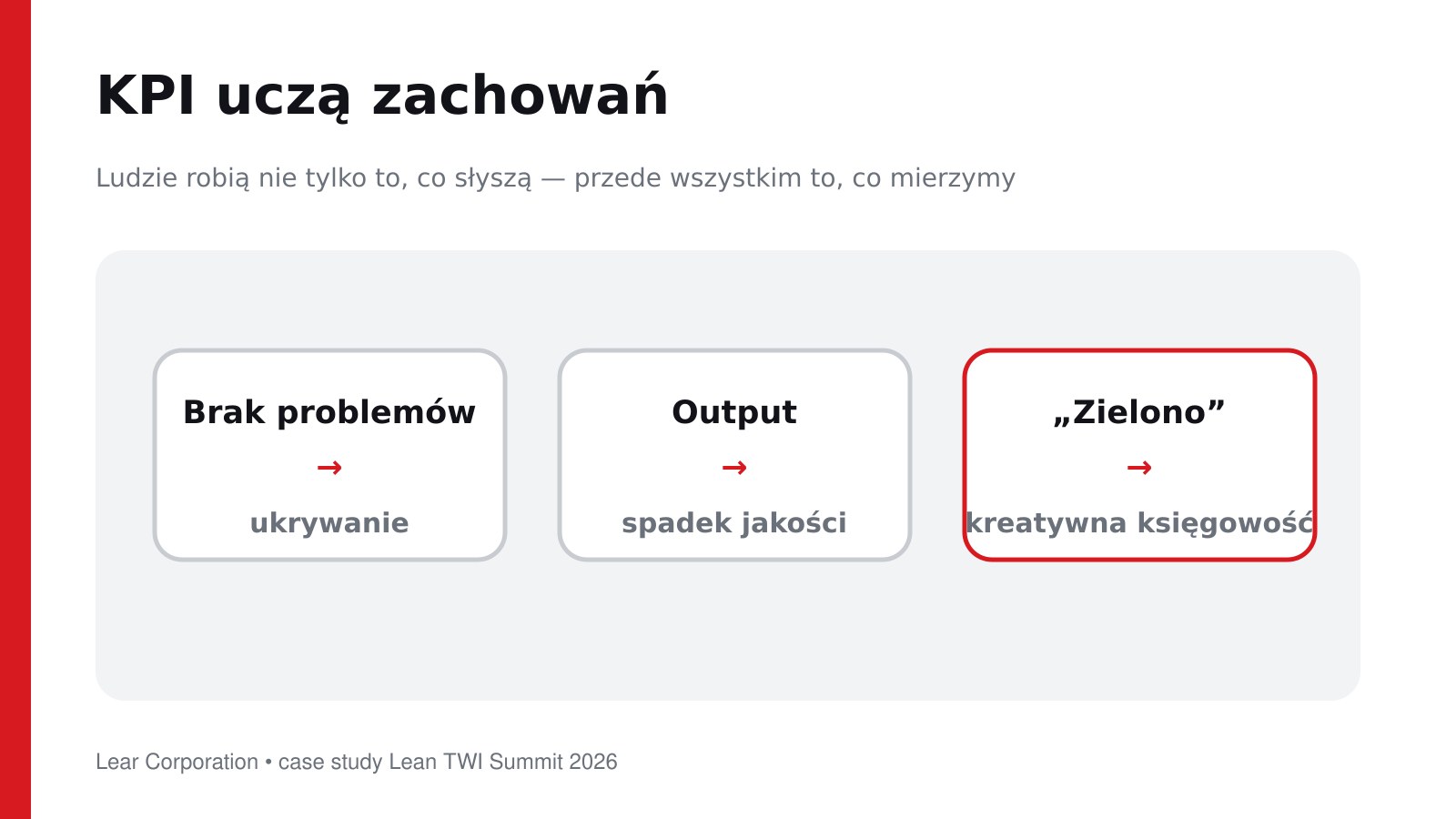
Lean implementation and KPIs that teach people to hide problems
People do not simply do what a leader says; above all, they do what the system measures and rewards. Rewarding an absence of problems increases the incentive to hide them. Focusing exclusively on output can undermine quality and stability. When “green” matters most, creative interpretations of data follow.
Good KPIs do not exist to confirm that everything is fine. They direct attention to deviations that require a decision. A manager’s role is not to take over every problem, but to build a system that works through its leaders. We discuss this further in the Leantrix article on the production manager’s role (in Polish).
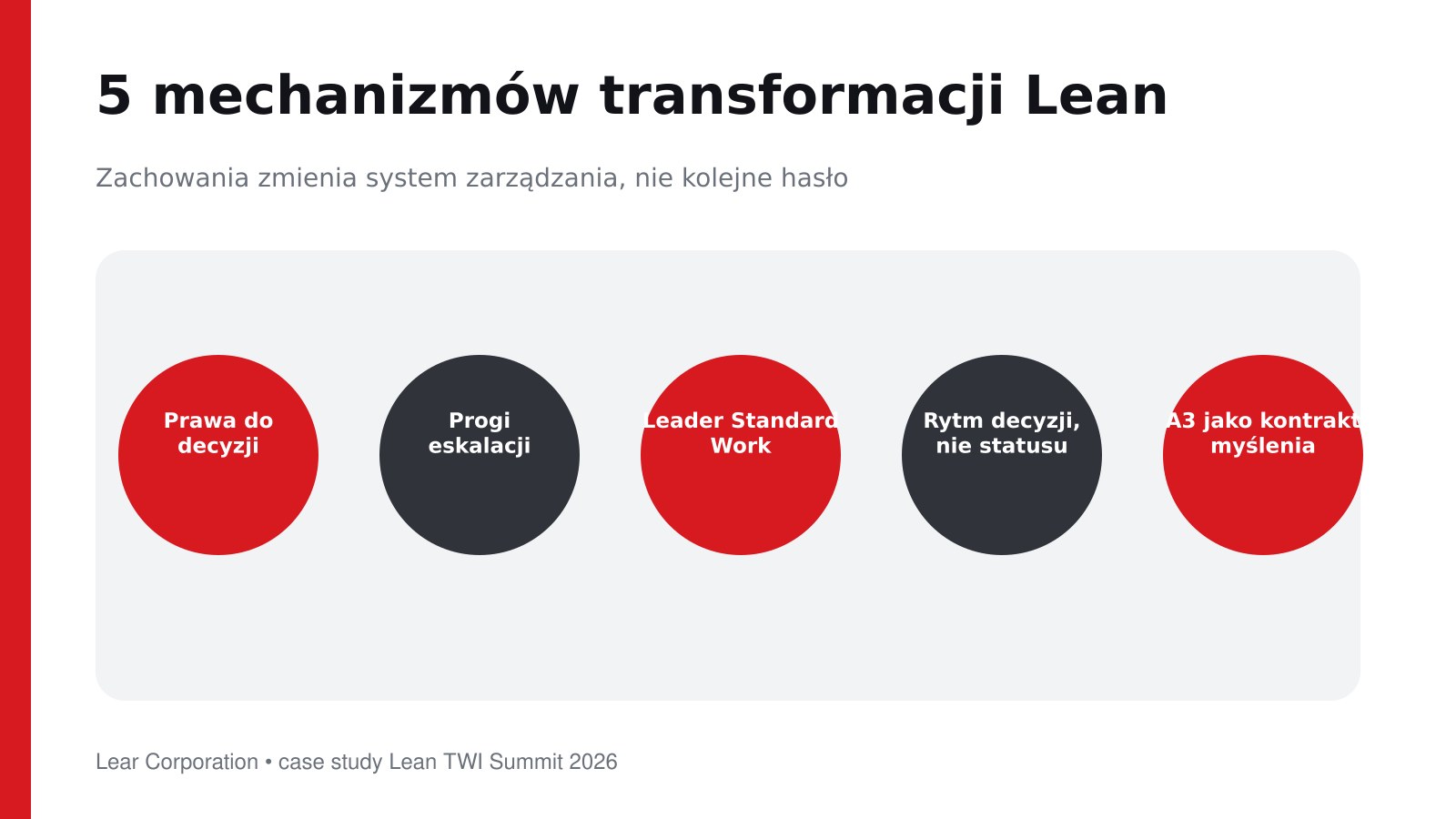
Five mechanisms that support Lean implementation
The presentation identifies five mechanisms that genuinely change behaviour. The first is clear decision rights: everyone knows who can resolve a matter without further approval. The second is escalation understood as a learning tool rather than informing on someone. The third is genuine Leader Standard Work, describing a leader’s repeatable behaviours.
The fourth mechanism is a daily routine focused on decisions rather than status reporting. The fifth is A3 used as an agreement about thinking: a shared logic linking the problem, facts, causes and actions, rather than a document produced solely for approval.
Lean implementation requires less micromanagement
Micromanagement can have several origins. It may be defensive—“I do not want to get blamed”; ritualistic—“this is how we do things here”; expert-driven—“I know best”; or chaotic—“I am losing track, so I try to control everything”. Each form can look like responsibility while making the team dependent on its leader.
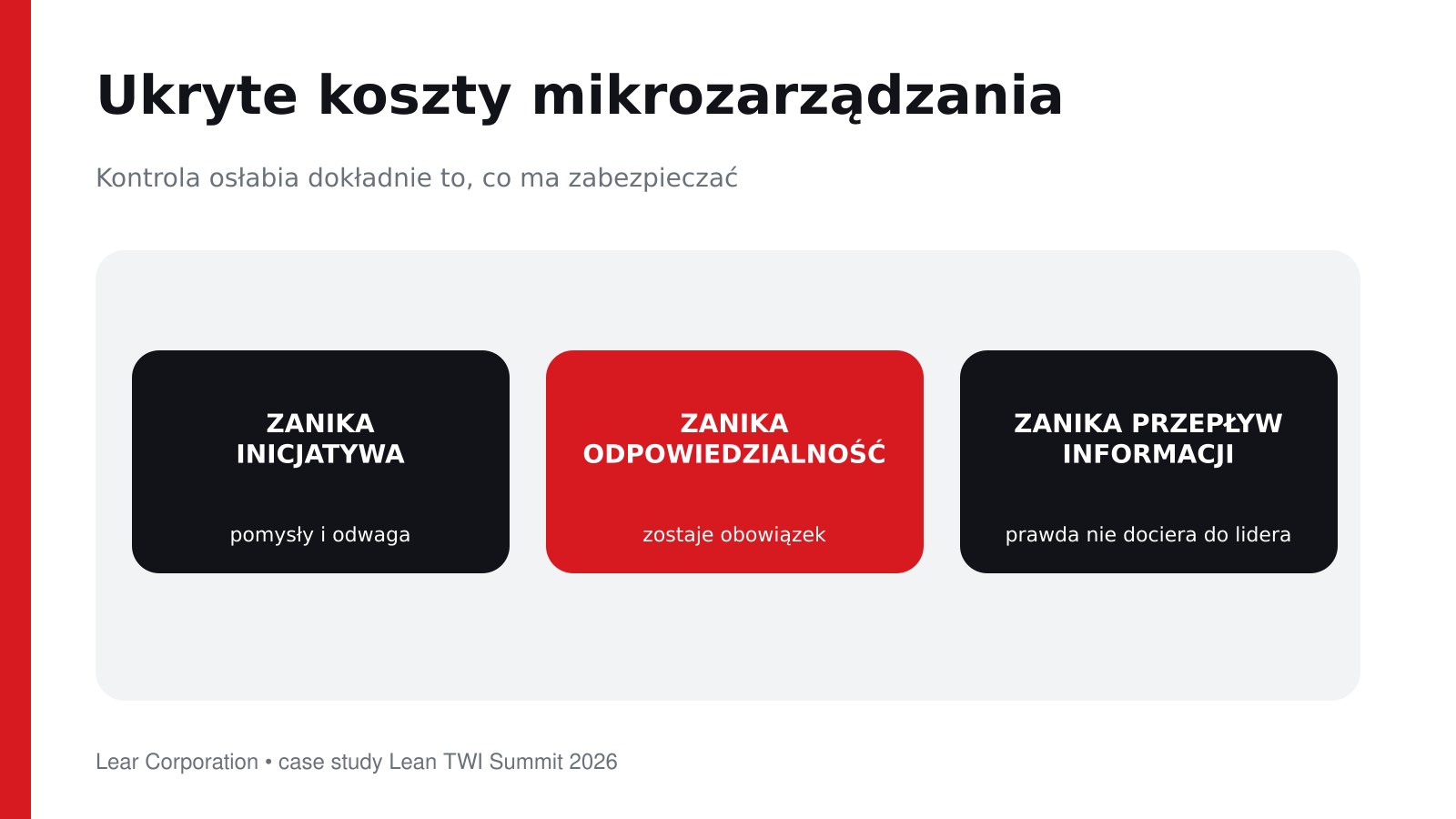
Its costs are hidden. Initiative fades because ideas will be corrected or rejected anyway. Accountability disappears, leaving people to follow instructions. Information stops flowing because people start saying what their manager wants to hear. The leader becomes indispensable, and the organisation becomes increasingly fragile.
How does Lean implementation help people move away from micromanagement?
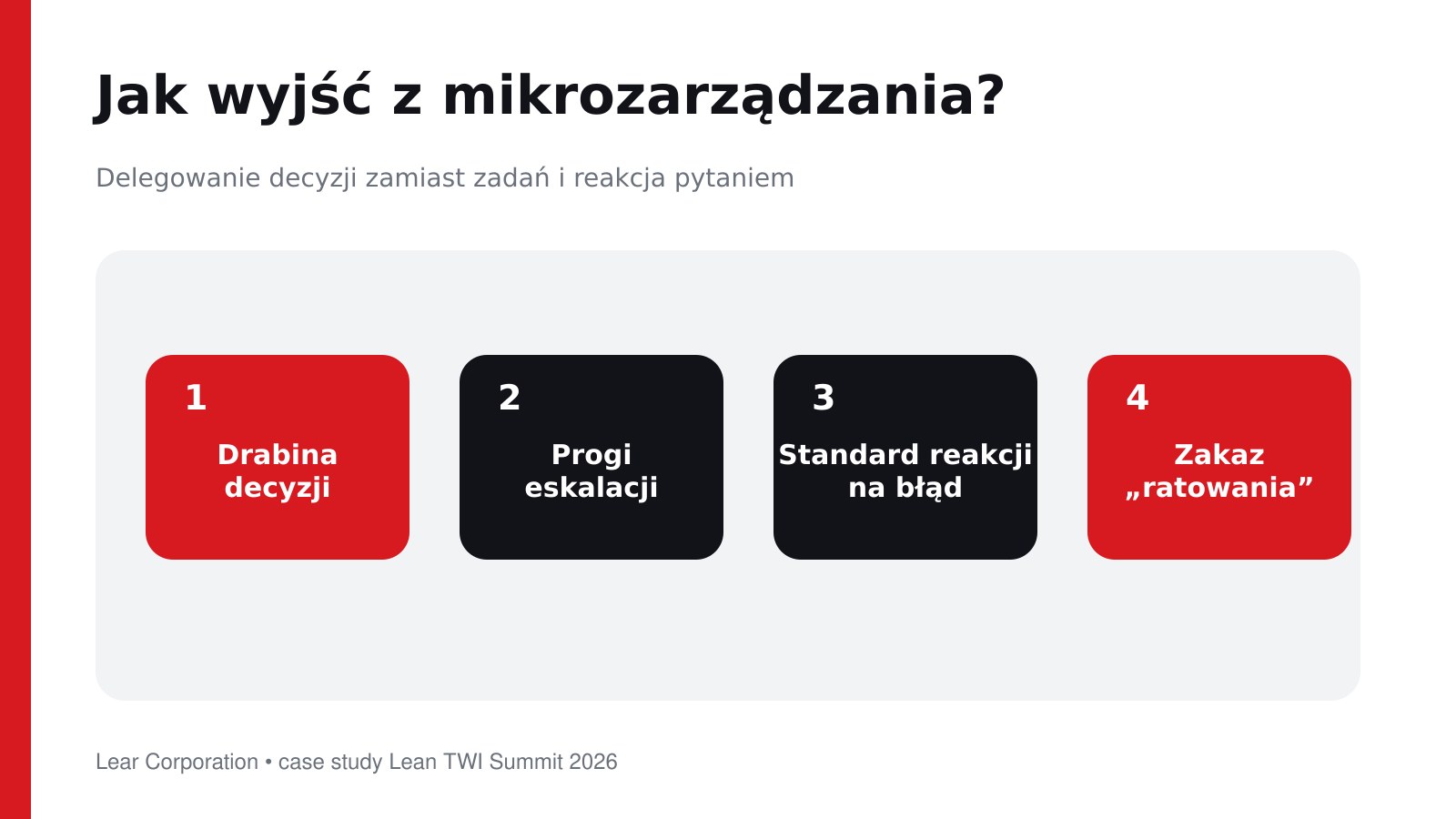
The first solution is a decision ladder: delegating decisions, not merely tasks. The second is escalation thresholds that clarify when the team acts independently and when it needs support. The third is a standard response to mistakes: starting with questions and facts rather than judgement and a ready-made answer.
The fourth practice requires leaders to restrain the instinct to “rescue”. Instead of offering a solution at the beginning of a conversation, the leader develops the team’s ability to think. This is the essence of “help people grow”: building courage, autonomy and clear boundaries, rather than simply being nice or withdrawing from responsibility.
The role of Continuous Improvement in Lean transformation
Mature Continuous Improvement does not avoid conflict. It makes disagreement about facts, priorities and problem-solving legitimate. A CI team should be able to point out waste, a missing standard or a process workaround, even when this disrupts a comfortable narrative of stability.
Conflict does not mean attacking people. It brings different hypotheses and interests into the open in pursuit of a shared goal. It requires psychological safety and disciplined use of facts. Read more about developing a Lean system rather than isolated tools in the Leantrix guide Implementing Lean Management step by step (in Polish).
Lessons from Lean implementation at Lear Corporation
- Hierarchy can support Lean if it is not used to conceal problems.
- The KPI system should reward the identification and resolution of deviations.
- Middle managers need changes to their working conditions as well as training.
- Delegating accountability requires clear decision rights and escalation thresholds.
- A leader’s success becomes visible when the team delivers results without their constant presence.
Lear Corporation is a global automotive technology supplier in Seating and E-Systems. Information about the company, its operations and organisational culture is available on Lear Corporation’s official website.
About the case study presenter
Sylwia Pawelczyk is a Continuous Improvement Manager at Lear Corporation and a Six Sigma Black Belt practitioner. She works on organisational improvement in the automotive industry, combining a process perspective with leadership development, decision-making systems and behaviours that support continuous improvement. At Lean TWI Summit 2026, she explained why hierarchy does not have to block Lean and which mechanisms help reduce micromanagement.
This article is based on materials presented by Sylwia Pawelczyk of Lear Corporation at Lean TWI Summit 2026 in Wrocław. It presents the organisational mechanisms and recommendations discussed by the speaker; it does not attribute undisclosed operational results to Lear Corporation.