

Customer value
Define the outcome, quality, timing and conditions the customer truly needs before improving individual activities.


Lean implementation and advisory
We help manufacturing and service organisations improve flow, reliability and daily management. The work starts with a business problem, continues through a real-process pilot in the gemba, and ends with a stable standard and an internal team able to improve it further.
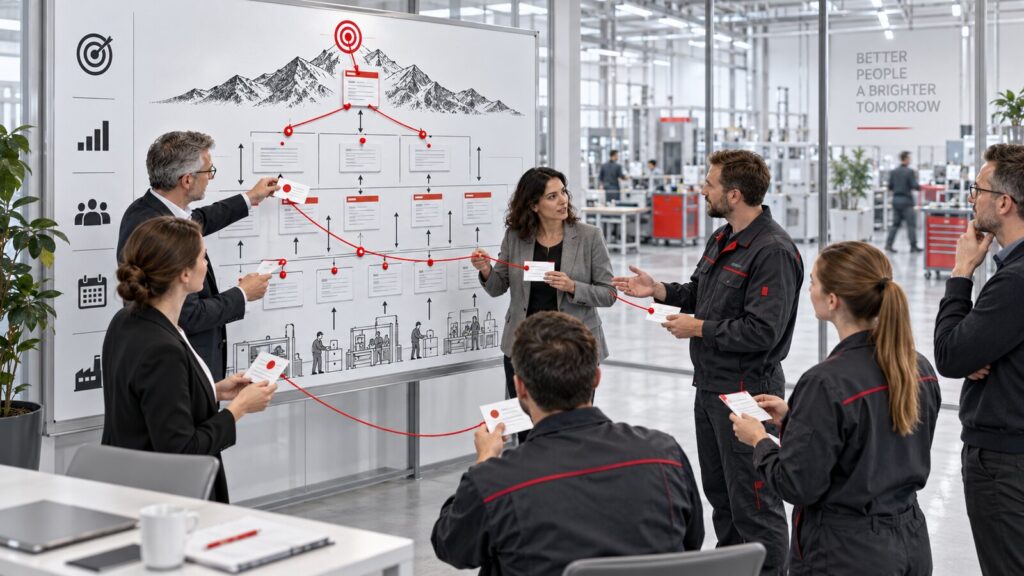
Lean Management is a management system for maximising customer value while reducing waste, instability and overburden. It connects end-to-end flow, visible standards, problem solving, leader routines and employee development into one operating model.
You can begin with one visible operational pain point or with a diagnosis of the entire management system. Each area below is a complete implementation path with its own measures, pilot and sustainment plan.
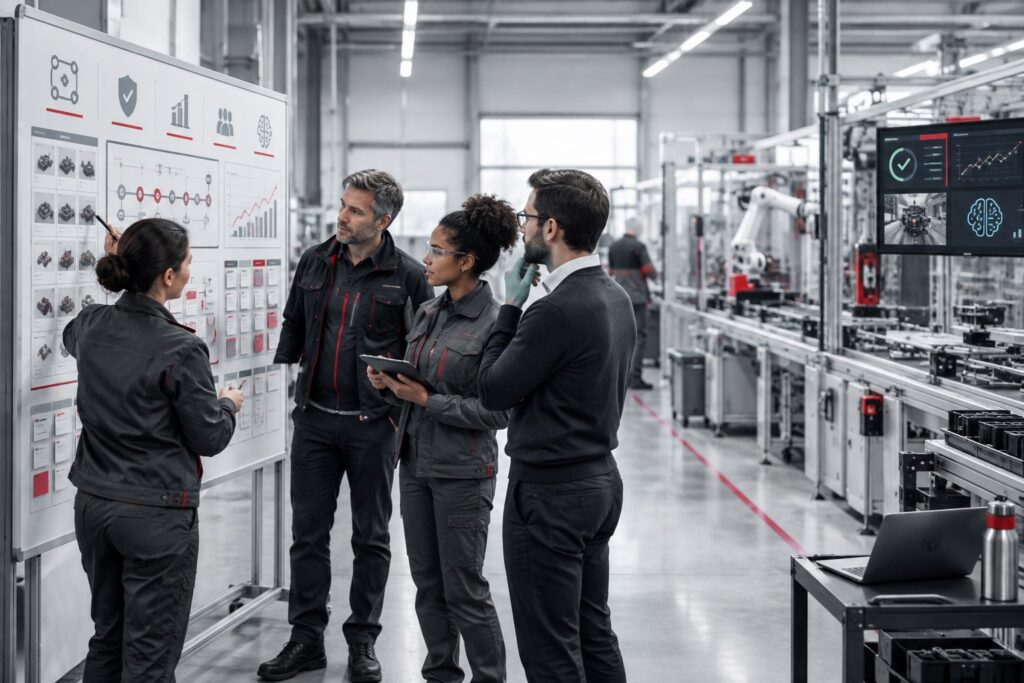 Value Stream ImprovementUse VSM, Kanban, Heijunka, FIFO and pull principles to shorten lead time, reduce work in progress and improve the flow of value.Explore VSM, Kanban and Heijunka →
 TPM and equipment effectivenessBring production and maintenance together to prevent breakdowns, remove availability losses and improve OEE.Explore Total Productive Maintenance →
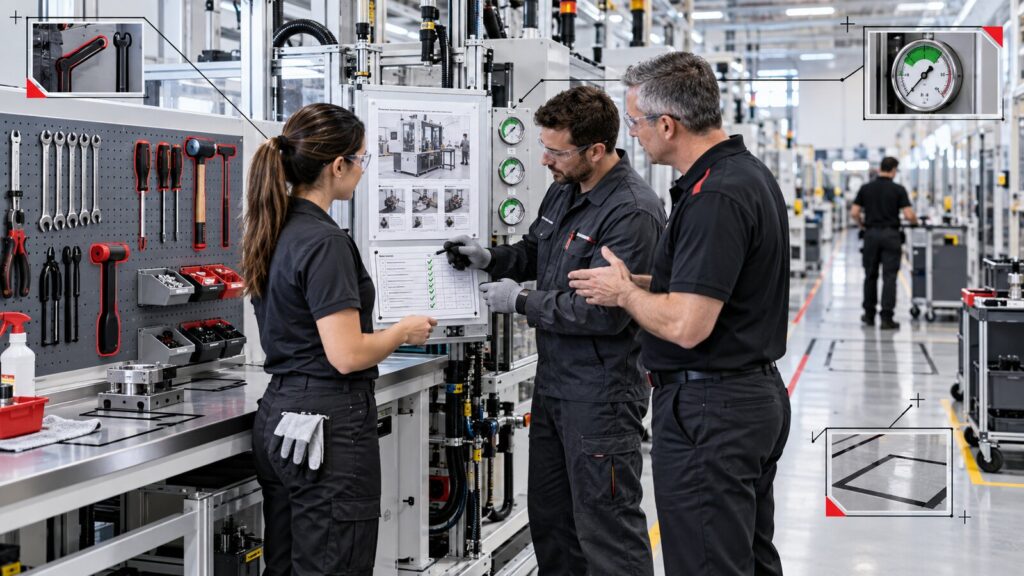 5S workplace systemCreate visible normal conditions that reduce searching, mistakes and risk while making abnormalities easier to see.Explore the 5S System →
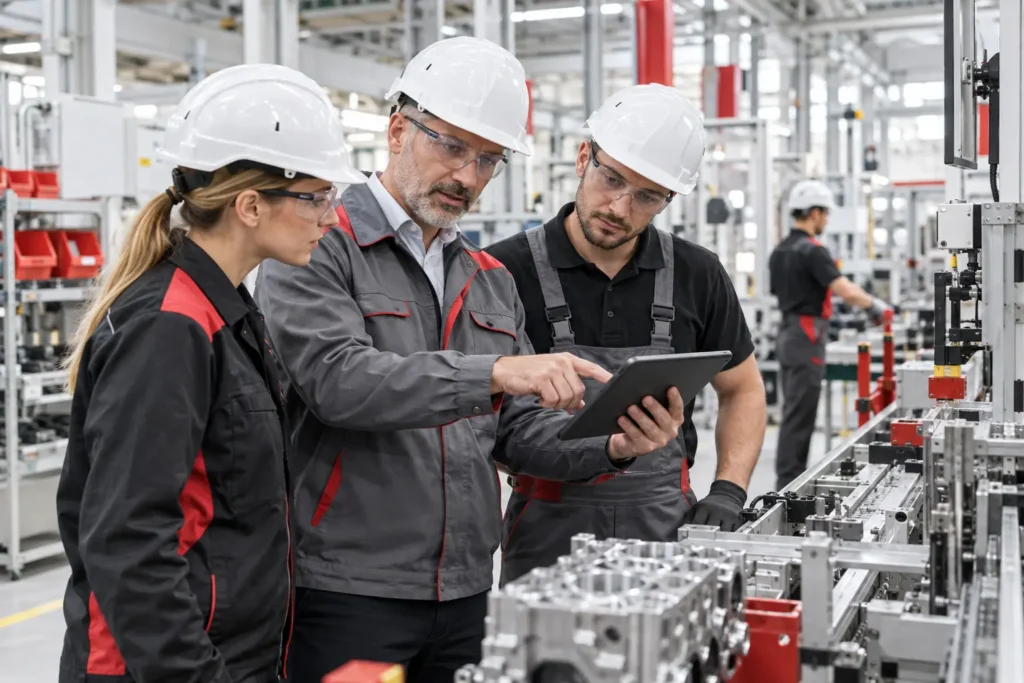 SMED quick changeoverSeparate internal and external work, improve preparation and standardise the sequence to increase flexibility and capacity.Explore SMED implementation →
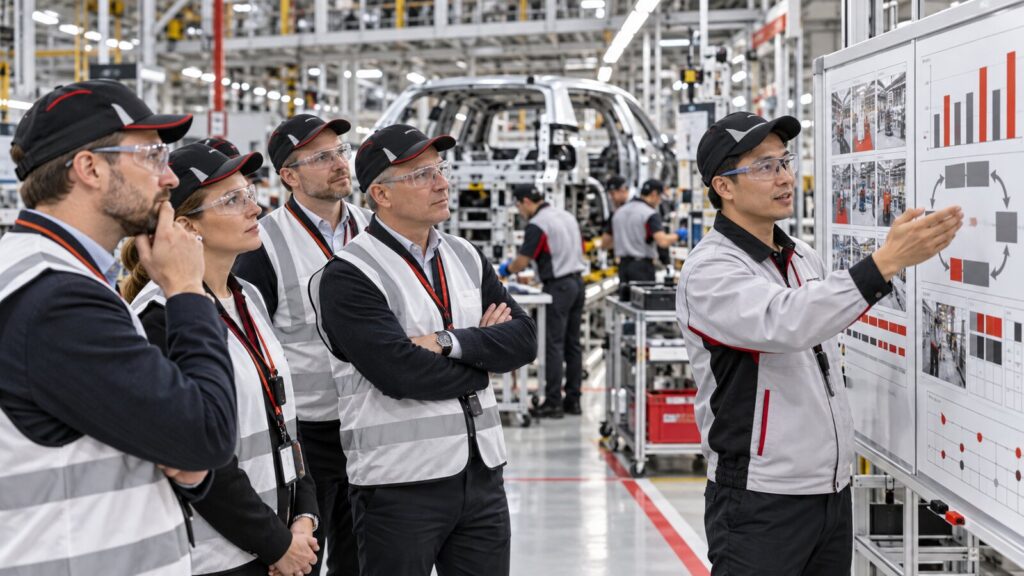 Problem SolvingBuild an organisational routine for defining problems, finding root causes, testing countermeasures and updating standards.Explore A3, 8D, PDCA and TWI →
Mature Lean connects the business direction with everyday decisions. Tools support the system, but they cannot replace clear ownership, leader behaviour and a reliable management rhythm.
Define the outcome, quality, timing and conditions the customer truly needs before improving individual activities.
See queues, inventories, hand-offs and constraints across the whole value stream rather than optimising functions in isolation.
Make the best-known method visible and teachable, so that deviations become a signal for action and Kaizen.
Respond to facts, investigate causes, test countermeasures and capture the learning in the updated standard.
Develop supervisors, instructors and process owners who can sustain the system without permanent consultant dependence.
Connect strategy, process measures, review routines and escalation with short PDCA cycles in the gemba.
The scope depends on the problem and organisational maturity. The constant elements are real processes, agreed measures, accountable owners and deliberate capability transfer.
Clarify the business need, current performance, customer impact, main losses, cultural conditions and process ownership.
Select a meaningful area, success measures, methods, team roles, governance rhythm and criteria for scaling.
Combine workshops, coaching and project work. The team tests solutions while leaders learn how to manage the change.
Confirm the result, standardise the process, establish review routines and transfer ownership to the client’s organisation.
If the method name is not obvious, begin with what people and customers experience. Diagnosis confirms the root problem and the best route into Lean.
| Visible problem | Likely starting point | Measures to establish |
|---|---|---|
| Long lead time, queues and high WIP | Value Stream Mapping and flow improvement | Lead time, WIP, queue time, delivery performance and constraint utilisation |
| Breakdowns and unstable equipment availability | Total Productive Maintenance | OEE, availability losses, failure frequency, maintenance backlog and basic conditions |
| Searching, unsafe conditions and inconsistent workplaces | 5S workplace system | Abnormalities, search time, audit trends, safety observations and leader response |
| Large batches caused by long changeovers | SMED quick changeover | Good-piece-to-good-piece time, external preparation, first-pass yield and batch size |
| Recurring quality or delivery problems | Problem Solving | Problem recurrence, containment time, root-cause confirmation and standard updates |
The LeanTrix Transformation Loop connects diagnosis, strategy, pilot implementation, capability building and scaling into one coherent programme.
Our case studies show how Lean, TWI and daily leadership practices work together in automotive, aerospace and other operational environments.
A long-term Lean and TWI journey built around operational standards, leadership routines and capability development across the organisation.
An example of connecting Lean Management, TWI and HR practices to develop people and improve operational performance.
A practical TWI implementation demonstrating how structured instruction strengthens standard work and repeatable results.
Explore direct feedback from organisations that have worked with LeanTrix on processes, standards, leadership and team capabilities.
We combine transformation leadership, TWI-based capability building, flow improvement and hands-on work with operational teams.
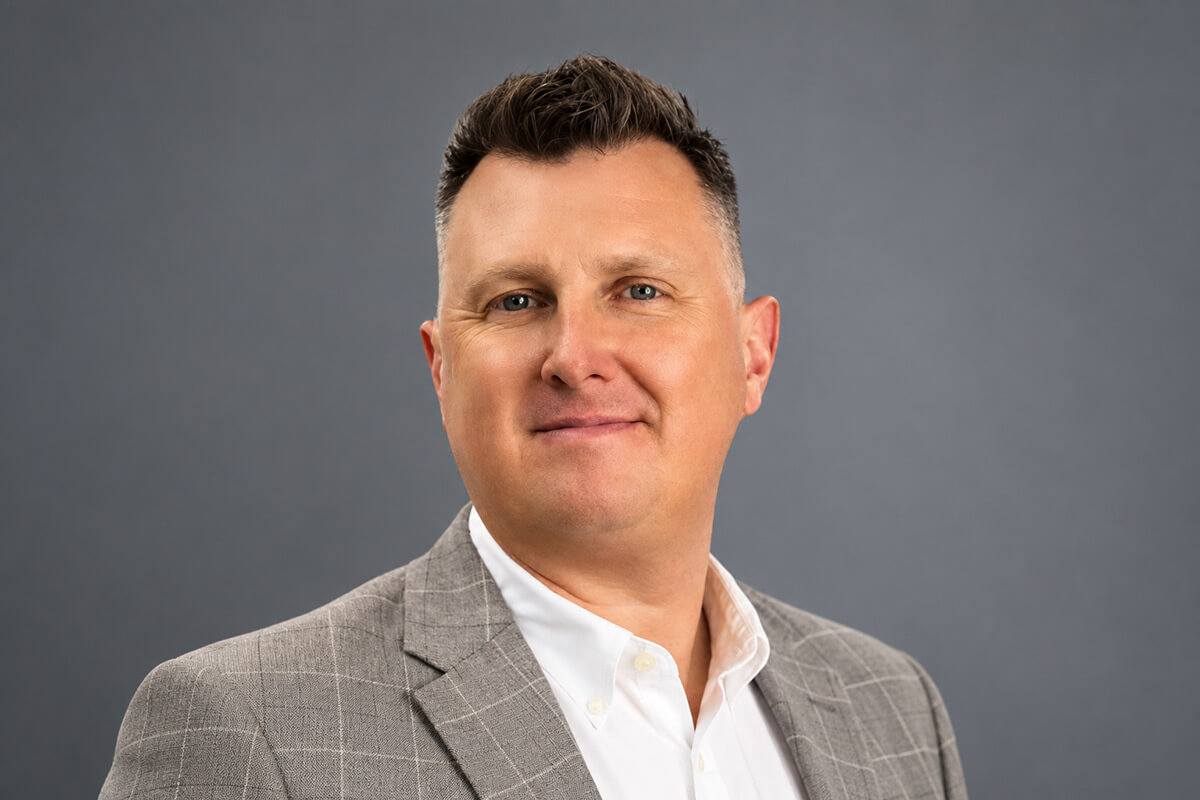
Lean and TWI transformation expert, author and practitioner focused on building durable organisational capabilities.
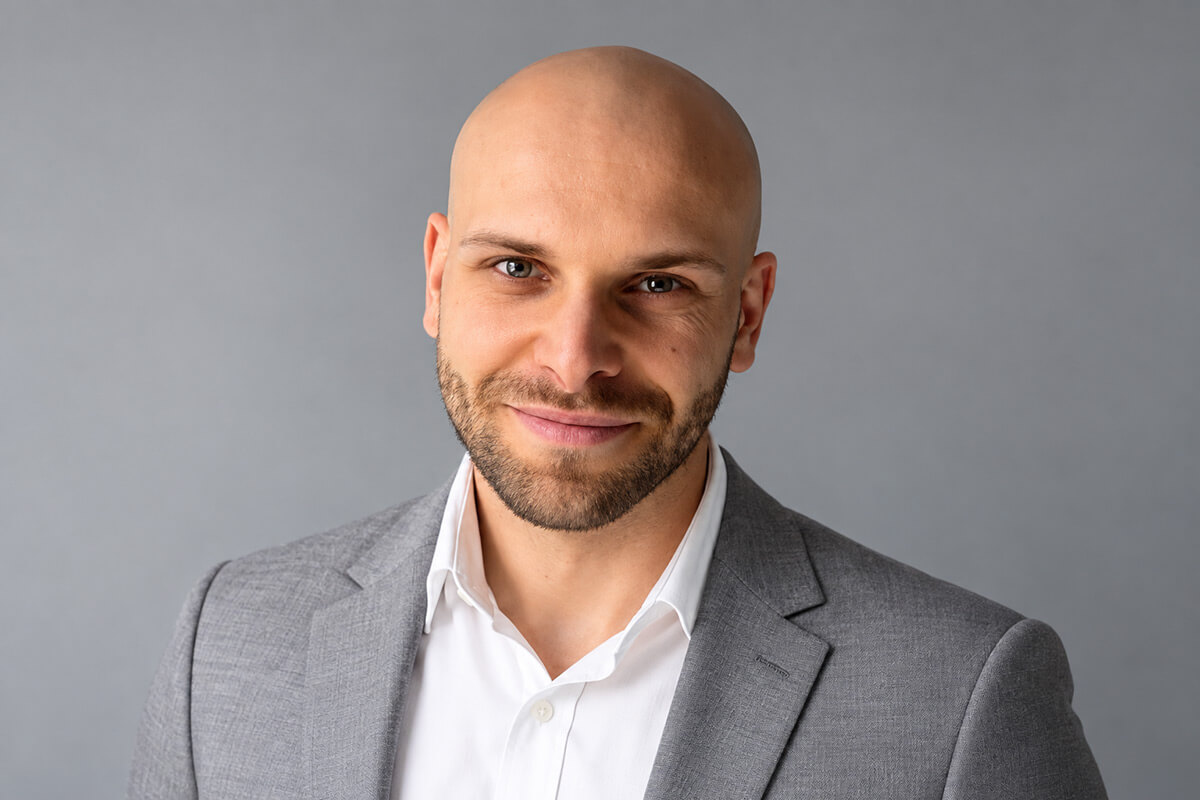
COO and Board Member, TWI Master Trainer; specialist in standard work, Kaizen and operational transformation.
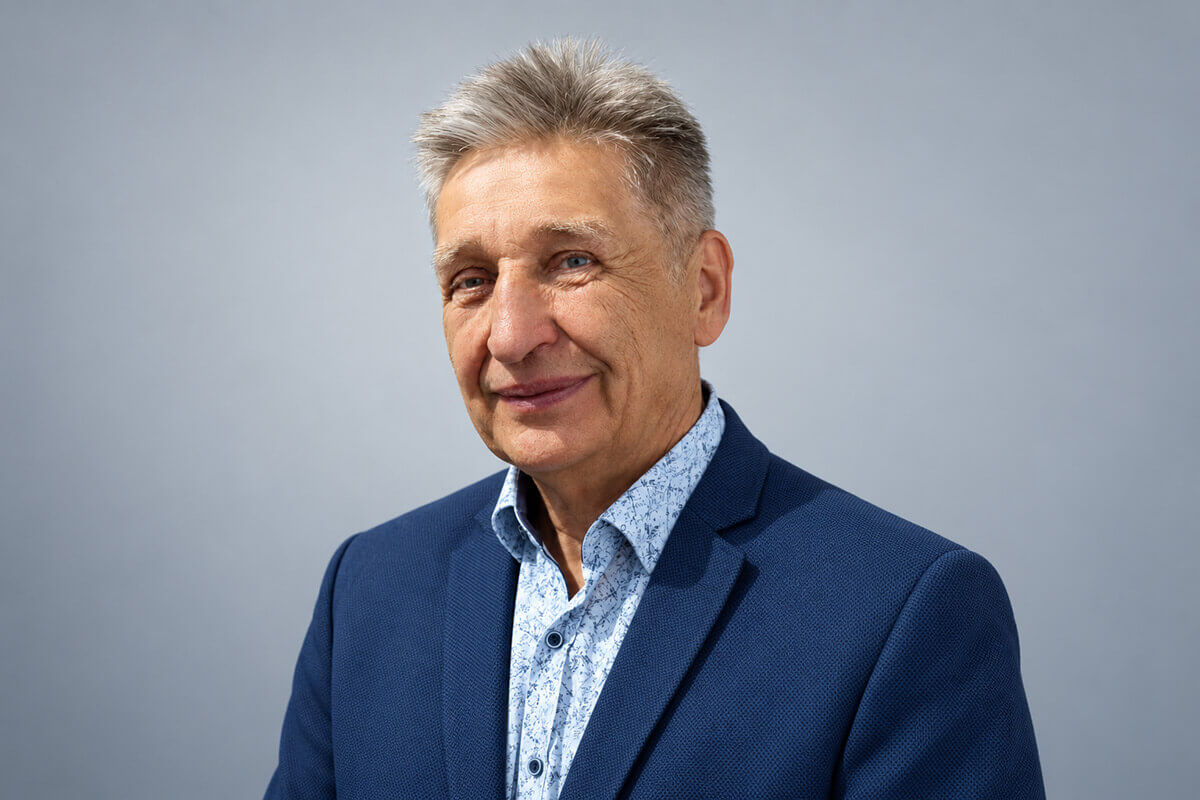
Lean practitioner specialising in value streams, production flow, VSM and implementation in the gemba.
Lean should solve a real organisational problem and leave the client more capable than before.
Start by defining the business problem, the customer impact, the process owner and a reliable baseline. Depending on the situation, the first move may be VSM, a Lean assessment, stabilising standard work or a focused pilot.
No. Customer value, flow, visible standards and structured problem solving can be applied in services, logistics, offices and healthcare. The design must reflect the work and operating context rather than copy factory tools literally.
Yes, when that method addresses a real problem and has an accountable owner, measures and a sustainment plan. 5S, SMED, TPM, VSM or Problem Solving can all be effective pilots.
Leaders set direction, observe work, develop people, respond to abnormalities and protect the standard. Without consistent daily leadership behaviour, Lean tools usually remain isolated initiatives.
Agreed customer and process results should improve, while the internal team’s ability to maintain standards and solve problems independently should grow. The number of workshops delivered is not a business result.
Training develops knowledge and skills. Implementation begins with a business problem, applies learning to a real process, measures before and after, coaches leaders and stabilises a new way of working. Training can support implementation, but cannot replace ownership of the result.
Tell us which result you need, where the process is unstable and what has already been tried. We will help determine whether the next step should be a diagnosis, focused pilot, audit or a broader transformation programme.
No generic training presentation and no ready-made answer. We begin by clarifying the problem, expected outcome and people responsible for the change.