Implementation case study
Connecting Lean, HR and TWI through improvement projects, multi-skilling and a culture of daily learning.
This case describes the implementation and company profile at the time of the original article; historical figures are retained. The implementation involved consultants who later joined LeanTrix.
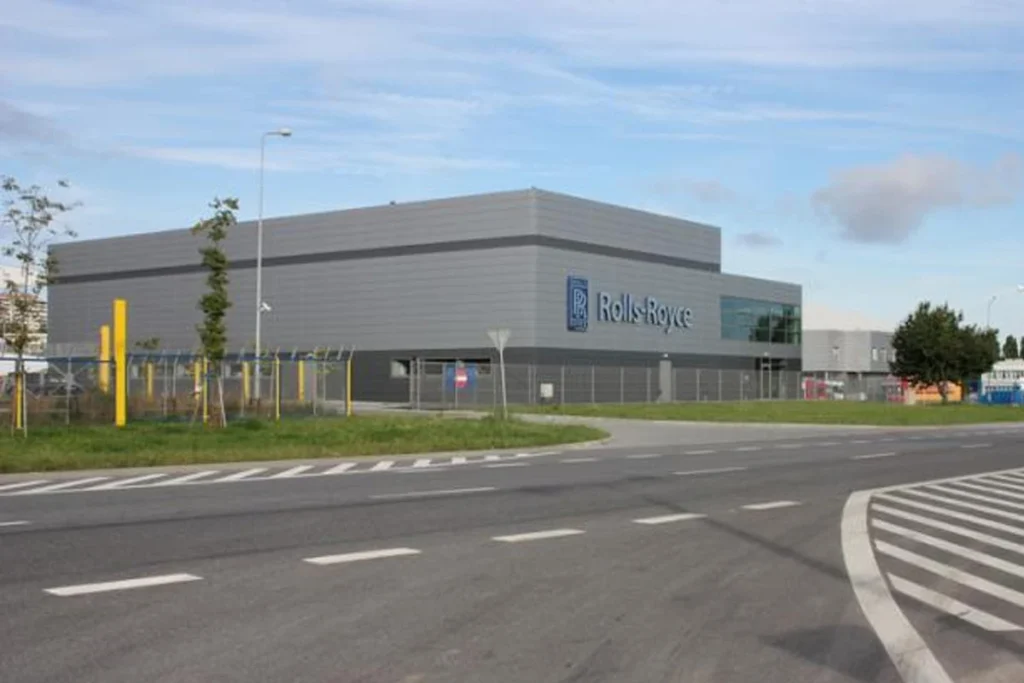
Lean HR at Rolls-Royce — a case study of Lean, TWI and HR implementation at the Gniew plant. The work involved consultants who later joined LeanTrix. At the turn of 2009–2010, Rolls-Royce Poland’s factory underwent major modernisation, marking the beginning of its journey towards continuous process excellence. This ongoing journey combined ingenuity and a commitment to improvement to create better possibilities. The account below retains the plant team’s perspective from the original article.
“Perfection is made up of small things, but it is itself a great thing” — attributed in the source to Sir Henry Rose.
Many companies deliberately pursue higher standards to provide better possibilities in a changing world. An increasingly common approach is to manage according to Lean Management. : creating a culture of continuous improvement.
Rolls-Royce: a new vision for Lean and HR
Our factory began its journey with many organisational changes. Several factors were critical: a development vision, determined leaders, a consistent indicator-based system, effective use of Lean and Six Sigma tools, and employee involvement. The first step was therefore a new approach to change management. We introduced the Gniew Improvement Journey (GIJ), requiring at least one improvement project in every business area. Business need was the main selection criterion, helping eliminate unnecessary changes. Each approved project defined its objective, deliverables, scope, schedule, team membership, team leader and key performance indicators (KPIs) (Polish). Projects were documented through project charters, monthly ABCD reports covering achievements, benefits, concerns and planned actions, and KPI results.
The role of leaders in GIJ
Project leaders were supported by a Business Improvement Black Belt (BIBB) and sponsor. Monthly GIJ meetings brought all project leaders together with the plant director, sponsors and BIBBs to review overall improvement progress. The review tool assessed process foundations, capability, value-stream flow and control. Projects and their status were displayed on two dedicated boards, one on the production floor and one in the office building’s main lobby. Anyone interested could attend the regular meeting. Projects were also discussed during the plant director’s monthly employee meetings. Project leaders explained the scope, why the work mattered and its expected benefits. These presentations helped involve a growing number of employees.
GIJ at Rolls-Royce Poland
Over the five years described in the article, GIJ enabled many projects to be completed. Employees’ ingenuity kept the regular meetings active. Project leadership gradually moved closer to daily work: directors led the first projects, followed by managers, supervisors and senior specialists. By the reporting point, specialists, technicians, engineers and employees in independent roles were leading projects.
The role of Lean and HR in GIJ implementation at Rolls-Royce
HR played an essential role throughout the process. Business needs and the development vision required the function to introduce or improve several areas.
Employee competence
One key area was helping employees answer questions such as how to lead projects and which tools to use. Questions about management capability and successful Lean implementation led us to create skills matrices in every business area. They covered critical skills and knowledge needed for projects and daily work. A dedicated Lean training programme ranged from Lean factory simulations to Training Within Industry (TWI) training for production employees and planning development using APICS methodology (American Production and Inventory Control Society).
The matrices defined employees’ core competencies and went further by introducing multi-skilling for production employees, enabling development across several areas.
The programme also developed Green Belts (Polish) to lead projects using Lean Six Sigma. Yellow Belt training became a foundation course for every employee, supporting each person’s contribution to improvement in daily work.
5S as a foundation
An important element in building continuous improvement culture was 5S implementation (Polish), which was our starting point in production. It helped involve the whole workforce. To sustain activity, we ran a 5S competition in which departments competed for first place.
The “I Have an Idea” programme
The factory introduced “I Have an Idea”, a Lean improvement programme directed at shop-floor employees, who know their work best. It supported continuous improvement through small steps and limited investment. Even apparently minor changes could substantially improve the effectiveness of our work (Polish). Employee ideas helped the factory operate more economically, safely and productively. The best ideas were recognised at all-employee meetings, and project status was displayed on the information board. Improvements included a fixture for rotating parts during welding, workplace reorganisation and workstation standardisation.
Training Within Industry at Rolls-Royce Poland
The Lean journey never ends; it is a continuous process of improvement. One important development was TWI implementation at the factory. It began the development of a consistent, effective and straightforward internal on-the-job training system. An organisation that can adapt production capacity quickly needs a highly skilled, flexible workforce. This requires standardised training, suitable trainers, shorter learning times and systematic development. We therefore chose TWI, a programme that develops supervisors’, managers’ and employees’ skills in Job Instruction (JI), Job Relations (JR), Job Methods (JM) and Job Safety (JS). TWI provided an important foundation for Lean Management. The TWI programme originated in the United States in the early 1940s and was used to develop new and inexperienced supervisors and managers.
TWI objectives at Rolls-Royce Poland and the Lean HR approach
The aim of introducing TWI-based on-the-job training was to train shop-floor employees effectively. The factory reported the following benefits:
- shorter employee training time,
- consistent knowledge transferred through Job Breakdown Sheets (JBS), regardless of who delivered the instruction,
- continuous development of existing employees so they could work effectively and without errors,
- less rework and higher productivity,
- greater employee flexibility, helping shorten production-order lead times.
All managers, supervisors, production employees and HR employees completed Job Instruction training, developing the ability to prepare Job Breakdown Sheets (JBS) (Polish). TWI Job Methods followed, showing how to improve existing methods to produce more good-quality products in less time with the same team, machines and materials. This module used a Kaizen Event approach: training took place on the production floor, where we learned to improve actual working methods. The final two modules addressed Job Safety, reducing accident risk and improving adherence to safety rules, and Job Relations, improving how supervisors resolved people-related problems. This helped address resistance to change and productivity losses caused by unresolved relationships. TWI embedded regular Kaizen workshops in the factory’s culture and supported effective training of inexperienced employees.
Summary: Lean HR at Rolls-Royce
Introducing simple Lean tools helped involve employees so that continuous improvement became a normal part of daily work. PDCA thinking, 3C sheets and brainstorming all contributed.
Lean is a way of thinking for factory employees. Many of us use its tools to improve, remove waste and increase effectiveness. This mindset focuses attention on added value, problem-solving and ongoing business improvement, supported by management and coaching.
Identifying and eliminating waste in every form became part of how we worked. Everyone could learn through their organisational role and individual development plan. Lean thinking was expected from all employees, while leaders created an environment where improvement was normal. Lean Sigma experts — Green Belts and Business Improvement Black Belts — supported priority-setting, selection of effective methods and timely delivery of results.
Lean depends on daily thinking, changes in behaviour and action to improve how work is done. The source returns to its opening thought about perfection emerging from small things. Small improvements with limited investment can have a substantial effect on effectiveness. From HR’s perspective, this means doing the right things in the right place every day: setting standards, ensuring employees understand them and know what is expected, and creating an environment where effective leadership enables everyone to participate in continuous improvement for a changing world.

Monika works with business leaders, focusing on employee development to provide the organisation with the right talent, build the right culture and optimise its structure. She is responsible for developing and implementing processes and policies that ensure consistent, standardised HR services, supporting the organisation’s effectiveness and growth.

I am a promoter of Lean Management and the Training Within Industry program. I am a practitioner. I co-create many startups. Since 2015, I have been the CEO of Leantrix - a leading Lean consulting company in Poland, which, starting from 2024, organizes one of the largest conferences dedicated to lean management in Poland - the Lean TWI Summit. Since 2019, I have been the CEO of Do Lean IT OU, a company registered in Estonia that creates the software etwi.io, used by dozens of manufacturing and service companies in Europe and the USA.