Implementation case study
From pilot airbag-module lines to internal training capability: a practical account of TWI implementation through PDCA.
This case describes the implementation and company profile at the time of the original article; historical figures are retained.
TWI at Autoliv — an implementation case study in the automotive industry (Polish). This article describes Training Within Industry (TWI) implementation at Autoliv Poland sp. z o.o. in Jelcz-Laskowice. It presents observations from Autoliv employees and the LeanTrix consultant who supported the programme.
The Autoliv Group
Autoliv was founded in Vårgårda, Sweden, in 1953 and has manufactured complete automotive safety systems throughout its history (Figure 1). Its vision is to reduce road accidents, injuries and fatalities. It designs, manufactures and sells advanced vehicle protection systems. The source describes the group at the time as:
- a leader in safety-system technology and sales, with approximately USD 9 billion in sales,
- a supplier to all leading vehicle manufacturers,
- 80 production plants in 29 countries, 10 technical centres in nine countries and 21 crash-test tracks,
- more than 64,000 employees, including 4,000 in research, development and engineering.

Figure 1. Autoliv’s product portfolio. Original figure in Polish.
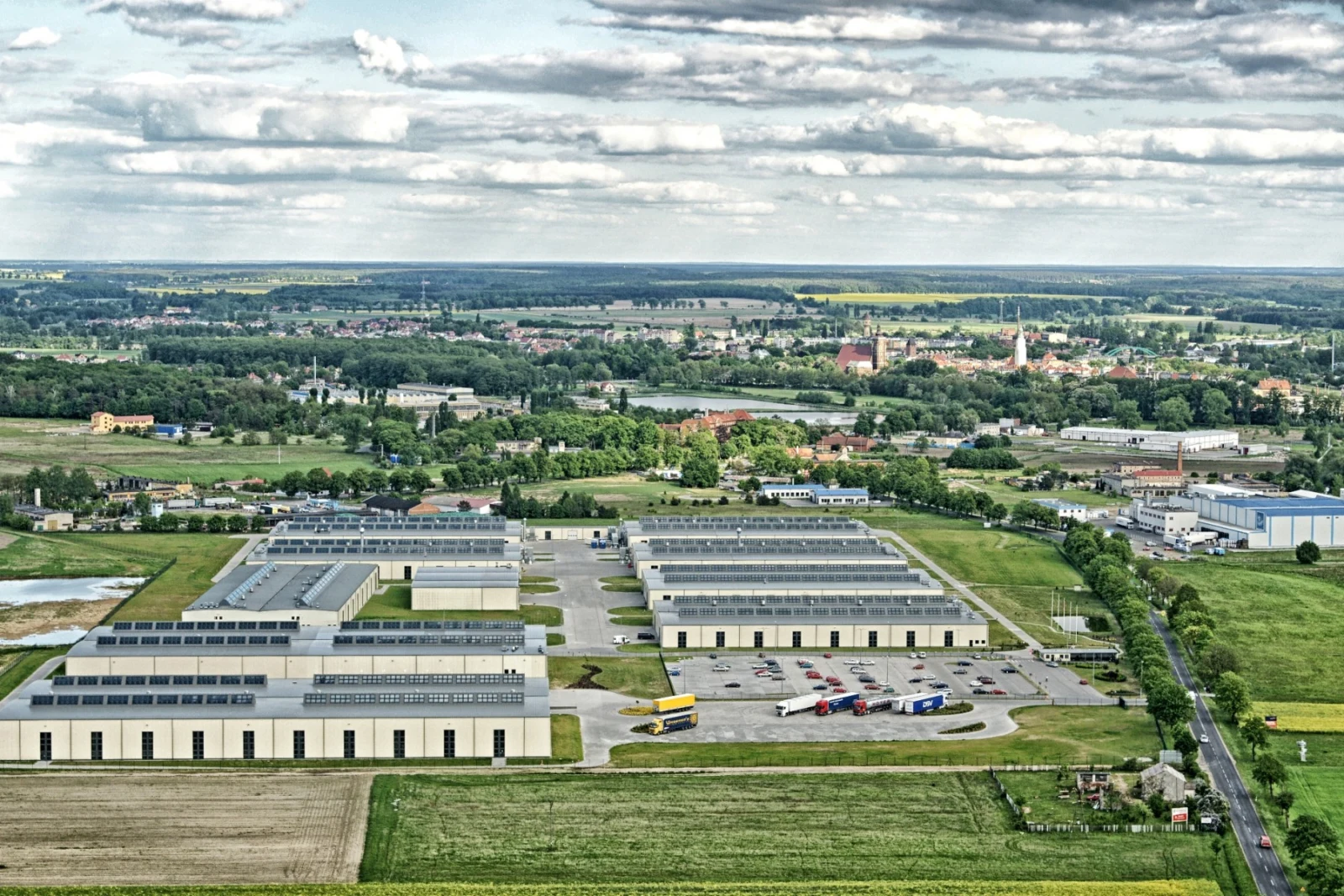
At the time described, Autoliv operated four production plants in Poland: AEP and APT in Oława, and APR and APA in Jelcz-Laskowice. The Jelcz-Laskowice factories had produced seat belts since 2002 and airbag modules since 2010, with more than 1,500 employees in total.

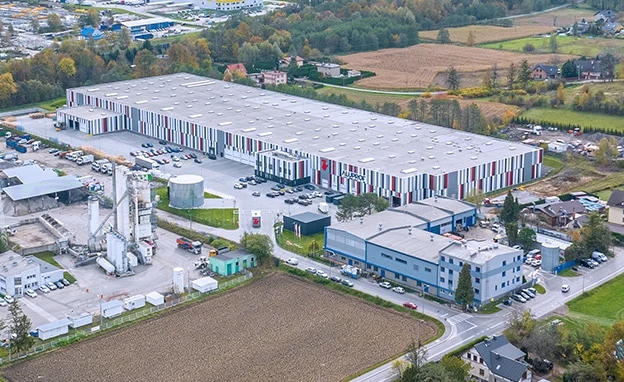
Figure 2. Autoliv Poland sp. z o.o. in Jelcz-Laskowice.
The TWI project described here was launched on selected airbag-module production lines at the APA plant in Jelcz-Laskowice.
Why TWI at Autoliv?
Training Within Industry is a comprehensive programme for developing team leaders’, supervisors’ and managers’ skills in Job Instruction (TWI JI), Job Relations (TWI JR) and Job Methods (TWI JM). TWI was developed in the United States during the Second World War to help leaders train people entering industrial employment for the first time, particularly women and young people. The programme delivered substantial benefits to American industry and supported the wartime production effort. Its methods use a structured improvement logic associated with the PDCA cycle. After the war, TWI became a major component of assistance to Japanese businesses. It grew from a productivity method into a way of working in many organisations and is widely recognised as an influence on the Toyota Production System and later Lean manufacturing.
TWI and KPIs
Implementing TWI in manufacturing can improve key performance indicators (KPIs) such as productivity, breakdown losses, delivery performance, quality and safety. Losses in these areas are often associated directly with human errors. Lean thinking addresses the root causes of problems. For human errors, these may include:
- missing or poorly delivered on-the-job instruction,
- employees not following work standards because those standards are poorly designed,
- the absence of an employee audit and follow-up process.
The TWI programme addresses the root causes of human errors through effective on-the-job instruction, follow-up and improvement of working methods (Kaizen).
At Autoliv in Jelcz-Laskowice, TWI targeted specific production challenges:
- growing employment, with more than 300 new employees planned for 2016,
- frequent recruitment of temporary employees,
- frequent movement of employees between production lines,
- long onboarding times for new employees,
- difficulty experienced employees had in transferring practical feel, techniques and useful tips, prolonging onboarding,
- failure to explain why work had to follow the agreed standard, leaving employees without sufficient understanding,
- experienced employees’ reluctance to use instructions that often failed to reflect actual production practice.
Developing competence through TWI
Skills development is central to TWI implementation. Competence combines knowledge, practical skill and responsibility. At Autoliv, development followed PDCA. Training in the PLAN phase built knowledge of TWI. Practice in DO developed skills. Certification and independent use of the methods in CHECK introduced responsibility. ACT developed internal experts who could both apply TWI and teach others. Figure 3 shows this progression.

Figure 3. Development levels for employees involved in TWI. Original figure in Polish.
Between initial training (1) and certification (3) lies practical application (2). Training providers are often asked to build lasting employee awareness and engagement through a workshop alone. The source argues that a workshop can create enthusiasm and willingness to use Lean tools, while deeper understanding develops through practice and certification. TWI often stalls when this practice phase is missing, commonly because people have no clear objectives before training and no allocated time to work towards them. Senior management therefore has a crucial planning role. Learning to drive offers a useful analogy: classroom learning provides level 1; driving under an instructor’s supervision develops level 2. Practice may involve dozens of lessons over several months, during which the learner is not yet qualified to drive independently. Passing the practical test provides the licence at level 3. Becoming a driving instructor later requires further assessment and qualification at level 4. The same distinction applies to developing TWI instructors and trainers.
The TWI implementation strategy at Autoliv
TWI implementation at the Autoliv plant in Jelcz-Laskowice followed PDCA. Table 1 presents the detailed sequence, key points, reasons and actions taken at Autoliv.
Table 1. TWI implementation at Autoliv in Jelcz-Laskowice.
| Implementation stage | Key points | Reasons | Actions at Autoliv |
|---|---|---|---|
| 1. Plan implementation (PLAN) | 1. Select the pilot line | 1. Build practical experience on a defined process so that subsequent factory-wide rollout is more effective. | The project selected several airbag-module production lines that were critical to quality and the end customer. |
| 2. Select the implementation team | 2. Choose experienced operators and leaders with deep job knowledge so that their standards reflect the real working method. | The implementation team comprised the people with the most experience on the selected production lines. | |
| 3. Define objectives | 3. Set measurable objectives before the practical workshop so that participants understand its purpose. | Before the workshop, selected team members received a clear objective for the DO phase: prepare standardised work instructions for specified operations. | |
| 4. Deliver the practical workshop | 4. Transfer theoretical and practical knowledge, and develop standardised work instructions under a TWI expert’s guidance. | The workshop lasted two days and produced five standardised work instructions. Every participant practised the TWI instructor role, with a LeanTrix consultant overseeing the process. | |
| 2. Practise the knowledge (DO) | 1. Allocate practice time | 1. People implementing TWI need time to practise, including time to prepare standardised work instructions. | Four experienced leaders received computer workstations and the time needed to prepare all instructions for the selected production lines. |
| 2. Consult a TWI expert | 2. Questions and uncertainties arise during practice, so practitioners need expert support. | The LeanTrix consultant was available to the team. Numerous telephone discussions clarified questions about preparing standardised work instructions. | |
| 3. Certify the implementation team (CHECK) | 1. Have a TWI expert review the instructions | 1. A correct standardised work instruction is the foundation of effective TWI JI training. | Before instruction delivery, the LeanTrix consultant reviewed the prepared instructions with team members as part of the audit process. |
| 2. Check how team members deliver on-the-job instruction | 2. TWI JI is straightforward in theory but can conflict with trainers’ established habits. Several practical checks may be needed to confirm that leaders use it correctly. | Each of the four selected team members completed practical audits on real production processes with the LeanTrix consultant. In every case, two audits were sufficient for certification as a TWI instructor. | |
| 3. Certify TWI instructors | 3. Certification formally confirms the ability to prepare standardised work instructions and deliver instruction using TWI JI. | After the audits, the LeanTrix consultant awarded TWI instructor certificates to all four selected team members. | |
| 4. Develop internal experts — Train the Trainer (ACT) | 1. Select a TWI trainer candidate | 1. A TWI trainer is both a practitioner of TWI JI and a person able to teach others. | One certified TWI instructor was selected for trainer development. |
| 2. Complete Train the Trainer development | 2. The course teaches selected instructors how to develop employees who have no previous knowledge of TWI. | The LeanTrix consultant and trainer candidate prepared a company-specific TWI presentation, practised workshop delivery and developed an instructional video for workshops. | |
| 3. Co-deliver a workshop with the TWI expert | 3. The expert supports the trainer candidate during their first practical TWI workshop. | A one-day workshop was delivered for experienced employees unfamiliar with TWI in practice. It had two parts: theory delivered by the LeanTrix consultant and practice delivered by the trainer candidate. | |
| 4. Certify the TWI trainer | 4. Demonstrated ability to deliver a practical TWI workshop leads to certification and a trainer diploma. | After the workshop, the selected person received a TWI trainer diploma. This confirmed their ability to deliver practical workshops, certify TWI instructors and support practitioners independently, without assistance from the LeanTrix consultant. |
Benefits of TWI implementation at Autoliv
The programme began at APA in Jelcz-Laskowice in July 2015. At the reporting point, it covered almost 20% of airbag-module production lines. The intended scope was both Jelcz-Laskowice factories, and initial TWI activities had also begun at Autoliv’s Oława plants.
The first benefits were visible in employees’ behaviour and attitudes on the pilot lines. TWI emphasises key points, including practical techniques and tips, and the reasons behind them. This helps employees understand their work and reduce errors linked to insufficient knowledge. On the pilot lines, an operator asked “Why do you perform this operation in this particular way?” was unlikely to answer “Because my supervisor told me to.” Employees understood why a particular method was required and its effect on the process and end customer. If they forgot a detail, they could refer to the standardised work instruction used during their TWI training. The team expected this approach to improve company KPIs over the longer term.
Figure 4 shows how an instruction for an example operation changed through TWI. The new instructions were clearer and easier to understand, and included practical techniques and reasons that build understanding. TWI instructors use these standardised work instructions to train employees through the Job Instruction method.


Figure 4. A work instruction before and after TWI implementation. Original documents in Polish.
At Autoliv, the principle was to address processes rather than blame employees for human errors. Supervisors are responsible for designing and defining processes and for addressing the conditions that allow errors to occur. The TWI Job Instruction motto is: “If the worker hasn’t learned, the instructor hasn’t taught.” This principle underpins employee development at Autoliv. Respect for employees, demonstrated through effective training, is one of the company’s key values.
Co-author:
- Iwona Diug — APA Production Area Manager at Autoliv Poland sp. z o.o., with ten years at Autoliv at the time of writing.

I am a Talent Acquisition Specialist with a strong belief in growth, change, and continuous learning. After nearly 20 years in various business roles, including quality, production, and logistics, I decided to redefine my professional path and focus on what truly drives me – helping people develop their careers. Working in a greenfield environment allows me to contribute across multiple areas: recruiting for global, managerial, and specialist positions; hiring leaders, production, and warehouse employees; supporting the design and implementation of onboarding and training programs; building employer branding initiatives; participating in CSR strategy development; and conducting internal workshops and training sessions. I also take part in numerous training programs and conferences, occasionally as a speaker.
Currently, at IONWAY, I combine my extensive business experience with my passion for people, creating opportunities for growth and shaping a culture of continuous development.

I am a promoter of Lean Management and the Training Within Industry program. I am a practitioner. I co-create many startups. Since 2015, I have been the CEO of Leantrix - a leading Lean consulting company in Poland, which, starting from 2024, organizes one of the largest conferences dedicated to lean management in Poland - the Lean TWI Summit. Since 2019, I have been the CEO of Do Lean IT OU, a company registered in Estonia that creates the software etwi.io, used by dozens of manufacturing and service companies in Europe and the USA.