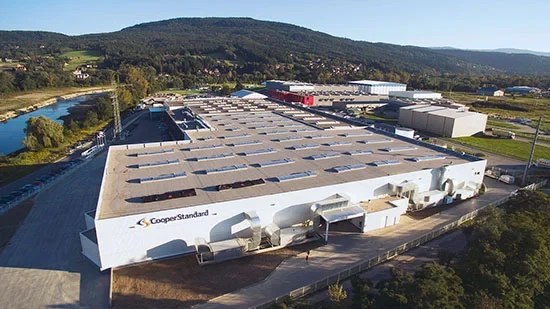
One system for developing people.
Four continents.
How LeanTrix supported Cooper Standard in building Building a Talented Organization: a shared system for onboarding, standardised work, job instruction, skills confirmation and leadership development across approximately 70 plants.
An operational system for building capability.
The challenge was to make a reliable way of teaching work function across countries, languages, processes and different levels of plant maturity.
When every plant develops its own practices, the quality of onboarding and the ability to sustain standards depend on particular individuals. BTO created a shared architecture that connected programme ownership, regional and plant trainers, and instructors developing operators directly at their workstations.
Cooper Standard retained responsibility for operational direction and results. LeanTrix supported the programme as a transformation partner and BTO Global Coach, helping design the system, develop trainers, support pilots and transfer knowledge between regions.
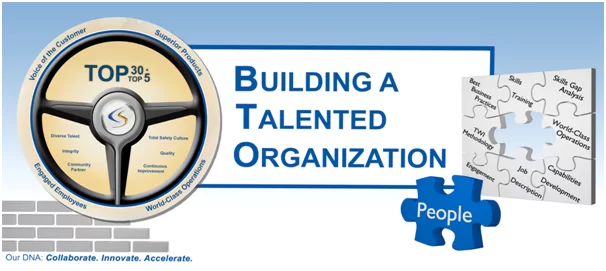
Programme scale, aggregated improvements and the mechanisms used to develop organisational capability. Operational baselines, financial figures and confidential Cooper Standard information are excluded.
Watch the original BTO testimonial
Beata Roczon, Plant Manager, Cooper Standard, on BTO and TWI. Recording from 2019; excerpt 3:43–3:59. Original Polish audio.
“The most significant result of BTO was the organisation’s ability to develop people repeatedly, in every plant, region and process.”LeanTrix team’s conclusion from the programme
From joining the organisation to working independently.
BTO connected recruitment and onboarding, reliable work standards, effective on-the-job instruction, audits and leadership development. TWI Job Instruction was a key method within that system.
Job fit
Assess aptitude and prepare a person for the requirements of a particular working environment.
Smart onboarding
Provide a consistent introduction, clarify expectations and prepare employees to learn at their workstations.
Standardised work
Establish a dependable reference for safety, quality, productivity and subsequent improvement.
Teaching the job
Use BTO-JB and TWI JI to prepare instruction, practise on the job and check the learning outcome.
Confirmation
Use 4QA and 17QA audits to check operators’ work and instructors’ ability to teach effectively.
Leadership development
Develop leaders’ capability in safety, quality, continuous improvement and sustaining the system.

Cooper Standard’s ownership
- Strategic direction and operational decisions.
- Global, regional and plant sponsors.
- Resources, priorities and accountability.
- Integration into daily plant management.
LeanTrix’s contribution
- BTO architecture and TWI standards.
- Coaching for global and local teams.
- Development of Master Trainers, trainers and instructors.
- Certification, audits and sharing good practices.
The system needed its own internal capability.
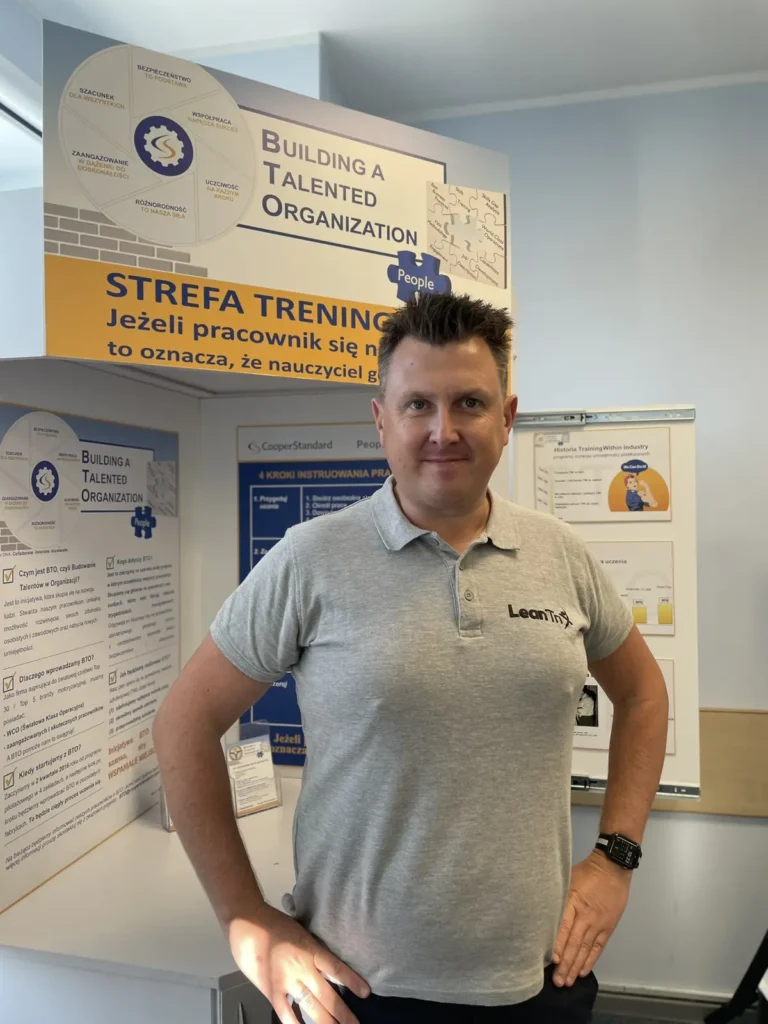
Bartosz Misiurek supported BTO development and scaling as part of the LeanTrix team. The programme developed an internal network of sponsors, trainers, instructors and leaders who could maintain standards and run further improvement cycles.
BTO evolved from teaching operators to a broader operating system. BTO-HSE, BTO-Q and BTO-CI extended capability development into health and safety, quality and continuous improvement. Job instruction became part of everyday production management.
Seven decisions. Successive learning cycles.
The programme illustrates how a transformation develops through successive target conditions. Reliable standards enabled consistent instruction; audits exposed further development needs; a trainer network made regional and global scaling possible. Each stage created the capability needed for the next one.
Identify the system constraint.
Unreliable standards, inconsistent onboarding and limited visibility of actual skills made it difficult to sustain quality and productivity. The issue affected several connected processes: preparing documentation, teaching people, defining ownership and confirming competence.
What needed to become dependable
- Work instructions reflecting the method actually used.
- Clear responsibility for maintaining the standard.
- Consistent instructor skills across plants.
- Evidence that instruction produced the intended capability.
Build the ability to standardise and teach work.
A shared standard had to work regardless of country, language, technology or an individual manager’s experience. Documentation, instruction and verification therefore had to form one system.
Establish sponsorship and the team.
Scaling to around 70 plants required clear responsibility at every level. The global sponsor linked the programme to operational strategy; regional and plant sponsors made resources and priorities available. Master Trainers, plant trainers and instructors had distinct roles in sustaining the method.
LeanTrix supported this architecture through programme design, coaching, certification and the transfer of good practices. Operational ownership remained with Cooper Standard.
Define the breakthrough challenge.
The desired capability combined a dependable work standard, effective knowledge transfer and measurable operating results. Operators needed to understand the reasons behind key points; instructors needed to transfer experience consistently; leaders needed to maintain and develop the system.
The process ambition
Common documentation and instruction standards, qualified internal trainers and instructors, audits that confirm capability, and a practical connection between training plans and the needs of production.
>10% productivity improvement
20% scrap reduction
These were improvement ambitions for BTO projects, rather than a claim that every plant achieved the same result.
An illustrative increase from 100 to 110 units per hour is +10%. Reducing a scrap rate from 2.0% to 1.6% is a 20% relative reduction, or a 0.4 percentage point reduction. These examples explain the arithmetic; they are not disclosed Cooper Standard baselines.
Understand the starting point and test a target condition.
A limited set of pilots allowed the organisation to learn how documentation, instruction, audits and measurement worked together before expanding the model. Four European plants — in Poland, Germany, Italy and France — formed the initial pilot group. The transformation account describes the first target-condition cycle from May to December 2016.
Current condition
Check work documentation, how the work is actually performed, instructor and operator skills, and the operating indicators needed to assess change. Establish the gaps that the pilot must address.
Target condition
A functioning standard in the pilot area, instructors able to teach that standard, operators able to perform it and an audit process that confirms the learning outcome.
Learning from a small number of real production processes made it possible to refine materials and define recommendations for subsequent plants. Expansion took place in waves, with the standard tested and strengthened through follow-up and audits.
Select methods and implement the solution.
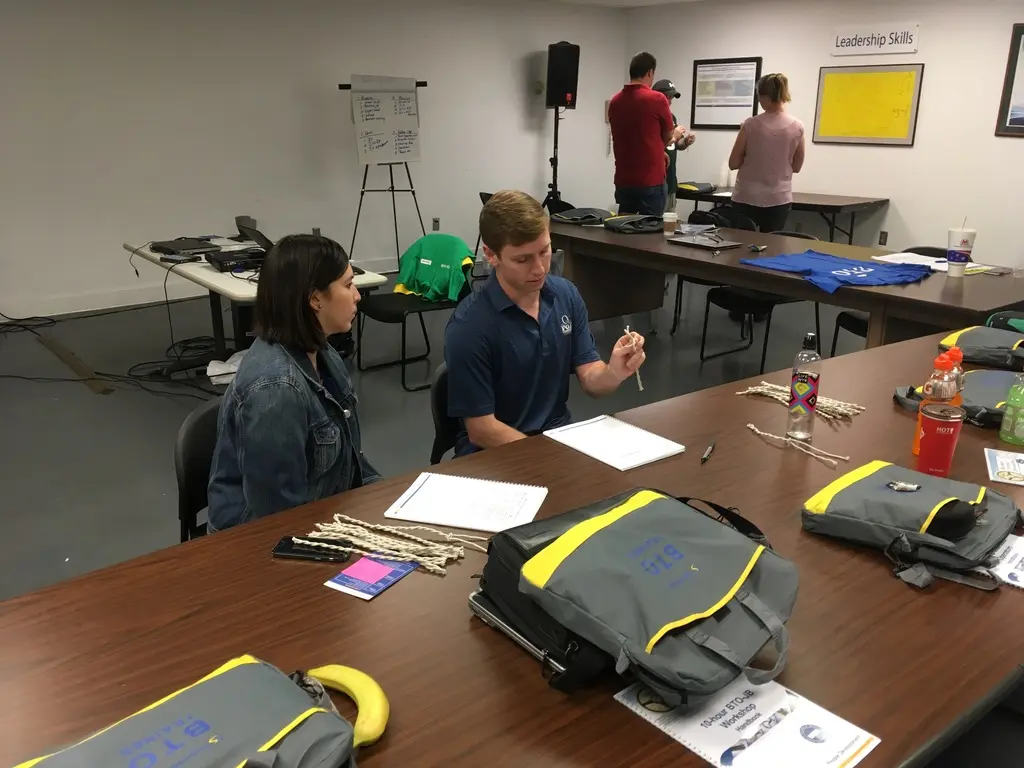
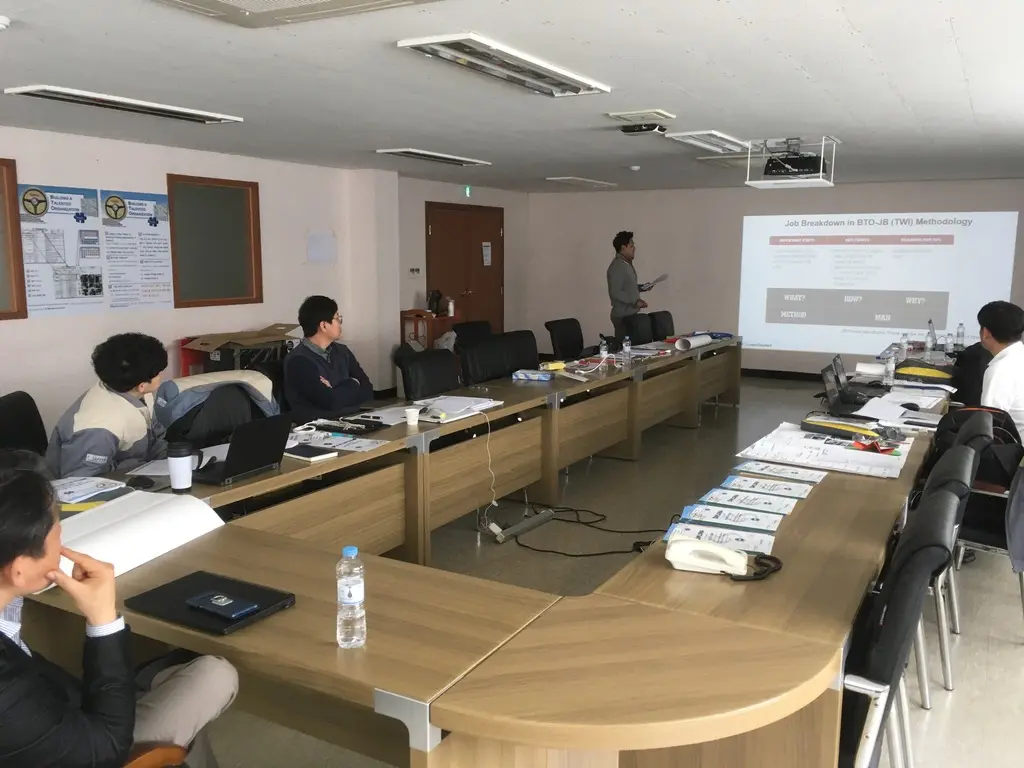
BTO-JB and TWI Job Instruction connected the preparation of a work standard with effective on-the-job teaching. Instructions provided a reliable reference, while instructor development made the standard usable when teaching a less experienced operator.
- Establish the local sponsor, team and implementation responsibilities.
- Identify critical operations and the skills needed in the pilot area.
- Prepare reliable work instructions and TWI Job Breakdown Sheets.
- Develop and certify internal instructors.
- Teach operators directly at their workstations.
- Use 4QA and 17QA to confirm operator and instructor competence.
- Review productivity and quality improvements, then adjust the approach.
A Job Breakdown Sheet structures the major steps, key points and reasons for the key points. It guides an instructor through the teaching process. The method helps people perform consciously and reliably, and the same standard becomes a reference for subsequent confirmation.

Develop internal change leaders.
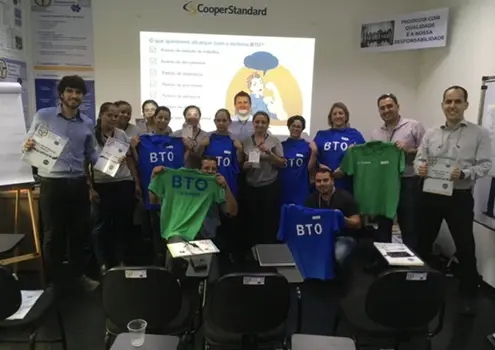
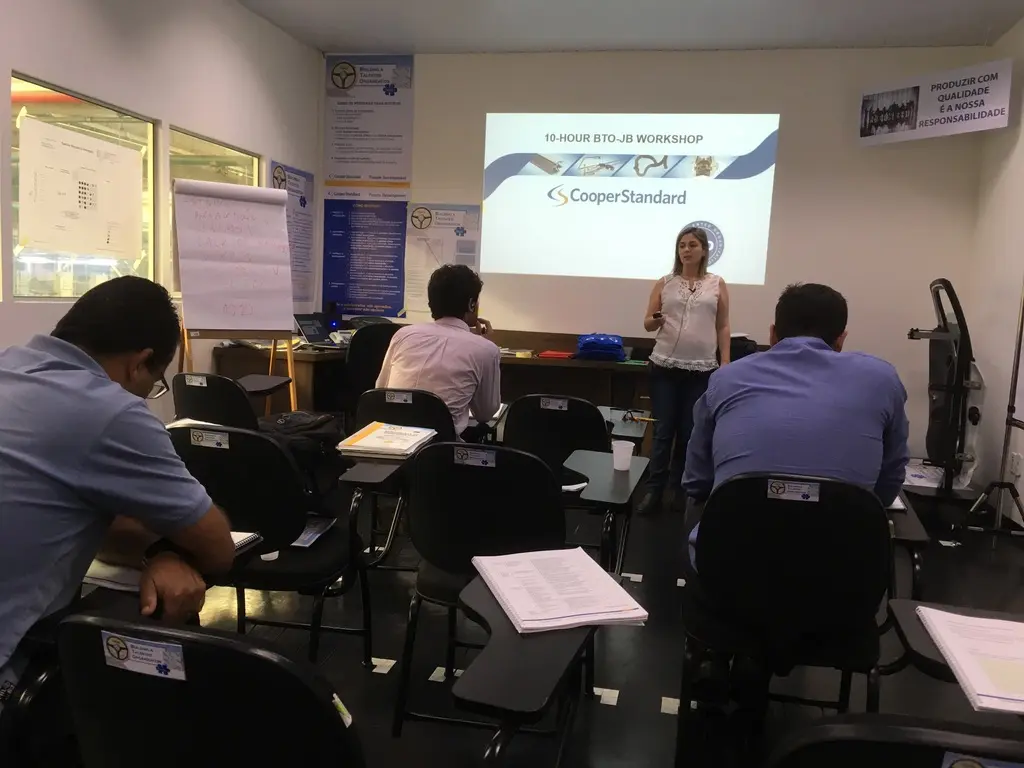
The trainer cascade made it possible to expand the programme while retaining the capability within Cooper Standard. Master Trainers developed plant trainers; plant trainers developed instructors; instructors built operators’ practical skills.
1 BTO instructor → up to 10 operators within a defined scope
The organisation needed more than a count of certified people. Trainers had to observe instruction, coach the instructor and confirm whether the operator understood the key points and could work to the standard.
Confirm the operator
Is the work performed according to the standard that was taught?
Confirm the instructor
Does the instructor prepare and conduct job instruction correctly?
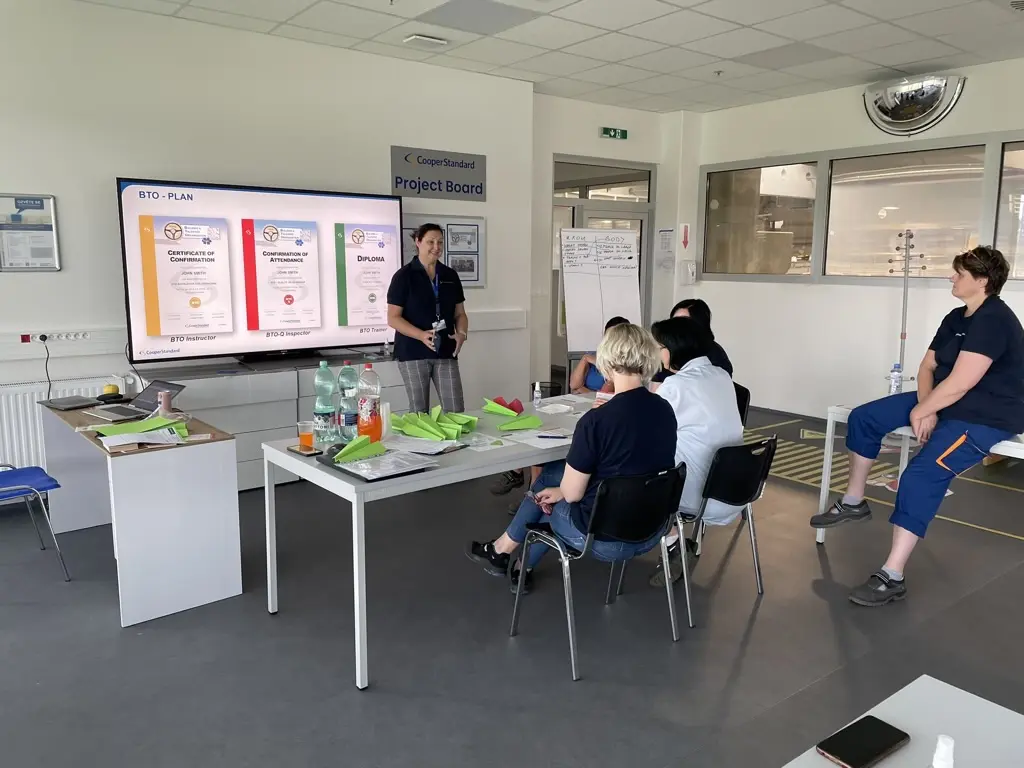
This double audit loop supplied information for coaching, renewed certification and further development. BTO-HSE, BTO-Q and BTO-CI broadened leaders’ skills in safety, quality and improvement, connecting the training system with daily operational responsibilities.
Sustain results and begin the next cycle.
The global system developed through successive phases. Common materials, certification requirements and audits supported scaling, while exchanges of good practices helped the organisation learn across plants and regions.
Four European pilots
The first pilot cycle in Poland, Germany, Italy and France established the basis for wider implementation. The transformation account describes sponsor review in December.
European waves and preparation for global scaling
The first wave extended to 16 plants in the first half of the year. Further projects and a regional sponsor structure prepared the next expansion.
From regional practice to a global system
Master Trainers, local trainers and shared standards made the model transferable. In 2019, 45 plant trainers were prepared in North America, Asia-Pacific and South America.
From instructors to leaders
The programme expanded leadership development in safety, quality and continuous improvement. Common BTO modules helped connect instruction with broader operational capability.
Stronger confirmation and documentation
The approach to checking operator learning outcomes and instructor competence became more consistent through 4QA and 17QA audits.
Managing organisational capability
Multi-skilling, workforce planning, team flexibility and regular reviews of programme maturity became more closely connected.
Improvements across four operating regions.
The 2019 global rollout summary reported productivity improvements in TWI-covered projects in all four regions. These figures describe the projects included in that summary; they are not a claim about total regional output or every process in every plant.
45 additional plant trainers
Prepared in 2019 across three new regions to support the global rollout.
41 shared good practices
Exchanged between plants during the European BTO Summit.
The earlier English account, published in 2018, reported an average productivity increase of 17.55% and an average defect reduction of 35.83% in first-wave participating plants. These refer to an earlier implementation group and reporting period; they should be read separately from the 2019 regional figures above.
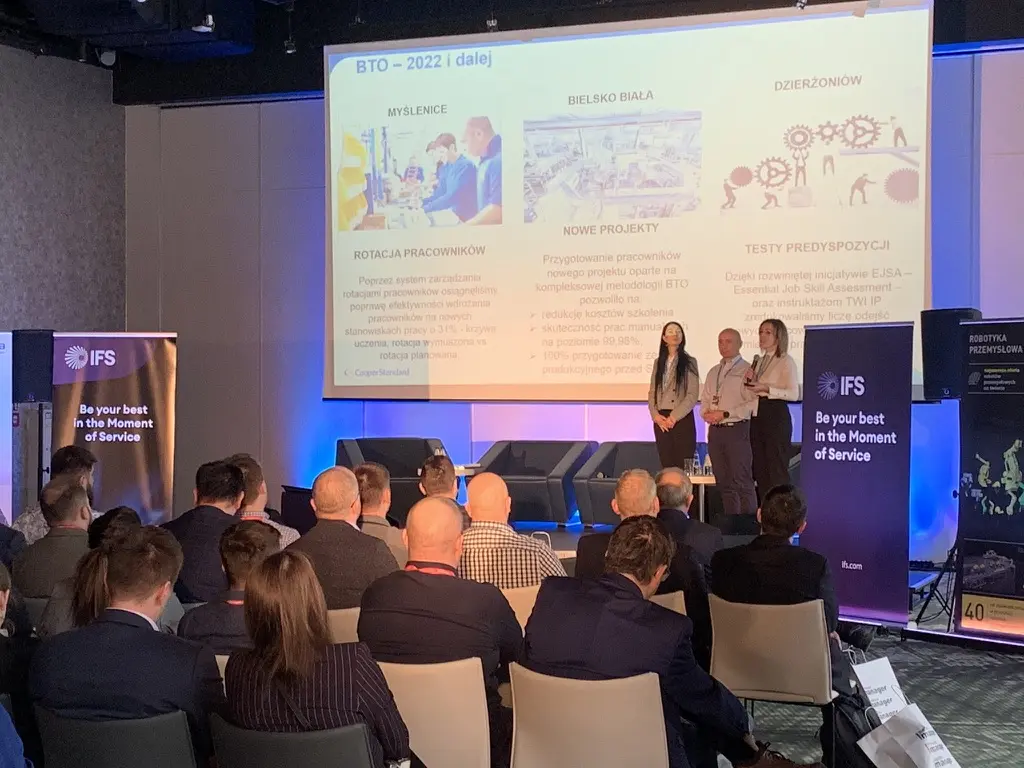
From a skills matrix to workforce decisions
The next stage connected skill development with staffing and flexibility. A skills matrix became a management tool for deciding who should learn which operation, in what order and for what operational reason.
- Improve flexibility when demand or attendance changes.
- Provide better coverage of critical workstations.
- Plan rotation and employee development.
- Connect production, HR, quality and safety in a shared discussion of competence.
- Work towards at least three workstations per operator and three qualified operators per workstation.
Expanding the range of work available to women
Analysis in 2023–2024 identified opportunities to make additional manual and machine operations available through systematic BTO training. The following figures describe identified potential in the analysed processes.
In one plant pilot, a further 18 operations were identified, 22 women were trained at nine critical workstations and the number of operations staffed by women expanded by 7%. Productivity and quality reached a level comparable with the previous staffing, without additional technical modifications. Preparation and effective instruction were central to the result.
From on-the-job instruction to smart onboarding.
Once standardised instruction had become more dependable, the programme extended towards preparing people before they reached the workstation: assessing job fit, structuring the initial learning environment and clarifying the preparation that would be most useful.
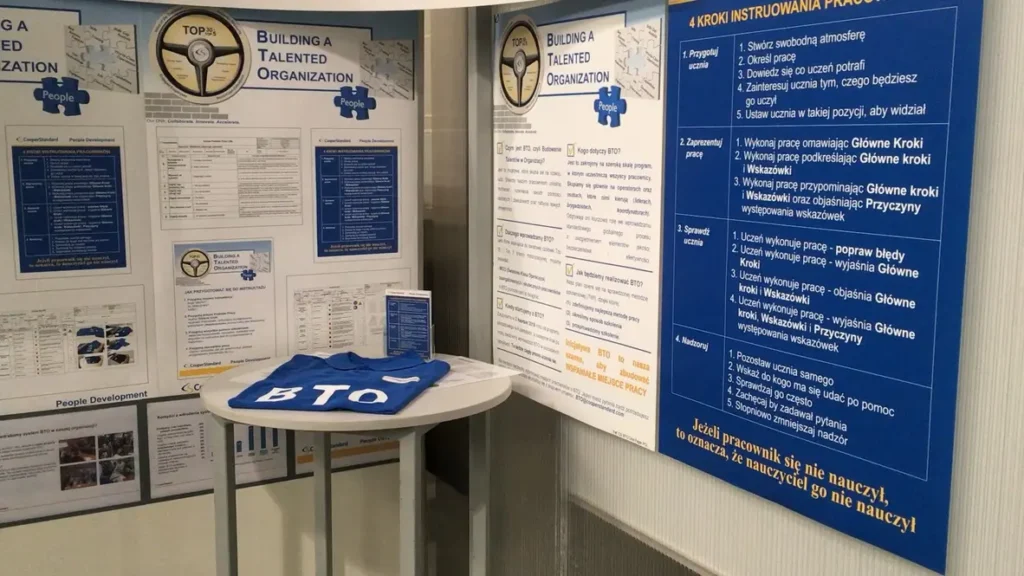
The transformation account reports an Essential Job Skill Assessment pilot in Częstochowa, followed by standardised BTO / Dojo Rooms and a more focused initial onboarding module.
Methods supported a wider operating capability.
The programme combined standards, the trainer cascade, audits, multi-skilling and leadership development. This combination made training part of a repeatable management system.
| Dimension | A stand-alone training project | The BTO transformation |
|---|---|---|
| Starting point | A selected method or training requirement | A capability gap affecting operational results |
| Ownership | A trainer, HR or a Lean department | Global, regional and plant sponsors, supported by the BTO network |
| Measurement | Participants and certificates | Quality, productivity, competence, audit results and flexibility |
| Scaling | Repeating a course | Developing trainers and instructors who sustain a common standard locally |
| After delivery | The training programme is complete | Audit, coaching and further development continue |
Six principles for a lasting global system.
Begin with the capability gap.
Define what the organisation needs to be able to do and connect that capability with an operating result.
Make sponsorship explicit.
Global, regional and plant owners provide the resources and accountability needed to maintain the programme.
Test before scaling.
Use real production processes to check the standard, refine the method and prepare recommendations for other plants.
Develop the internal network.
Master Trainers, plant trainers and instructors enable the organisation to develop successive teams independently.
Observe skills and results.
Combine 4QA and 17QA with operational improvements. A certificate alone does not demonstrate changed behaviour.
Let the programme mature.
Extend capability as new needs emerge: from instruction to leadership, onboarding, multi-skilling and workforce planning.
Questions about the Cooper Standard case.
Who led the transformation?
Cooper Standard and its operational leaders owned direction, resources and results. LeanTrix supported programme design and scaling through BTO Global Coaching, trainer development, certification, audits and sharing good practices.
What period does this case cover?
The global transformation account covers 2016–2024, including programme development documented through Q1 2024. Earlier European first-wave results are separately identified so their scope is not confused with later global rollout data.
How is BTO different from a single TWI course?
A TWI course develops a specific instruction skill. BTO connects that skill with programme ownership, a trainer cascade, certification, audits, skills management and global scaling. BTO also evolved to include wider leadership and onboarding capabilities.
Does a common standard remove local autonomy?
The method, roles and quality criteria remain consistent. Plants apply them to their own examples, priority processes and implementation conditions. The programme can therefore preserve a shared standard while using local operating knowledge.
How should TWI effectiveness be measured?
Combine coverage, certification and audit results with improvements in operational performance and team flexibility. Training counts alone cannot establish whether people work differently or whether the system has become more capable.
Can a similar system work outside automotive?
The architecture of a work standard, internal trainers and skills confirmation is relevant wherever reliable performance depends on transferring practical knowledge. Each organisation still needs to define its own problem, ownership and implementation conditions.
Which capability would make the greatest difference in your organisation?
LeanTrix helps connect strategy, work standards, TWI, leadership development and measurable operational improvement. An initial conversation can identify a sensible next step: diagnosis, a pilot or the first target condition.
Source and scope. This case draws on the Building a Talented Organization programme summary, project materials and the programme team’s account, with activity documented through Q1 2024. It presents aggregated scale and improvements, with operational baselines, financial data and confidential information excluded. The 2018 European first-wave figures, 2019 regional results, controlled BTO-JB pilot, workforce analyses and onboarding pilot refer to different reporting scopes. The global narrative follows the Polish transformation account; additional programme detail is available in the Polish BTO case study. Original programme photographs and graphics are retained, with English captions.

I am a promoter of Lean Management and the Training Within Industry program. I am a practitioner. I co-create many startups. Since 2015, I have been the CEO of Leantrix - a leading Lean consulting company in Poland, which, starting from 2024, organizes one of the largest conferences dedicated to lean management in Poland - the Lean TWI Summit. Since 2019, I have been the CEO of Do Lean IT OU, a company registered in Estonia that creates the software etwi.io, used by dozens of manufacturing and service companies in Europe and the USA.