


The symptom is contained repeatedly, while the mechanism that creates it remains in the process.
Problem solving · A3 · 8D · PDCA · TWI
Problem solving is a repeatable management process for closing a verified gap between the current and expected condition. It turns facts from gemba into a tested countermeasure, confirmation over time and an updated standard so that the same problem is less likely to return.
Problem Solving – A3, 8D, PDCA and TWI
Build one practical problem-solving system for frontline leaders, quality teams and cross-functional projects. LeanTrix helps organisations move from symptoms and completed reports to verified root causes, effective countermeasures and learning embedded in daily work.
A3 · 8D · PDCASelect the format after the problem and operating context are understood
1 thinking standardDefine the gap, verify causes, test countermeasures and standardise what works
Gemba firstFacts from the process come before opinion, templates and meeting-room conclusions
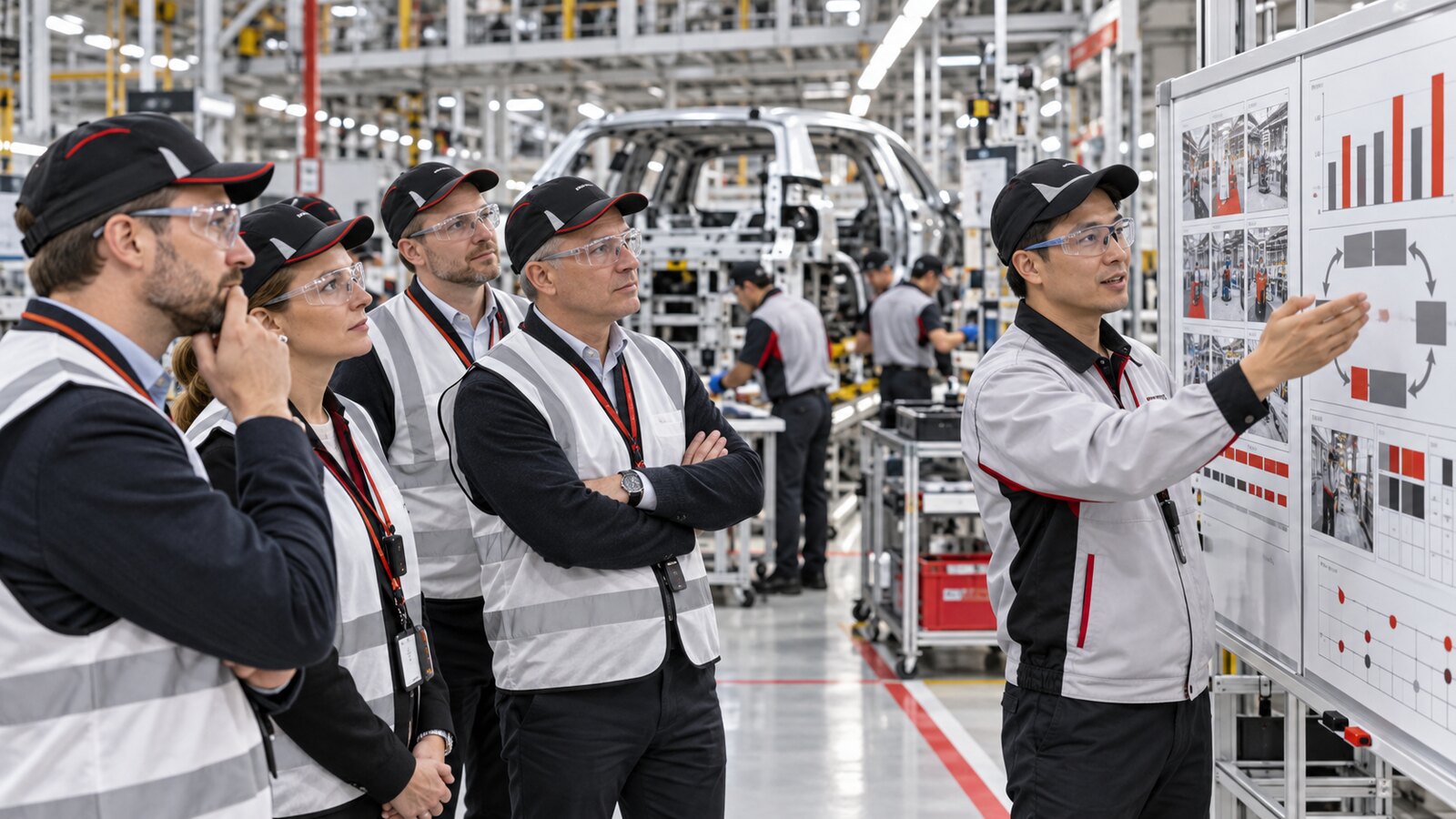
Start with the operating problem
When activity is high but the same problems return
A problem-solving system is needed when the organisation produces reports, meetings and corrective-action lists but cannot show that causes were verified and recurrence was prevented.
A3 or 8D is treated as paperwork; effectiveness is not confirmed in the real process over an agreed period.
Teams debate probable causes without observing the work, separating facts from assumptions or testing the causal link.
Even a successful countermeasure remains local knowledge because work, reaction and leader standards are not updated.
The working logic
One disciplined logic, several useful formats
A3, 8D, PDCA and TWI Problem Solving should not compete. Each gives a different level of structure, while the underlying reasoning remains consistent.
From a visible gap to a sustained standard
The shared sequence starts with a specific gap and facts from gemba. The team verifies causes, chooses and tests a countermeasure, checks the result over time and then integrates the learning into the operating standard.
- A3 for concise PDCA thinking, dialogue and management alignment
- 8D for formal, cross-functional and customer-quality problems
- PDCA for controlled experiments and iterative learning
- TWI Problem Solving for frontline leader capability at gemba
- Containment separated from permanent corrective action
- Effectiveness confirmed before the problem is closed
- Work, reaction and leader standards updated after success
- Lessons shared where the same risk can occur elsewhere

The common backbone
PDCA is a learning cycle, not four labels on a slide
Plan means defining the gap, target, conditions and hypothesis. Do means testing on a controlled scale. Check compares evidence with the expected result. Act either standardises a verified improvement or starts the next learning cycle.
LeanTrix connects this logic with gemba observation, cause verification, leader coaching and visual follow-up. The objective is not a perfectly completed template; it is a process that performs more predictably and a team that can solve the next problem with less dependence on experts.
Pilot, learn, scale
Build capability around a real recurring problem
A pilot gives the organisation a common language, a visible result and evidence about the leader routines needed before the system is scaled.
Diagnose the current system
Review recent problems, recurrence, closure criteria, escalation, data quality and how leaders coach teams today.
Pilot on one meaningful gap
Select a problem with a clear owner, accessible facts and business relevance; choose A3, 8D, PDCA or TWI accordingly.
Coach at gemba
Develop leaders to ask for facts, test reasoning, protect the team from premature solutions and verify effectiveness in the process.
Standardise and scale
Embed the method in tier meetings, escalation, audits, competence matrices and the rules for updating work standards.
Management evidence
Measure recurrence, response and learning
The number of completed reports is an activity measure. Management needs indicators that show whether problems are detected earlier, solved more effectively and prevented from returning.
| Measure | What it reveals | Interpretation guardrail |
|---|---|---|
| Recurrence rate | Whether the same failure mode returns after closure | Use a precise definition and a meaningful observation window |
| Detection-to-containment time | How quickly the customer or next process is protected | Fast containment is not evidence of root-cause removal |
| Time to effectiveness confirmation | How long it takes to verify a stable result | Do not close only because actions were completed |
| Verified-cause rate | How often causal claims are supported by process evidence | Separate an assumed cause from a tested causal mechanism |
| Standard-update completion | Whether successful learning changes the operating system | Check work, reaction and leader standards—not only documents |
| Leader autonomy | How many problems teams solve with sound reasoning and less expert rescue | Assess thinking quality, not only the volume of closed cases |
Evidence, not decoration
Direct participant evidence and related transformation cases
The first card links to named testimonials from LeanTrix and Toyota problem-solving workshops. The other cards show broader operating-system evidence; they are not presented as proof that one isolated tool created every result.
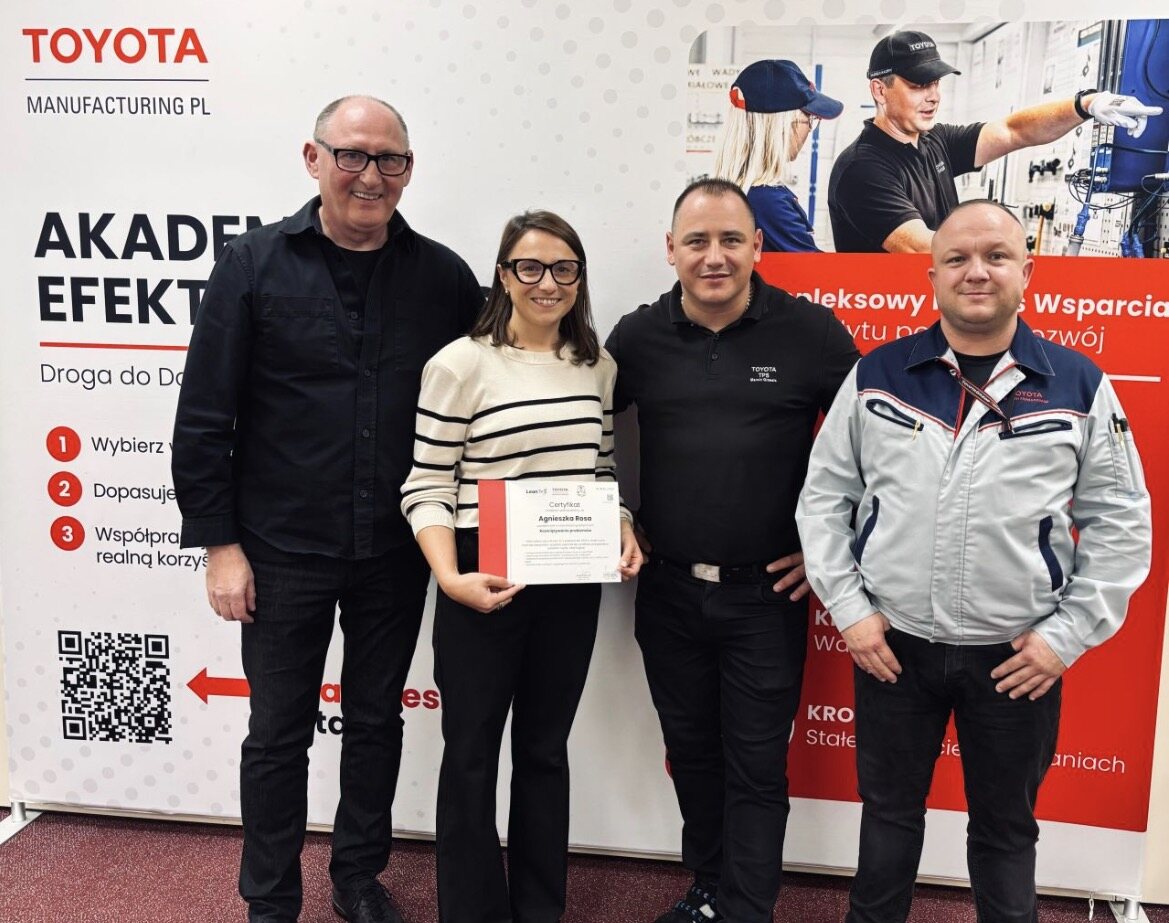 Toyota workshop · named participantsSee problem solving as a daily management systemParticipants describe standards, Andon response, leader involvement, cause analysis and learning observed in Toyota's real operating environment. The reference page links to their original public posts.Read the verified participant testimonials →
 Related evidence · operating systemCapability and standard work at transformation scaleThe English case documents a multi-plant Lean and TWI transformation with measured quality and productivity outcomes. It is related system evidence, not a stand-alone Problem Solving deployment claim.Read the English case study →
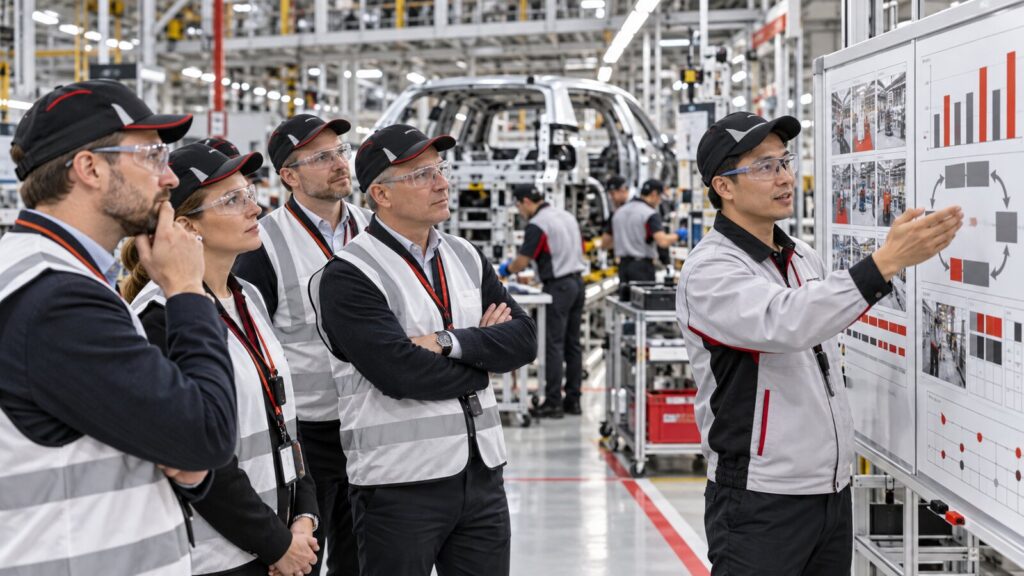 LeanTrix · evidence libraryImplementation evidence across industriesExplore documented Lean, TWI, TOC and operational-transformation programmes and the conditions that made the results sustainable.Explore the case-study library →
Signed client references and verified testimonials
See original client documents and named testimonials covering Lean, TWI, leadership development, quality and operational transformation.
People behind the work
Practitioners who connect reasoning with the management system
The team combines Toyota Kata and TWI coaching, frontline implementation and formal quality-system discipline so that problem solving works both at gemba and in cross-functional governance.

Wiktor Wołoszczuk
Psychologist, Lean consultant and Toyota Kata & TWI Master Trainer with more than 20 years of leadership and change experience.
View expert profile →
Kamil Müller
LeanTrix Board Member and TWI Master Trainer working with leaders, instructors and frontline teams on standard work and improvement.
View expert profile →
Dr Marcin Paska
Quality and management-systems practitioner working with ISO, IATF, risk, audit readiness and disciplined problem solving.
View expert profile →Connected capabilities
Continue with a related method
A strong operating system links flow, standard work, leader routines and problem solving instead of treating each method as a separate initiative.
FAQ
Problem Solving – frequently asked questions
The answers clarify method selection, implementation conditions and the difference between closing an action and eliminating a cause.
What is problem solving in Lean management?
It is a structured way to define a measurable gap, observe the process, verify causes, test countermeasures, confirm effectiveness and standardise learning. The purpose is better process performance and stronger organisational capability, not a completed form.
Which should we use: A3, 8D, PDCA or TWI Problem Solving?
Use A3 for concise PDCA thinking and alignment, 8D for formal cross-functional or customer-quality problems, PDCA for controlled experimentation, and TWI Problem Solving to build frontline leader capability. The risk and complexity of the problem should determine the format.
Is containment the same as a corrective action?
No. Containment protects the customer or next process immediately. A permanent corrective action changes the causal mechanism and must be verified over time before closure.
How do we know that a root cause is real?
A causal statement should be consistent with observed facts and withstand a test: when the cause is removed or controlled, the expected result should change. A plausible explanation without evidence remains a hypothesis.
Why do problems recur after an 8D or A3 is closed?
Typical reasons are weak problem definitions, assumed causes, action lists without tests, premature closure and failure to update the work, reaction or leader standard.
Can problem solving be implemented outside manufacturing?
Yes. The same logic applies in logistics, healthcare, shared services, administration and other repeatable processes, although evidence, cycle times and escalation routes must fit the operating context.
How does a LeanTrix engagement begin?
We start with a business problem and the current way it is detected, escalated and solved. A practical next step may be a diagnostic review, a pilot on one recurring gap, leader coaching or a broader capability programme.
Start with the business problem
Stop closing reports. Start closing verified gaps.
Bring one recurring problem, the available facts and the way your organisation currently responds. We will help you select a practical method and define a pilot that can produce both a business result and a repeatable management standard.
Free consultation
We first understand the process, expected result and implementation conditions. Then we propose the right expert and a practical next step.
Discuss your challenge