


Tools, materials or information have no dependable location, increasing time and interruption.
Workplace organisation · visual standards
The 5S System is a team-based method for making the normal state of a workplace visible, removing sources of disorder and building a practical routine for maintaining and improving the standard.
5S System – principles, steps and implementation
Go beyond clean-up campaigns. Use 5S to improve safety, access, flow, abnormality detection and ownership in production, logistics, laboratories, healthcare, offices and digital work.
5 stepssort, set in order, shine, standardise, sustain
At a glancenormal and abnormal states become visible
By the teamusers design a standard that works in reality
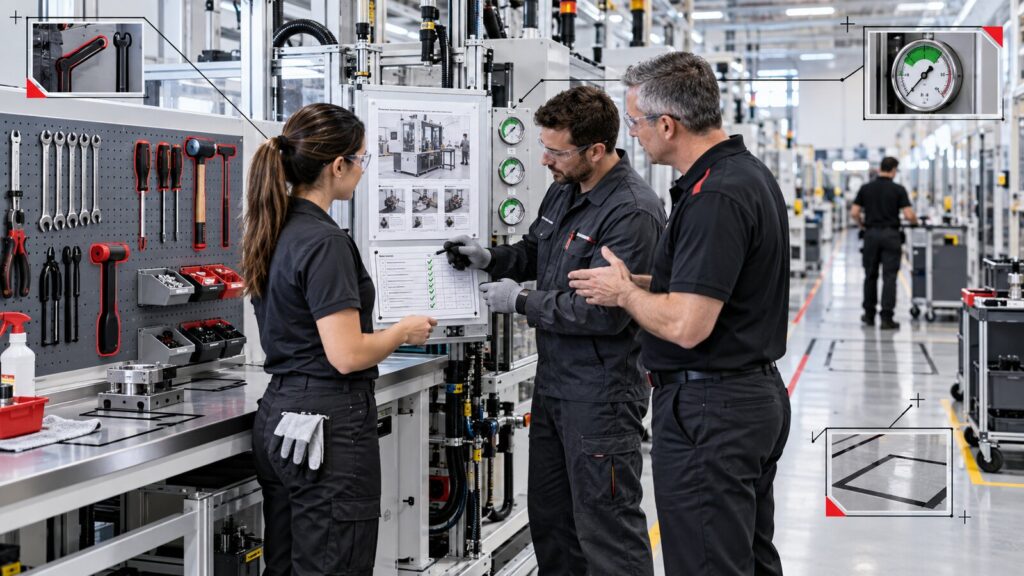
Start with the work
When 5S solves a real operating problem
The best pilots begin with a specific safety, quality, flow or time problem. Order is a means of making better work easier—not a cosmetic target.
Leaks, damage, shortage and incorrect quantities remain invisible until they affect the process.
The expected state is understood by experienced people but not visible to a new employee or another shift.
Areas prepare for an audit, then return to the old condition because ownership and reaction are unclear.
The method
The five 5S principles and steps
Each step solves a different management problem. Skipping directly to labels and shadow boards produces appearance without a sustainable system.
1. Sort (Seiri)
Separate what is necessary from what is unnecessary or uncertain. Use evidence and a clear decision process.
2. Set in order (Seiton)
Choose locations, quantities and access rules based on frequency, sequence, safety and flow.
3. Shine and inspect (Seiso)
Clean to restore conditions and reveal leakage, damage, wear and other abnormalities.
4. Standardise (Seiketsu)
Make the normal state, responsibility, frequency and reaction visible without relying on verbal explanation.
5. Sustain and improve (Shitsuke)
Use short leader routines, feedback and team problem solving to maintain and refine the standard.
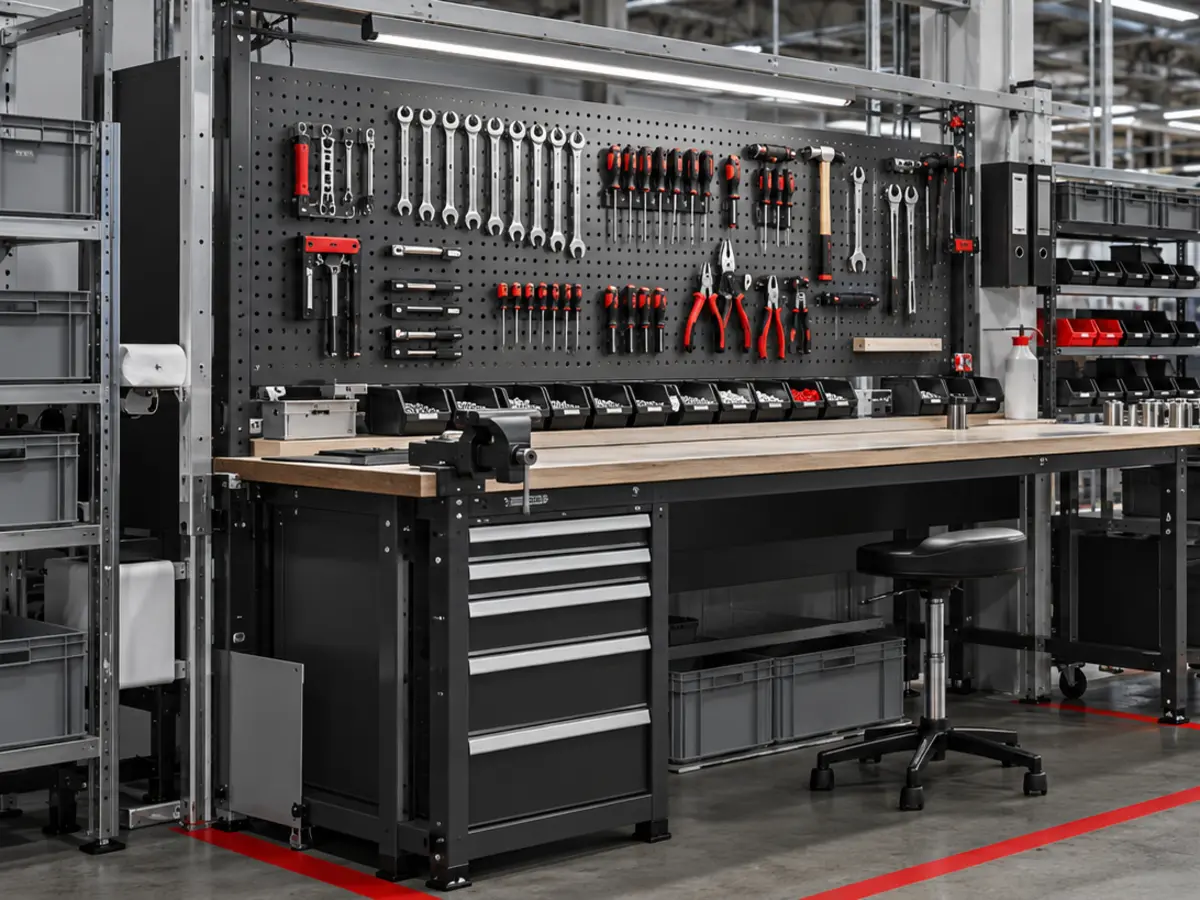
Red tags and cleaning standards
Make decisions and abnormalities visible
A red-tag campaign is not indiscriminate disposal. It assigns an owner and decision date to unnecessary or uncertain items and helps the team remove the cause of accumulation.
A cleaning standard is also an inspection standard. It defines the point, normal condition, safe method, frequency, owner and reaction when the team finds leakage, wear, looseness or contamination.
- Item, reason, owner and decision date
- Required quantity and defined location
- Normal state and abnormality signal
- Safe response and escalation path
Standard created with the users
How we implement the 5S System
We work in the actual area with the people who use it. The result must survive a normal shift, changing demand and everyday constraints.
Define the pilot and baseline
Specify the area, users, owner, risks and the operational measures that 5S should improve.
Run a gemba 5S workshop
Sort, redesign locations, remove sources of disorder and test the new arrangement during real work.
Create the visual standard and reaction
Show the normal state, responsibilities, review frequency and the escalation path for deviations.
Build the leader routine
Use short checks for coaching and improvement, so the team—not an external auditor—maintains the result.
Evidence of better work
How to evaluate a 5S implementation
An audit score can support conversation, but it should not become the purpose. Measure the effect on work and the team's ability to sustain the standard.
| Measure | What it answers | Example |
|---|---|---|
| Search time | Are tools, materials and information available without unnecessary motion? | Time to locate a defined item during normal work |
| Safety and ergonomics | Does the workplace reduce exposure and awkward work? | Obstacles, access, spills, reach and handling conditions |
| Defects and shortages | Does the standard prevent missing or incorrect items? | Picking errors, shortages and material mix-ups |
| Response and sustainment | Are deviations visible and closed between audits? | Closure lead time, recurrence and observations on normal shifts |
5S in practice
Different sectors, the same management logic
The objects and risks change, but sustainable 5S always connects the normal state, ownership, leader routine and improvement.
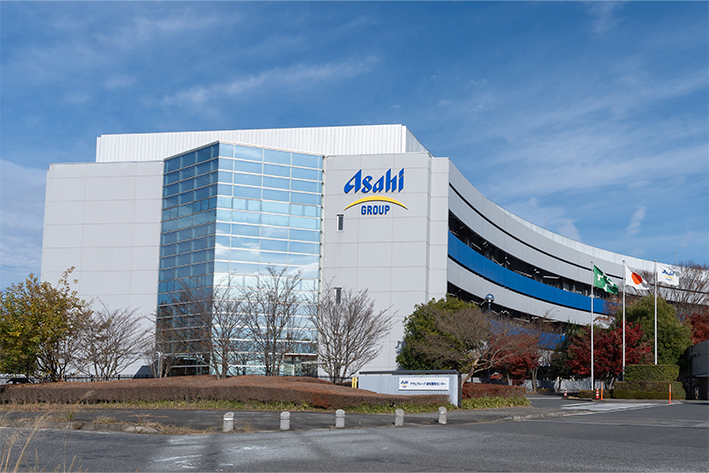 Asahi Group · manufacturingFrom order to a daily team system5S became a foundation for visible abnormalities, team ownership and the next stage of TPM development.Read the full case study →
 Penta Hospitals · healthcare5S and 6S in clinical support workProcedure sets, organised materials and visible standards were introduced to reduce searching and support safer work.Read the full case study →
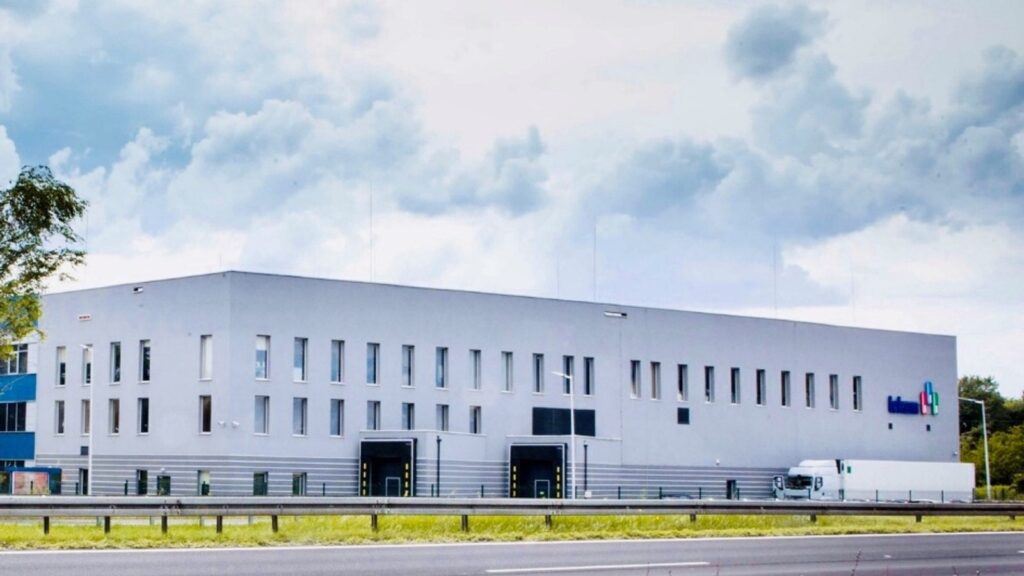 LEK-AM · pharmaceuticals5S as a management cycleStandard, audit, reaction and improvement were connected so that 5S could be sustained in daily work.Read the full case study →
See implementation evidence and signed references
Explore our case-study library and original client documents covering Lean, TWI, leadership and operational transformation.
Implementation support
5S connected with standard work and team capability
The facilitator helps users design a practical standard, while the process owner and frontline leader build the routine that sustains it.

Kamil Müller
LeanTrix Board Member and TWI Master Trainer working with leaders, instructors and operational teams on standard work and capability development.
View expert profile →Build a connected operating system
Continue with a related capability
Each method is stronger when it is connected to standard work, leader routines and measurable process performance.
FAQ
Frequently asked questions about the 5S System
A good 5S implementation changes how work is performed and managed—not only how an area looks.
Is 5S just a cleaning method?
No. Cleaning is one step and also a form of inspection. The complete system covers selection, location, visual standards, ownership, reaction to abnormalities and the routine for sustaining and improving the workplace.
Where should a 5S pilot begin?
Choose an area where disorder affects safety, quality, time or flow and where the real users can participate. The pilot should matter, but still be small enough for rapid learning.
Is a 5S audit enough to sustain results?
No. An audit can reveal deviation, but sustainability requires ownership, a clear response, leader routines and permission to improve the standard when experience shows a better way.
Can 5S be used outside manufacturing?
Yes. It is used in logistics, laboratories, offices, healthcare and digital processes. The items being organised may be information, documents, queues or shared tools rather than physical components.
What is a red-tag campaign?
It is a controlled process for identifying unnecessary or uncertain items. Each tag records the item, reason, owner, location and decision date so that removal is deliberate and the source of accumulation can be addressed.
What should a machine-cleaning standard include?
The point to clean, the normal condition, safe method, tool or agent, frequency, time, owner and the response to an abnormality. It does not replace EHS, lockout/tagout or manufacturer requirements.
Start with the business problem
Build a 5S system that still works between audits
Describe the area, business problem and expected result. We will help you design a pilot, team workshop, visual standard and leader routine for sustainable 5S.
Free consultation
We first understand the process, the expected result and the conditions for implementation. Then we propose the right expert and the next practical step.
Discuss your challenge