Leaders implement Lean at VMI Poland. This case study shows how an active management and leadership role supports Lean implementation. A sponsor does more than launch a project: they provide resources, maintain the link to the business goal, remove decision-making barriers and regularly check whether change is actually taking place in the organisation.
This case study is based on Przemysław Markowski’s presentation ‘Lean in managers’ hands — sponsorship that works’. It describes the publicly presented transformation management model. It omits the organisational structure, project details, internal forms and data that are not needed to understand the method.
VMI Poland: Lean needs an owner on the business side
In a Lean transformation, it is easy to focus attention on tools, workshops and the project team. Yet a project can have a good plan, capable participants and a business justification, and still stall because decisions are missing, resources disappear or it loses touch with real working conditions.
VMI Poland’s presentation places responsibility at management level. The sponsor connects business direction with the daily course of change. They should see both the status of the project and people’s readiness to work in a new way.
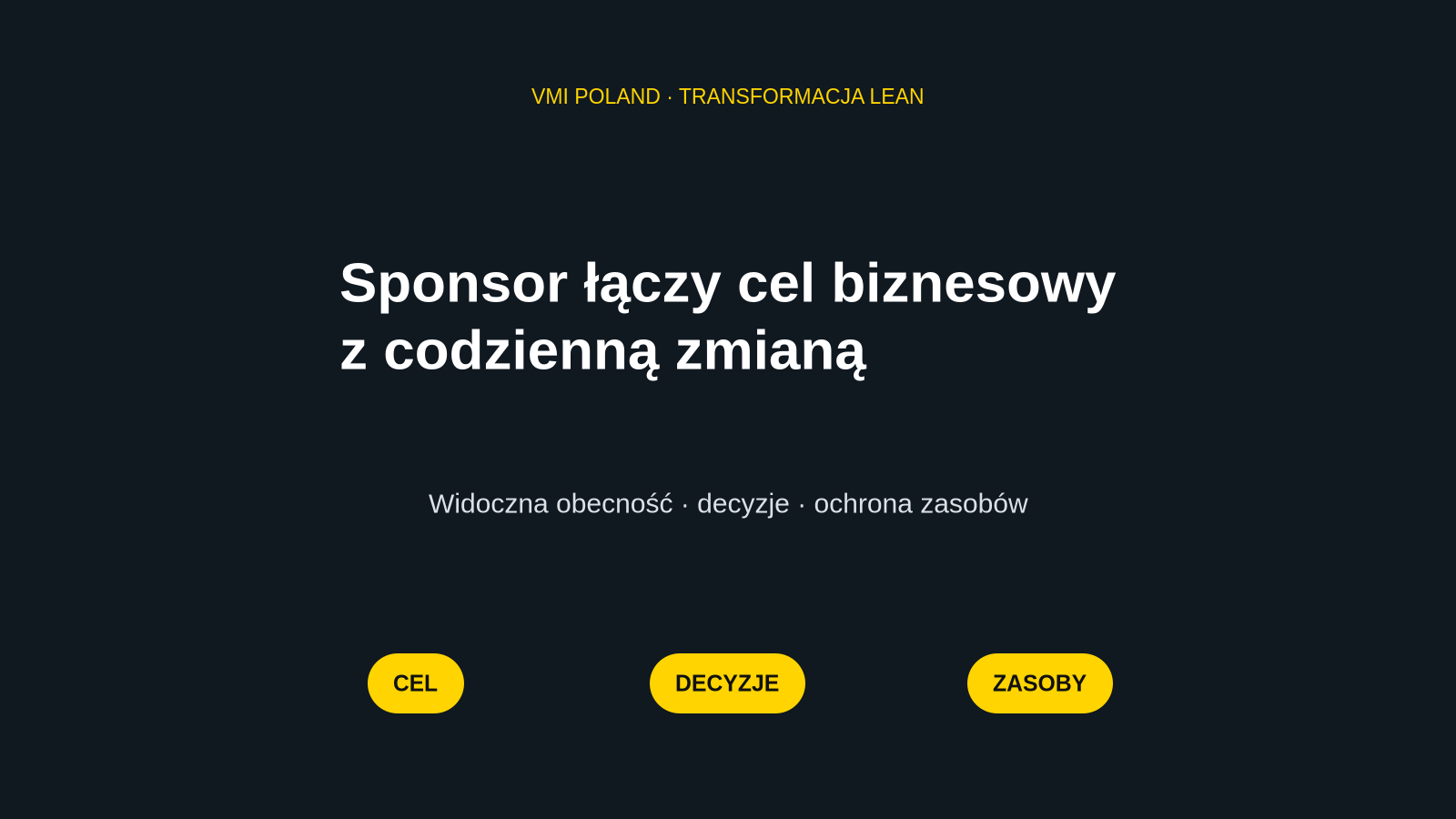
Leaders implement Lean (original presentation slide in Polish).
Leaders implementing Lean: three risks
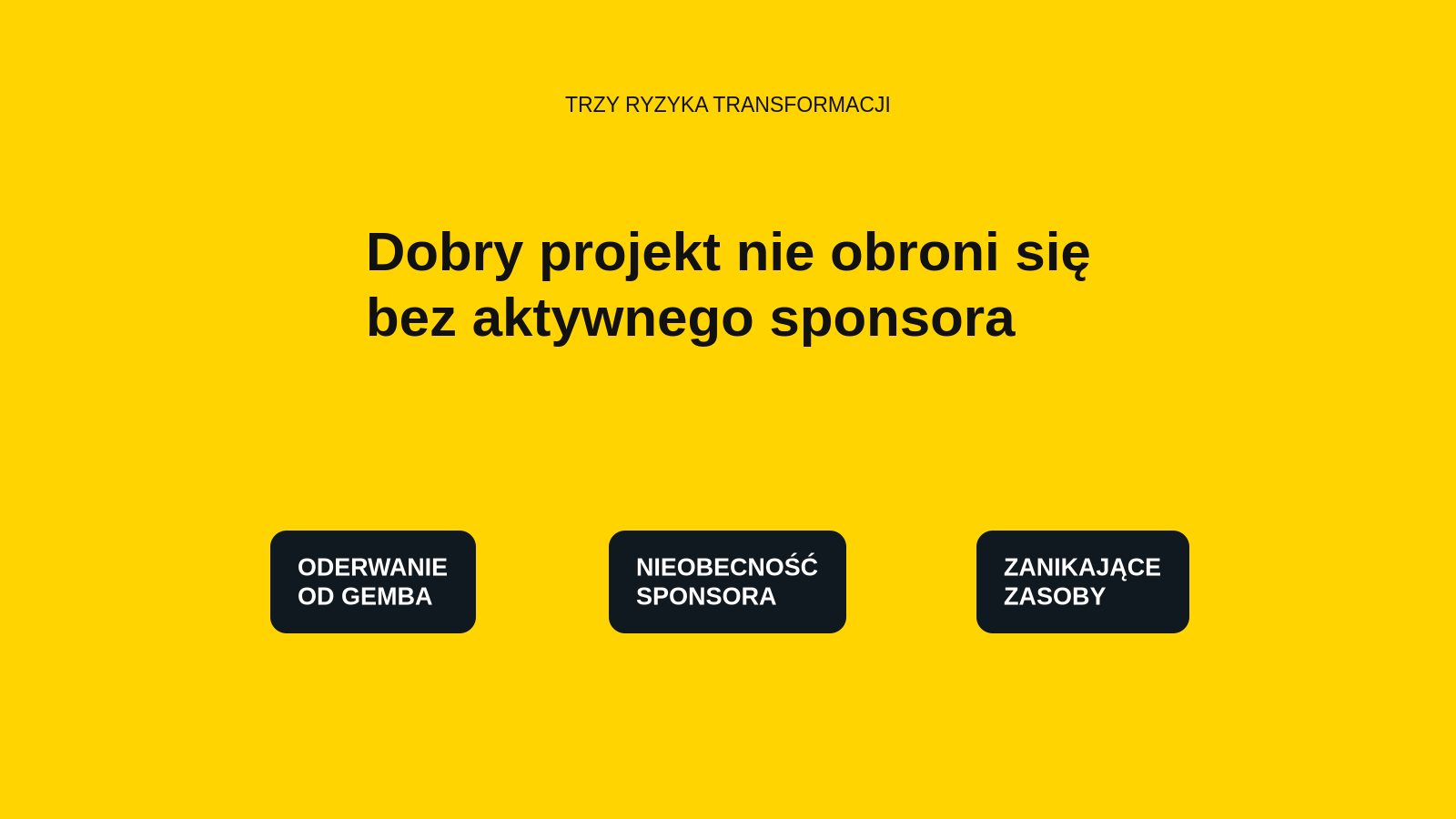
The material identifies three recurring causes of project failure: losing touch with reality, an absent sponsor and the loss of resources allocated earlier. Each leads to a similar outcome: the project team is formally working, but the organisation is not creating the conditions for implementation. Leaders are not implementing Lean.
- Losing touch with reality happens when a project describes a process from a conference room without regular contact with the Gemba.
- An absent sponsor slows decisions and sends a signal that the change is not a major priority.
- Disappearing resources cause project tasks to lose out to daily work, even when they remain formally listed in the plan.
The answer is not more reports. A clear sponsorship agreement is needed, together with a rhythm in which the leader makes decisions and removes obstacles.
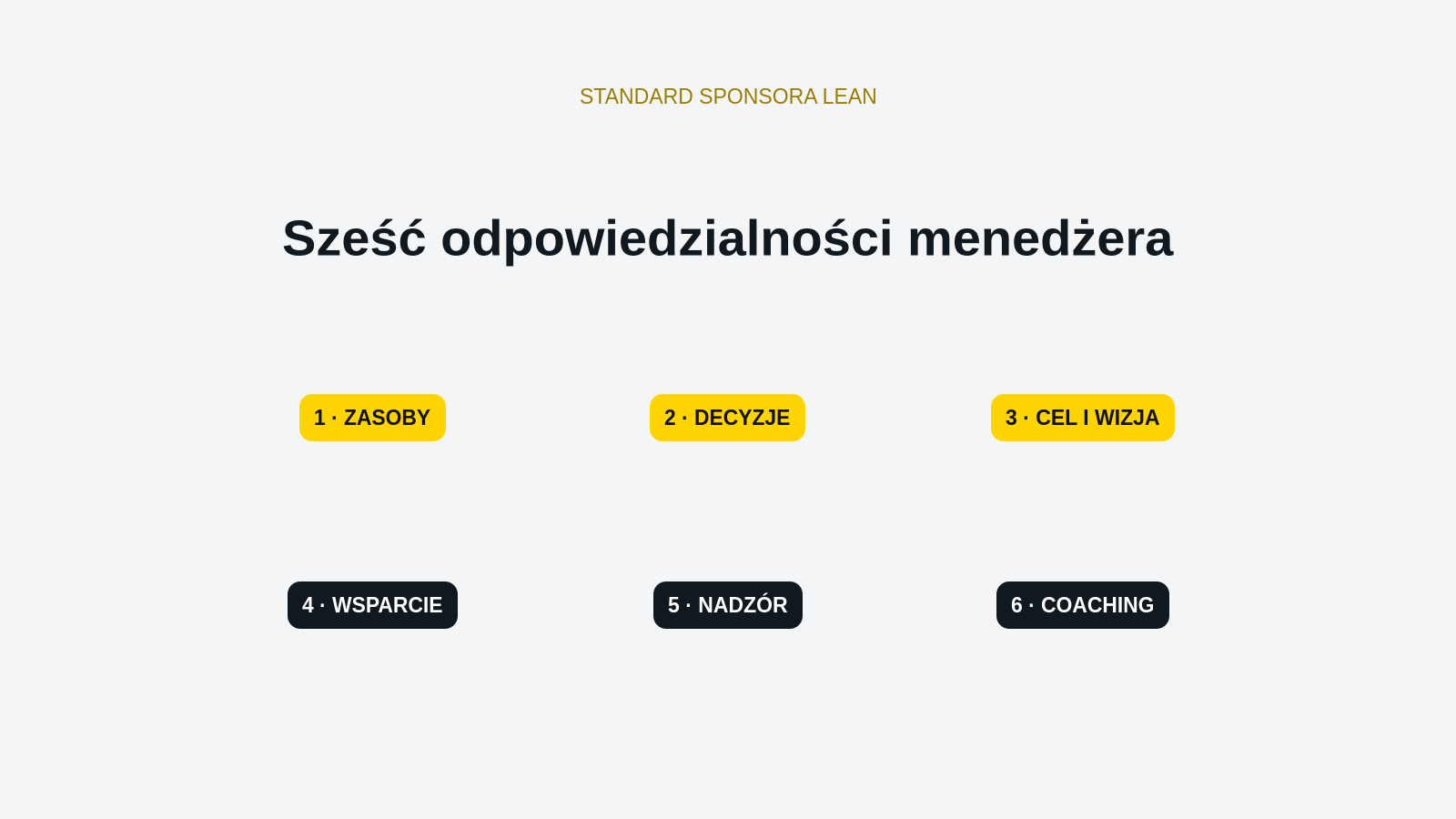
Six responsibilities of the sponsor, leader or manager
Przemysław Markowski structured the sponsor’s role around six areas. Together they form a practical standard for a plant manager, operations director or value-stream owner. This is how leaders take responsibility for implementing Lean.
1. Providing resources
The sponsor agrees who will work on the project, how much time they can dedicate to it and which skills are needed. They protect these agreements against people being repeatedly moved to other tasks.
2. Balancing decision-making
The team needs autonomy within the project’s boundaries and a fast route for decisions beyond its mandate. The sponsor defines those boundaries and resolves conflicts between priorities.
3. Project goals and vision
The goal should describe the business problem and the expected way of operating, rather than just a list of activities. The sponsor ensures that the project does not become a tool implementation disconnected from the organisation’s constraint.
4. Organisational support
Change usually crosses departmental boundaries. The sponsor helps agree responsibilities, ensures access to data and builds support from other managers.
5. Monitoring progress
Oversight does not mean taking over the team’s work. The sponsor checks milestones, risks, resource use and evidence of behavioural change in the process.
6. Motivation and coaching
The sponsor reinforces accountability, asks questions and helps the project leader learn from difficulties. Their role also includes communicating the importance of the change to others in the organisation.
Leaders implementing Lean: project and change
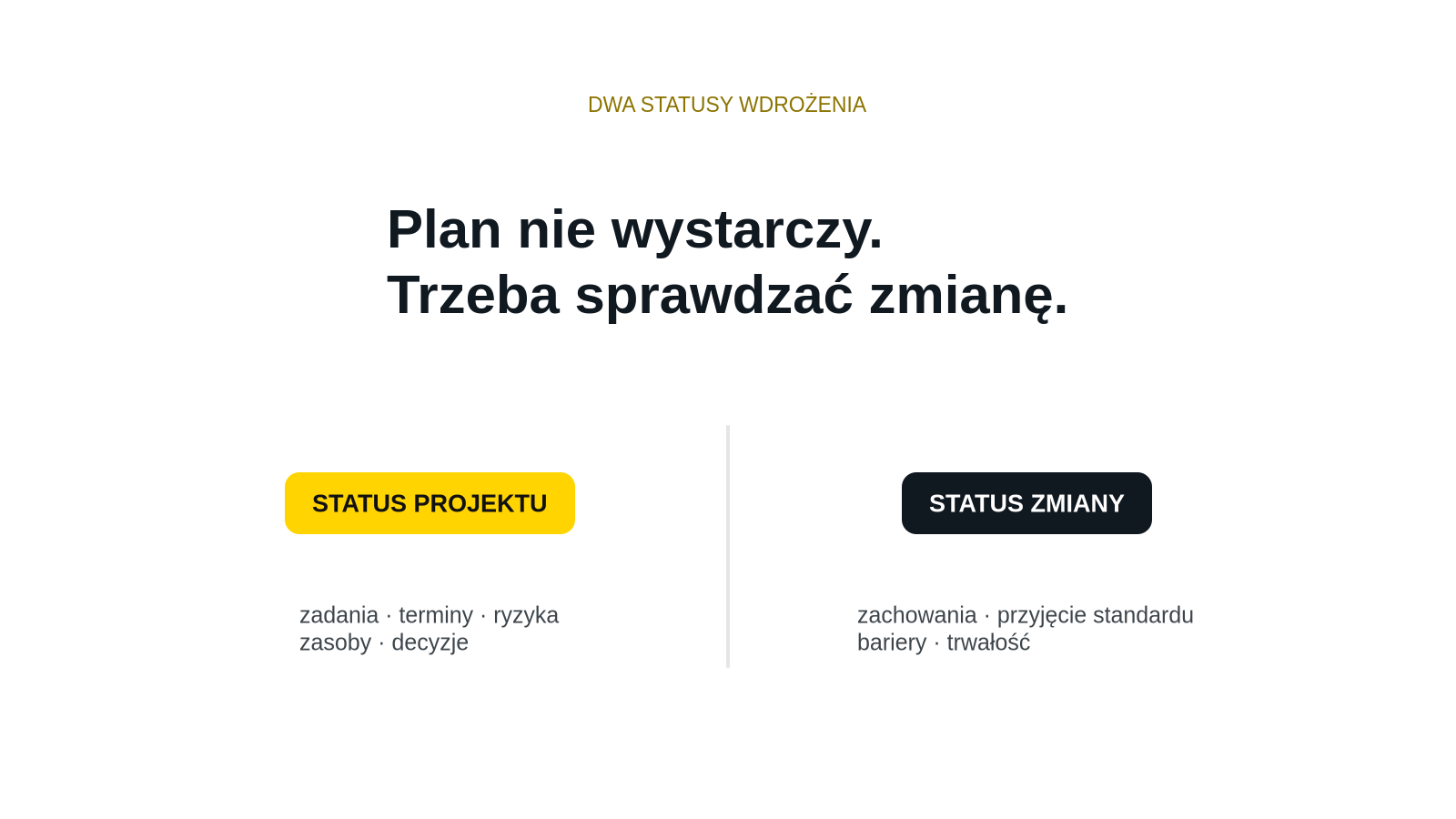
One of the material’s most important conclusions is the distinction between project status and change status. A project can follow its schedule while the organisation is still unprepared to adopt the new way of working.
Project status covers scope, activities, risks and delivery of milestones. Change status concerns people: their awareness of the need, readiness, knowledge, skills and ability to sustain new behaviours. VMI Poland showed both dimensions in one review system, following stages from problem definition through analysis and implementation to benefit realisation.
Obeya as the sponsor’s working rhythm when leaders implement Lean
Obeya organises a shared review of the goal, project status, problems and decisions. The board itself is not the most important element. Value comes from regular meetings of the people who can remove obstacles and from the team working with one shared picture of the situation.
- The business goal remains visible throughout the project.
- Problems and risks have owners and dates for follow-up.
- Resources are discussed openly before lack of availability stops the work.
- The sponsor’s decisions reach the team without unnecessary delay.
- Change progress is checked in the process, rather than only in a report.
This rhythm protects the transformation from two extremes: micromanagement and sponsorship in name only. The team retains responsibility for delivery, while the sponsor is responsible for the organisational conditions.
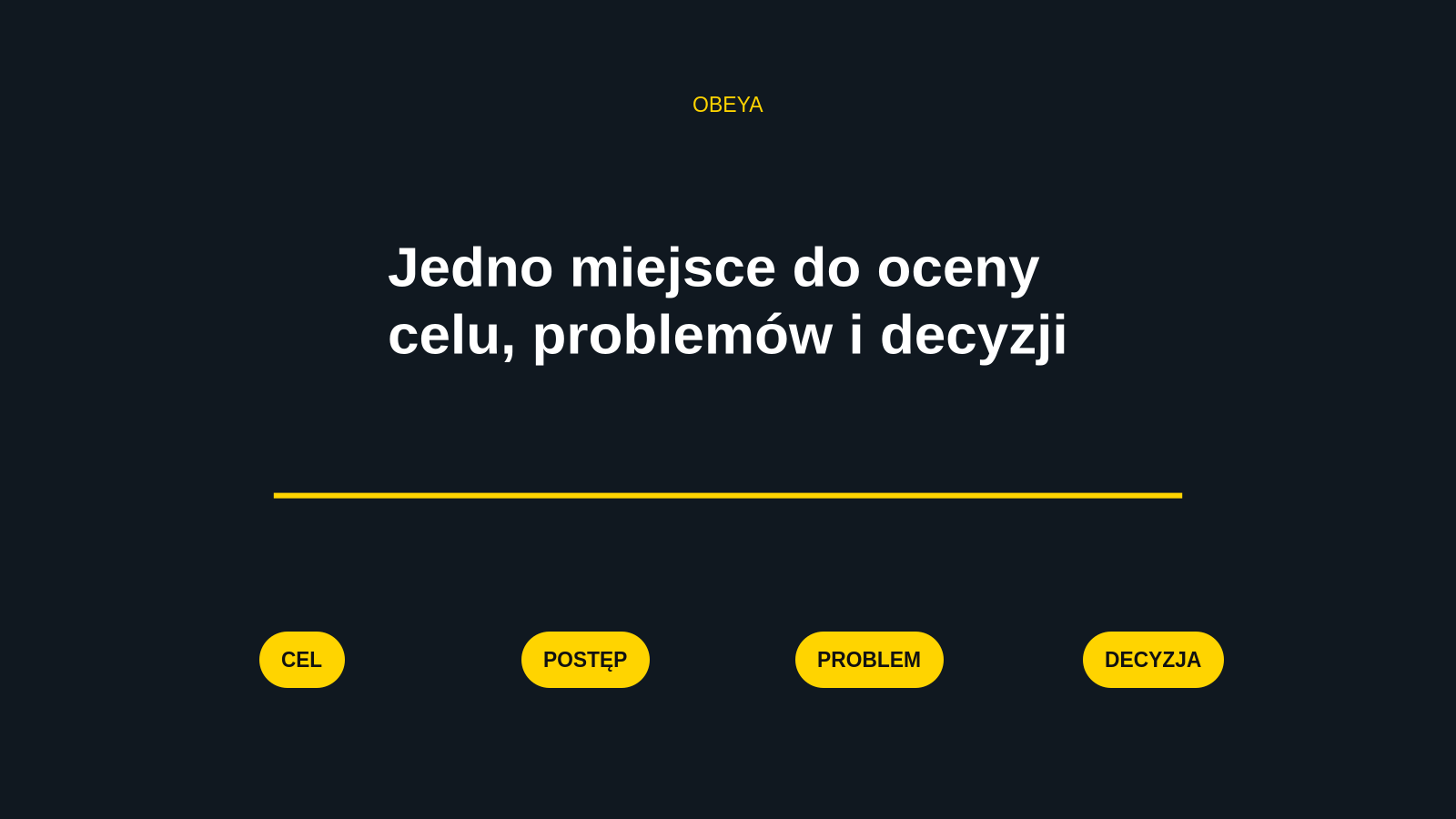
Obeya connects purpose, progress, problems and decisions in one working rhythm for sponsors and the team as leaders implement Lean (original slide in Polish).
How do you start sponsorship that works?
- Choose a sponsor with a real mandate. They should be able to allocate resources and make decisions concerning the area.
- Define the business problem. Establish which constraint the organisation wants to remove and how it will recognise improvement.
- Agree the roles. Separate the responsibilities of the sponsor, project leader, team and experts.
- Plan the Obeya rhythm. Meetings should lead to decisions rather than readings of reports.
- Monitor the project and the change. Check both delivery of the plan and people’s behaviour in the process.
- Move to benefit realisation. After implementation, confirm the stability of the new standard and its impact on business performance.
Does this case study show leaders implementing Lean?
It shows that leaders can take responsibility for implementing Lean. The presentation documents a management model used and recommended in the VMI Poland context: the sponsor is responsible for purpose, resources, decisions, organisational support, oversight and coaching. It also shows the use of Obeya and the parallel monitoring of the project and change.
The material does not document specific financial, production or quality results achieved through this model. This publication therefore provides no figures and does not invent unconfirmed outcomes. It is a case study of a transformation management system rather than a performance report for an individual project.
Sponsorship in the LeanTrix Transformation Loop
An active sponsor is especially necessary when an organisation faces many problems and cannot identify its constraint. The sponsor helps maintain a shared direction, protects resources and creates the conditions for experimentation and learning. This way of working connects with the LeanTrix Transformation Loop model, leadership and the practice of change management.
About the source author
Przemysław Markowski presented VMI Poland’s approach to the role of managers in Lean transformation. The material focuses on sponsorship, management responsibility, change management and the Obeya rhythm.
Source: ‘Lean in managers’ hands — sponsorship that works’, a presentation by Przemysław Markowski, VMI Poland. This publication describes the publicly presented working model. It does not include the organisational structure, project data, internal forms or unpublished KPIs.