
Geberit’s leader communication standard was presented as an everyday management practice that helps people understand the purpose of their work, influence how things are done and recognise their own success. Joanna Szmycińska-Słowik brought these elements together in a simple model useful to production leaders, HR and those responsible for organisational culture.
This case study is based on ‘Communication as an element of building employee engagement’. It describes publicly presented principles and practices. It contains no confidential indicators, employee data or information about Geberit’s internal results.
Geberit: a leader communication standard
In a manufacturing plant, communication must work to the rhythm of operations. A leader communicates priorities, responds to deviations, explains changes and talks with people about problems. If these conversations are limited to instructions and checks, the team may know the task without understanding its significance. If a leader informs but does not listen, employees see no room to influence things. If a team achieves its goals but receives no feedback, success remains invisible.
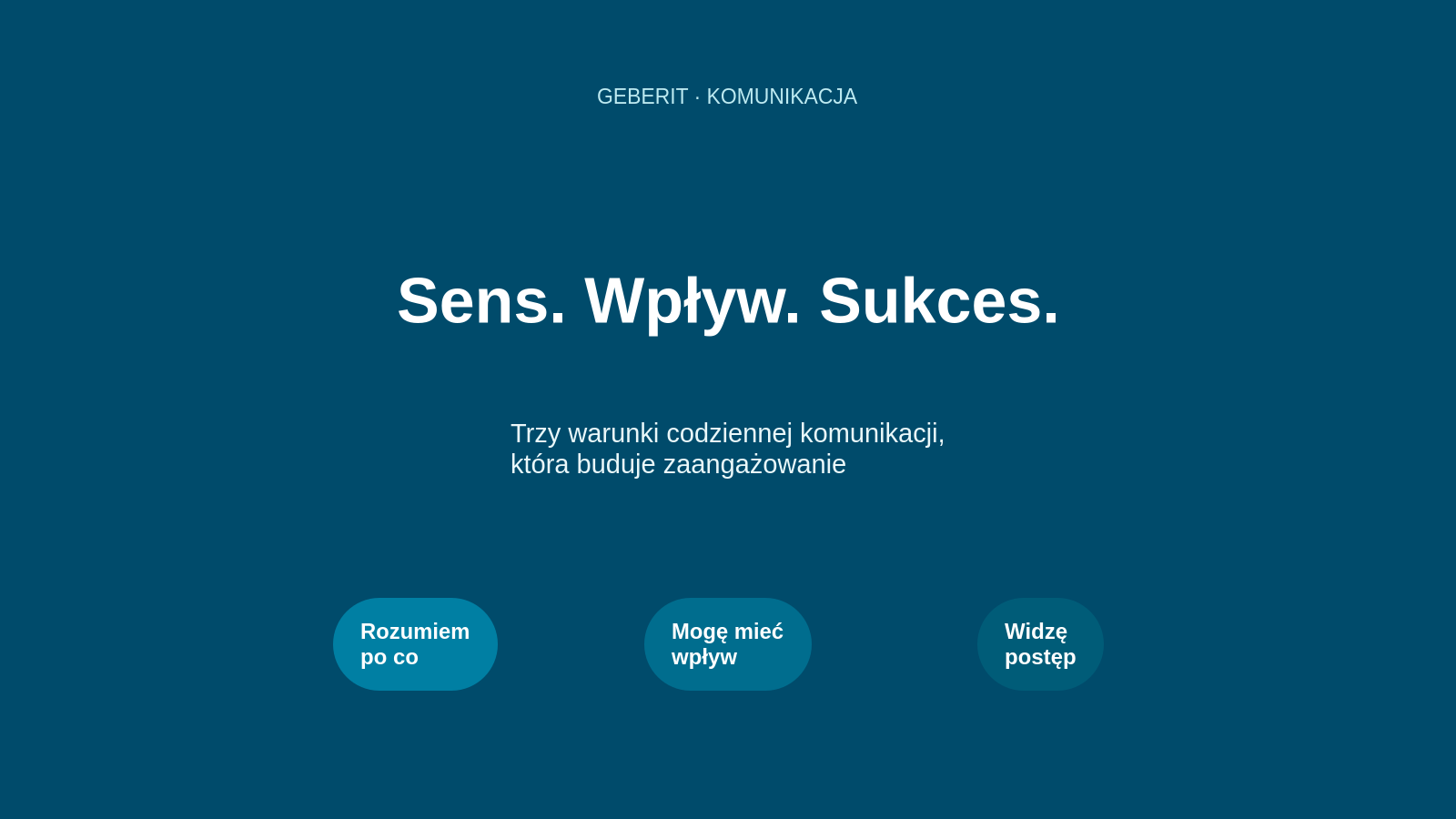
Geberit’s material structures these needs as an engagement triangle. Its three corners are purpose, influence and success. The model helps translate the broad concept of ’employee engagement’ into specific managerial behaviours.
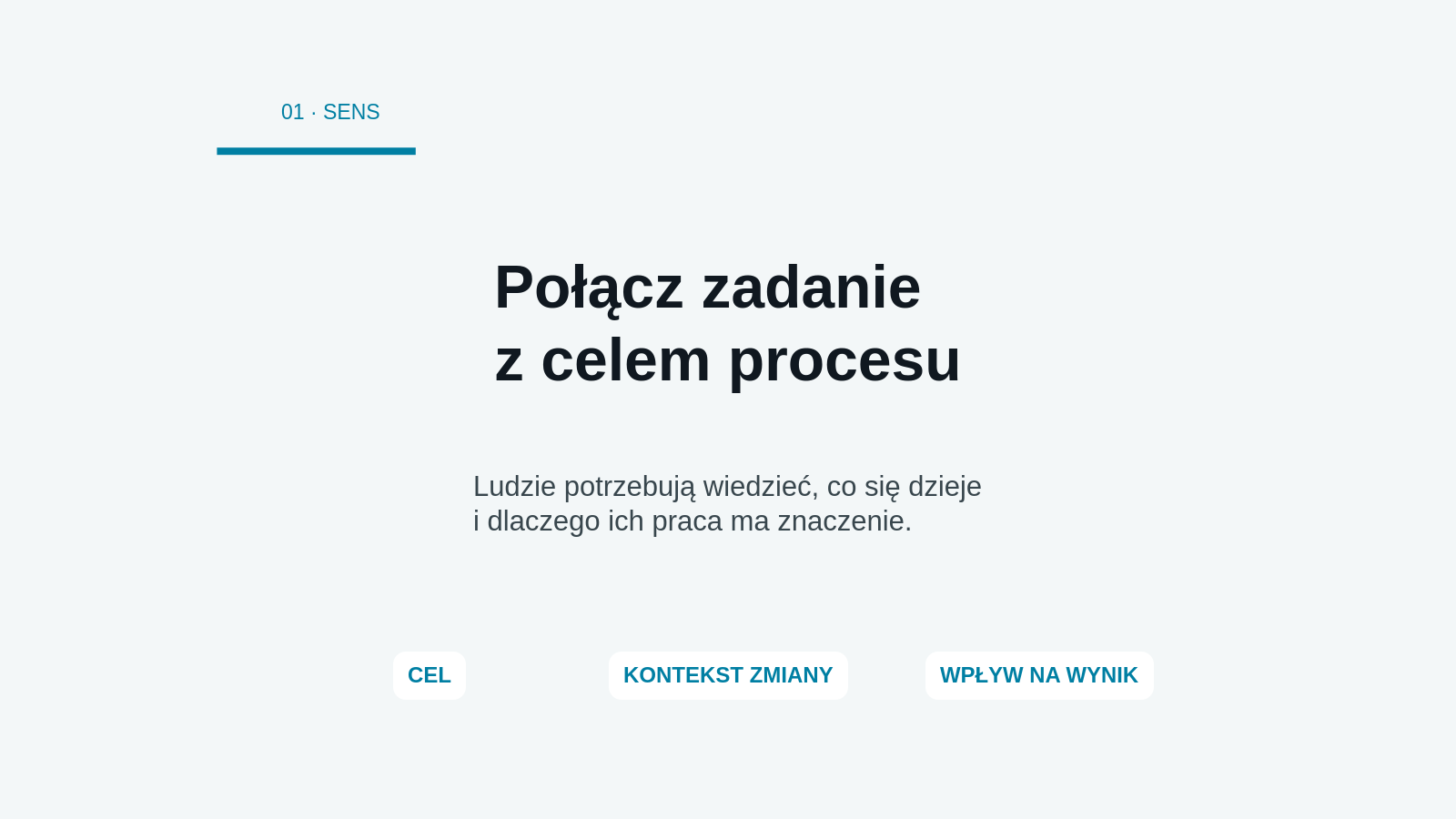
Purpose: employees understand why they do the work
Purpose emerges when a person can connect their task to the team’s goal and the company’s direction. An instruction alone describes what must be done. The leader’s communication explains why the standard matters for safety, quality, the customer or continuity of the process.
The material includes practices that help maintain this context: sharing plans and changes, review meetings, conversations with foremen, short opinion surveys and direct contact between employees and management. Their shared goal is not to increase the number of messages. It is to build a common picture of the situation.
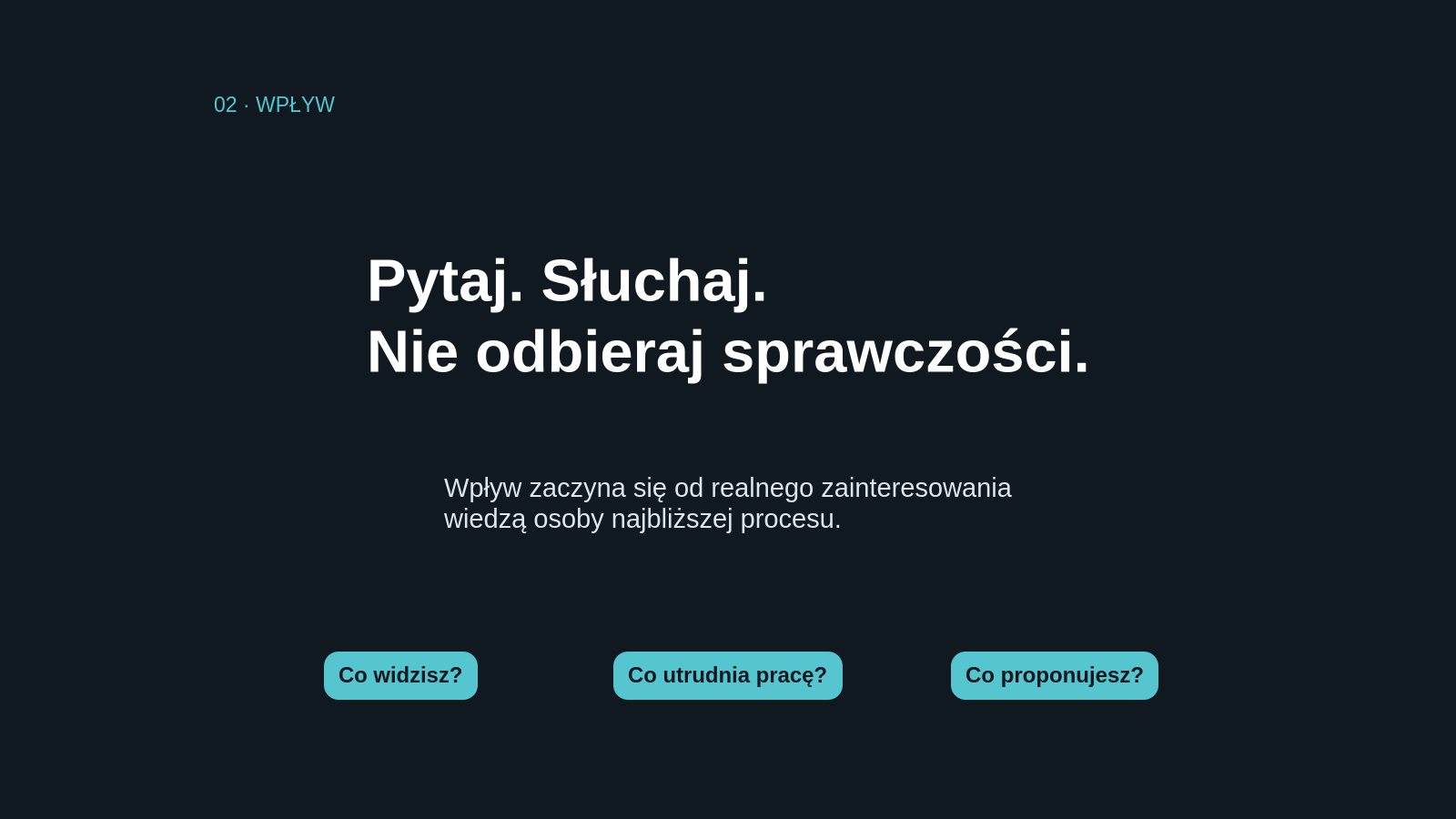
Influence: the leader asks before offering a solution
The second element concerns agency. Employees do not have to decide everything, but should know where they can use their experience and make suggestions. In manufacturing, questions about working conditions, sources of difficulty, safety and opportunities to improve the standard are especially important.
The presentation points to individual meetings, participation in projects, asking for opinions and employee surveys. Most important, however, is the leader’s behaviour during an ordinary conversation. Instead of immediately offering advice, they can first ask: ‘What do you see?’, ‘What makes the work difficult?’ and ‘What solution do you suggest?’. This way, communication does not take responsibility away from the person closest to the process.
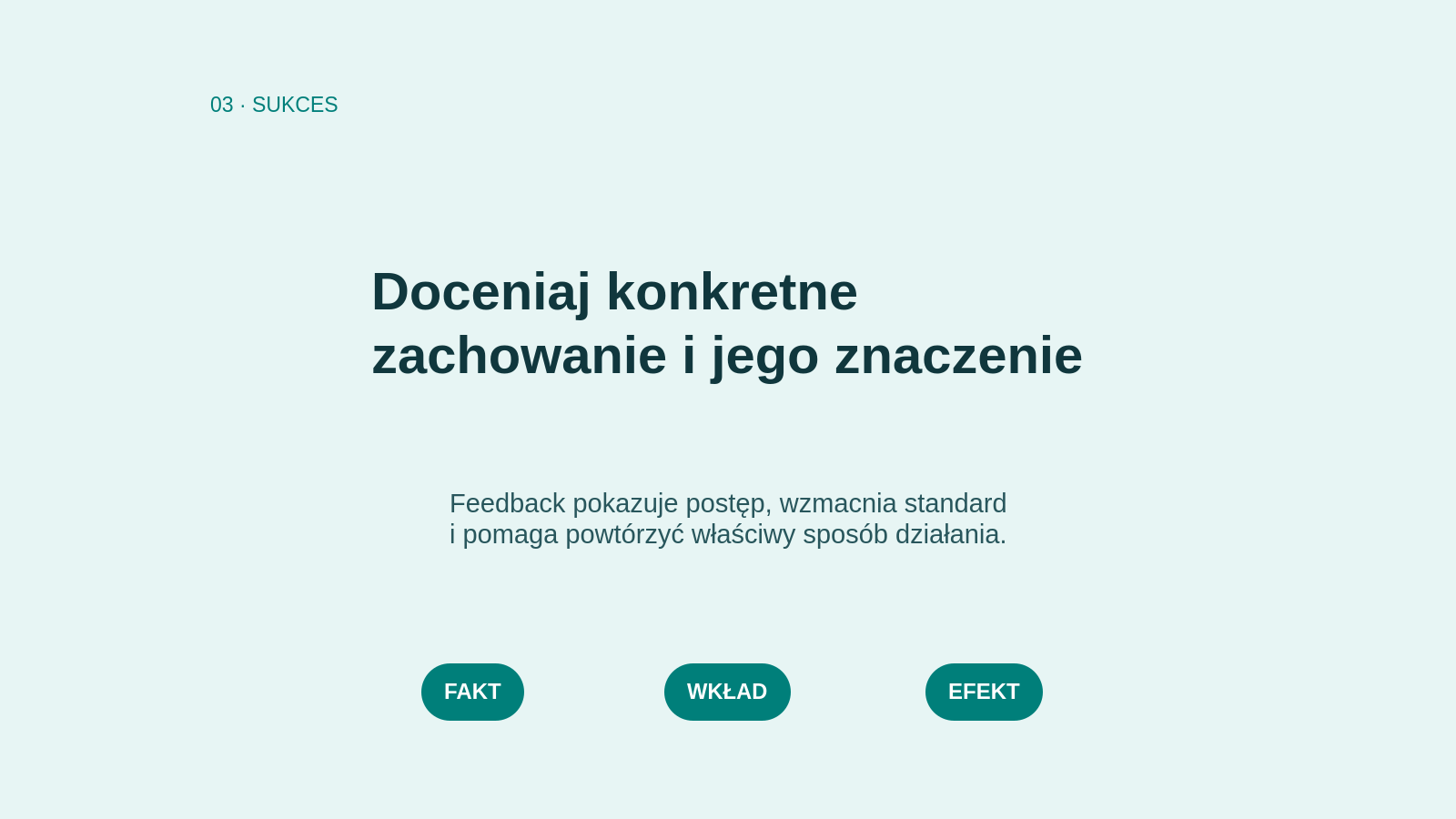
Success: feedback makes progress visible
The third corner of the triangle is a sense of success. This is not just about rewards. In daily work, quick, specific feedback matters more: what was done well, what effect a change produced and which behaviour is worth repeating.
Recognition should refer to a fact and the employee’s contribution. A general ‘good job’ quickly loses meaning. Saying ‘you stopped the process after identifying a non-conformity, so the defect did not move on’ reinforces the right behaviour and the quality standard. The material also shows the importance of celebrating achievements, development and creating promotion opportunities. Each element helps people see that effort leads to results.
A daily leader communication standard
The most practical part of the material concerns behaviours a manager can use every day. They require neither a new IT system nor an extensive campaign. They require consistency.
- Separate the person from the problem. Talk about observable behaviour and process conditions rather than labels.
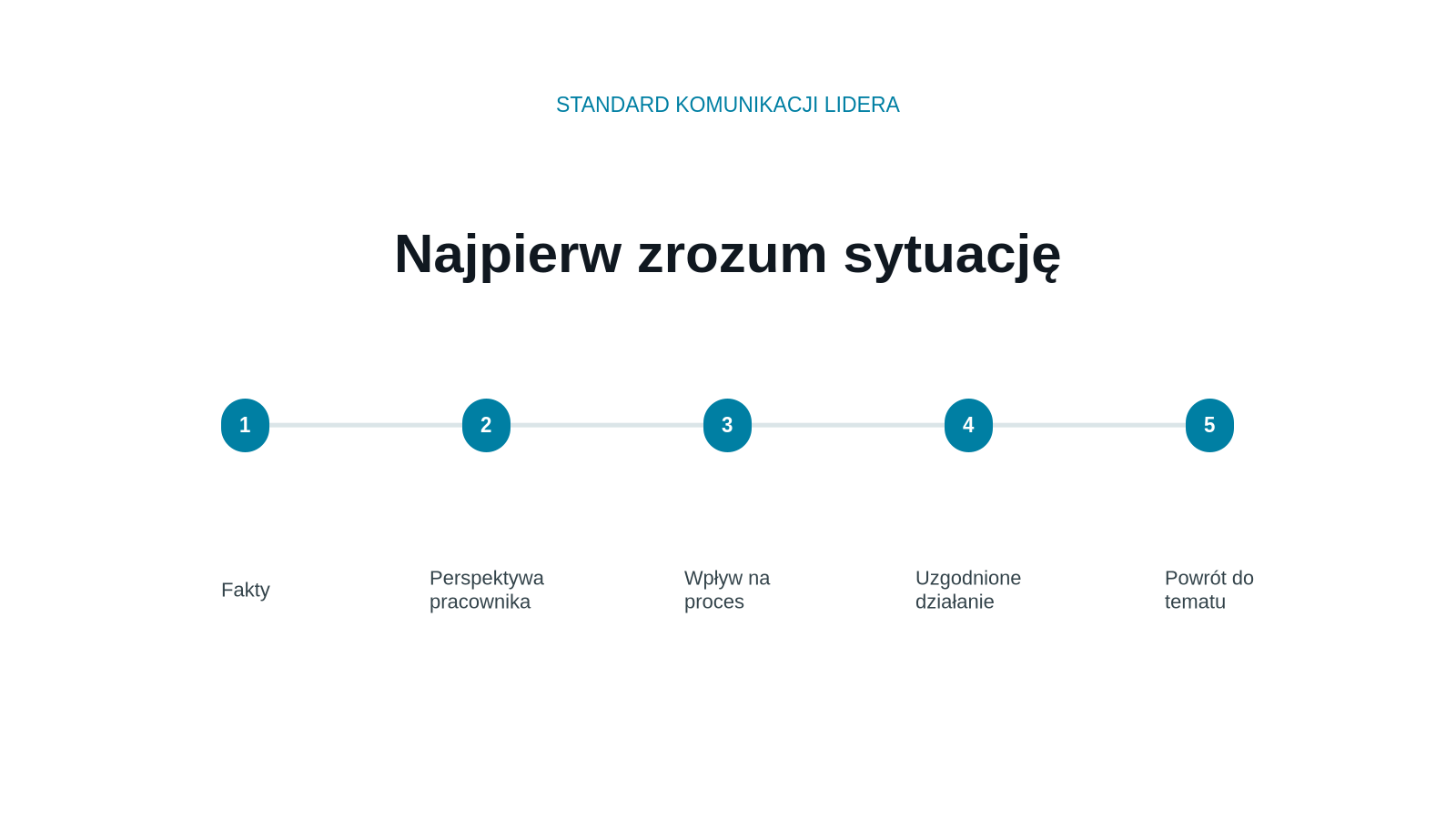
- Base the message on facts. Identify the situation, its consequences, expectations and emotions when they matter to the conversation.
- Ask instead of taking over. Help employees see a possible action for themselves.
- Listen without rushing. Give the other person time, attention and the opportunity to finish speaking.
- Close the loop with information. When an employee reports a problem, they should know what happened next.
- Ask for feedback. Leaders also need information about how their communication affects the team.
How can the purpose–influence–success model be implemented?
- Diagnose the current communication rhythm. Check where the team receives information, where it can ask questions and how it learns the results of its actions.
- Choose one management process. Start with a shift briefing, a board meeting or a 1:1 conversation.
- Add questions about purpose, influence and success. The leader should be able to explain the goal, gather employees’ perspectives and identify progress.
- Observe leaders’ behaviour. A meeting calendar alone does not guarantee conversation quality. Feedback is needed in the workplace.
- Close the communication loop. Reports and ideas need a response, even when the organisation cannot implement them.
- Measure the quality of the practice. Assess the regularity of conversations, response speed and the team’s ability to explain priorities.
What does this leader communication case study demonstrate?
The material documents the approach recommended by Joanna Szmycińska-Słowik: leaders should explain purpose, create space for influence and help the team recognise success. It also shows specific communication practices used or discussed in the Geberit context.
The presentation contains no data establishing the programme’s size, changes in engagement indicators or communication’s impact on Geberit’s operational performance. This publication therefore does not attribute results to the company that the material does not document. It is a case study of managerial practices rather than a report measuring implementation outcomes.
The significance for organisational transformation
Tools alone do not sustain transformation. It needs leaders who connect strategy with daily work and can hold conversations about problems without taking away people’s agency. This is why communication connects with leadership development, organisational culture and the LeanTrix Transformation Loop model.
About the source author
Joanna Szmycińska-Słowik presented a case study of communication as a tool for building employee engagement at Geberit Produkcja. The material combines the HR perspective with a manager’s daily work and manufacturing plant practice.
Source: ‘Communication as an element of building employee engagement’, by Joanna Szmycińska-Słowik, Geberit Produkcja Sp. z o.o. This publication presents public principles and practices. It contains no confidential employee data, internal KPIs or unpublished business results.