


Sales, operations and finance use different assumptions, calendars and aggregation levels, so meetings begin with reconciliation instead of decisions.
Demand · supply · inventory · finance
Sales and Operations Planning (S&OP) is a recurring cross-functional management process that reconciles demand, operational capability, inventory and financial expectations into one agreed and executable plan.
Sales and Operations Planning (S&OP): One Executable Plan
Move from competing forecasts and late escalation to a decision cadence with shared assumptions, visible scenarios, accountable owners and one plan that sales, operations and finance can use.
1 planshared demand, supply and financial assumptions
5 viewscustomer, demand, supply, inventory and finance
1 cadencepreparation, reviews, decisions and follow-up

Start with the operating problem
When functions plan well separately but the business plan is not executable
S&OP becomes necessary when the organisation has many reports and meetings but still discovers capacity, inventory, service or margin conflicts too late to respond deliberately.
Inventory is high in total, yet the products or materials needed by customers are unavailable at the right time.
Plans use theoretical capacity while the real constraint, skills, maintenance, materials or product mix are not reflected.
Priorities change through escalation, but margin, cash, service and inventory trade-offs are not evaluated early enough.
The working logic
A monthly decision cycle from assumptions to executive commitment
S&OP is not another reporting meeting. Each review prepares a defined decision, works at an agreed level of aggregation and records assumptions, scenarios, owners and follow-up.
The recurring S&OP cycle
The sequence and names can be adapted, but every cycle should move from trusted inputs through cross-functional scenarios to explicit executive decisions and tracked actions.
- Prepare data, assumptions, changes and the planning horizon
- Demand Review: agree the unconstrained demand view and key risks
- Supply Review: test capacity, constraints, materials, skills and alternatives
- Pre-S&OP: reconcile scenarios and unresolved cross-functional trade-offs
- Executive S&OP: approve one plan, decisions, owners and escalation
- Follow up actions and improve data, assumptions and process discipline

One conversation, several perspectives
Make trade-offs visible before approving the plan
A credible cycle connects customer and demand signals with capacity, constraints, materials, inventory policy, service commitments and the financial effect of each scenario. The purpose is not perfect forecasting; it is better decisions under uncertainty.
Roles must be explicit: who owns the demand view, who validates supply capability, who quantifies financial consequences, who recommends a scenario and who has the authority to approve the final plan.
Pilot, learn, scale
How we build an S&OP process that can run every month
We design the process around the decisions the organisation needs, use existing data wherever possible and pilot the complete cycle before investing in unnecessary complexity.
Diagnose decisions and planning gaps
Map current calendars, data, hand-offs, escalation and recurring conflicts. Define which decisions S&OP must improve and at what horizon.
Design roles, reviews and measures
Set the level of aggregation, inputs, owners, decision rights, review sequence, scenarios and a small set of useful indicators.
Run a complete pilot cycle
Facilitate demand, supply, pre-S&OP and executive reviews using real data, record decisions and expose missing assumptions or capability.
Stabilise and improve the cadence
Coach owners, standardise preparation and follow-up, improve data quality and connect the cycle with budgeting, execution and daily management.
Management evidence
Measure decision quality as well as forecast quality
No single KPI proves that S&OP works. A balanced view connects demand quality, service, inventory, capacity, financial alignment and the discipline of closing agreed actions.
| Measure | What it answers | Example |
|---|---|---|
| Demand quality | How large and systematic is the difference between demand assumptions and actuals? | Forecast error and bias at the agreed product-family and horizon level |
| Customer service | Does the approved plan support reliable fulfilment? | OTIF, availability, backlog and lost-sales signals |
| Inventory health | Is inventory positioned for the agreed service and risk? | Days of inventory, excess, obsolete stock and shortage exposure |
| Supply feasibility | Does the plan reflect the real constraint and capability? | Capacity loading, constraint utilisation, schedule adherence and lead time |
| Financial alignment and follow-through | Are decisions translated into margin, cash and owned actions? | Gap to financial plan, scenario impact, action closure and recurring escalations |
Evidence, not decoration
Related flow and constraint evidence—not full S&OP case studies
LeanTrix has documented work on constraints, flow and operational standards that support an executable planning process. The three examples below are adjacent evidence; none is presented as a complete end-to-end S&OP implementation.
 Adjacent constraint evidence · Polish caseEdica: managing the constraint and flowThe documented TOC programme reported 37% more throughput per hour and 34% more revenue per hour. It illustrates constraint-focused operating decisions; it is not a complete S&OP implementation.Read the related case study in Polish →
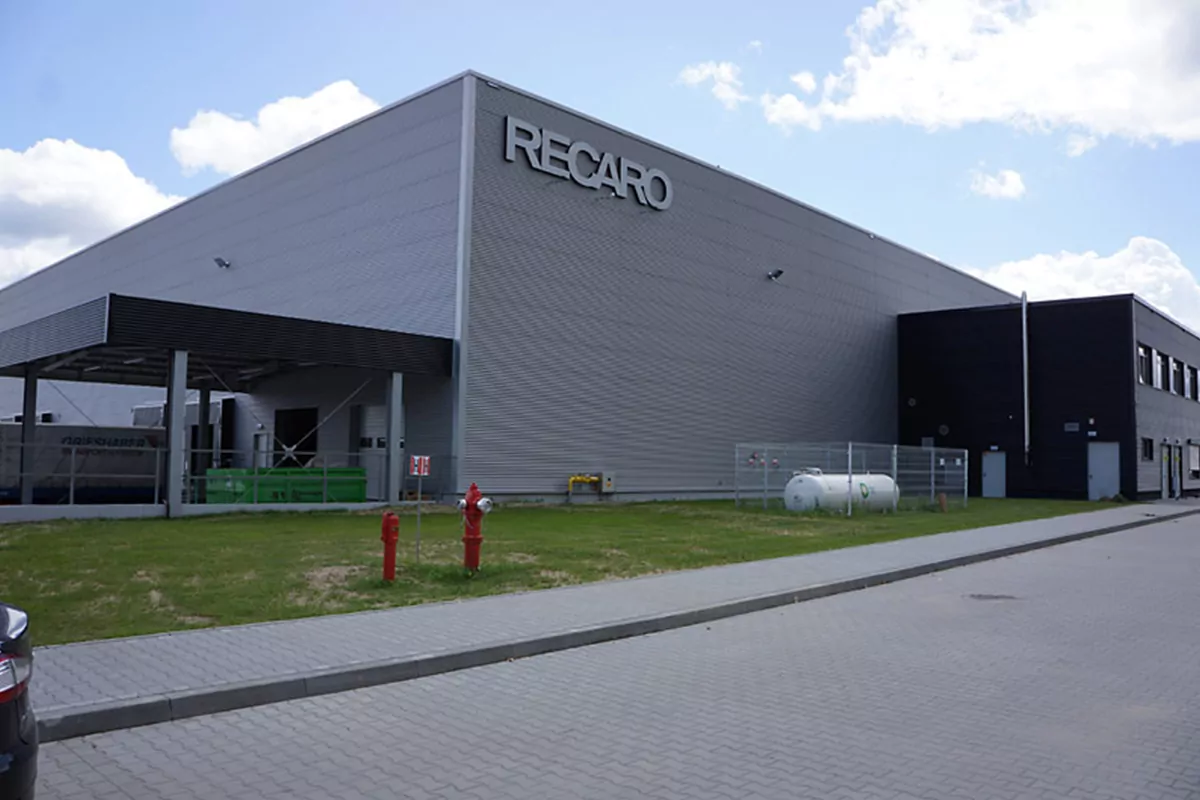 Adjacent flow evidence · Polish caseRECARO: flow, layout and resource useThe case describes removing waste from material flow, workplace organisation and plant layout. Absolute volume, inventory and quality figures were omitted for confidentiality. It is not presented as an S&OP rollout.Read the related case study in Polish →
 Adjacent quantified flow evidence · manufacturingA more executable flow after VSM and FLPOperator travel fell from 97 to 47 metres, cycle time from 17 to 12 minutes, hazards from 10 to 2 and OEE rose from 62 to 67. These are flow results from another industry, not an S&OP outcome study.Read the related English case study →
Signed client references and verified testimonials
See original client documents and named testimonials covering Lean, TWI, leadership development, quality and operational transformation.
People behind the work
Complementary capabilities around flow and constraints
The profiles below document adjacent expertise in value-stream flow, internal logistics, material planning, constraints and transformation. The delivery team for an S&OP engagement should be confirmed for the client's context; these profiles are not presented as proof of a dedicated S&OP title or certification.

Andrzej Bielewski
LeanTrix VSM and flow-improvement practitioner who helps cross-functional teams turn current-state facts into an executable future-state plan.
View expert profile →
Maurycy Szkolnicki
Transformation practitioner and Theory of Constraints expert. He connects strategy, flow, TOC, Lean Kata and daily management.
View expert profile →Connected capabilities
Continue with a related method
A strong operating system links flow, standard work, leader routines and problem solving instead of treating each method as a separate initiative.
FAQ
Frequently asked questions about Sales and Operations Planning
A useful S&OP process is simpler than many organisations expect, but it requires clear decisions, ownership and discipline across functional boundaries.
What is Sales and Operations Planning?
Sales and Operations Planning is a recurring cross-functional process for agreeing one executable plan by reconciling demand, supply capability, inventory and financial expectations over a defined planning horizon.
How is S&OP different from production planning?
Production planning converts demand into detailed operational schedules. S&OP works at a more aggregated and longer-term level to resolve cross-functional capacity, inventory, service and financial trade-offs before detailed execution.
Does S&OP require a new IT system?
Not necessarily. Many organisations should first clarify decisions, roles, aggregation, data ownership and meeting standards using existing systems. Technology becomes valuable when it supports a working process rather than compensating for an undefined one.
How often should the S&OP cycle run?
A monthly cycle is common because it balances strategic visibility with operational response. Some volatile businesses add weekly execution reviews, but these should not replace the broader cross-functional S&OP cycle.
At what level should products and capacities be aggregated?
Use a level that exposes meaningful demand, margin and capacity trade-offs without drowning the discussion in SKU-level detail. Product families, resource groups and time buckets should match the decisions being made.
Which indicators show that S&OP is working?
Look for more reliable customer service, healthier inventory, feasible capacity plans, fewer late escalations, better alignment with financial expectations and consistent closure of approved actions. Forecast accuracy alone is insufficient.
Is S&OP the same as an SOP or Standard Operating Procedure?
No. S&OP means Sales and Operations Planning, a cross-functional management process. An SOP is a Standard Operating Procedure that describes how a defined activity should be performed.
Start with the business problem
Turn competing plans into one executable decision system
Tell us where demand, capacity, inventory or financial assumptions stop aligning. We will help you define the decisions, pilot the review cycle and build ownership for a sustainable S&OP process.
Free consultation
We first understand the process, expected result and implementation conditions. Then we propose the right expert and a practical next step.
Discuss your challenge