


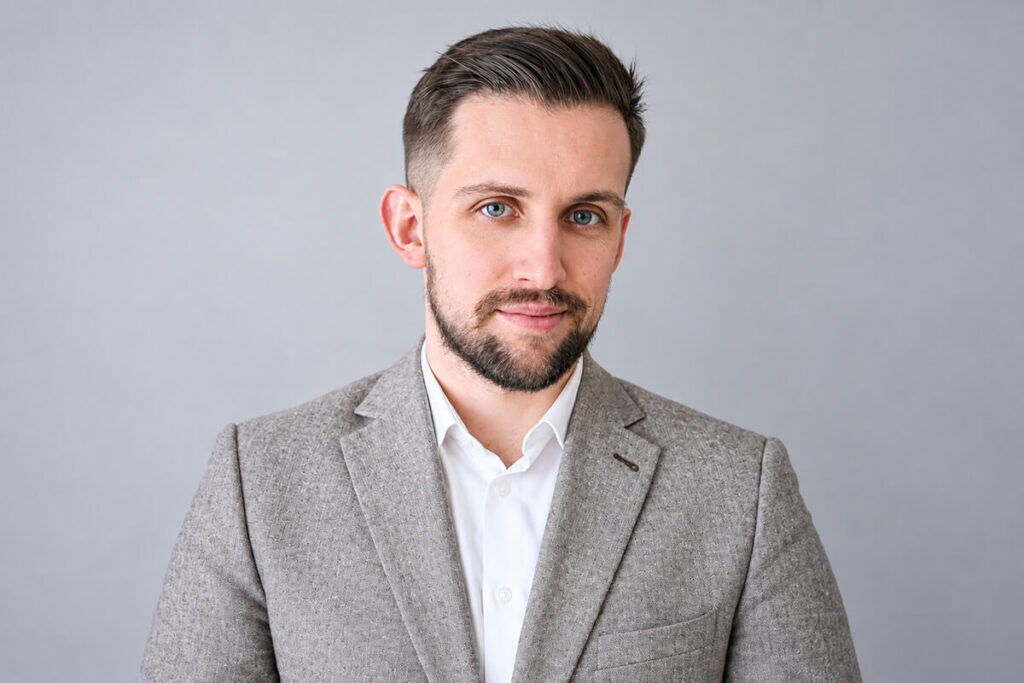
Rafał Wrona is a Lean Management, TWI, and Six Sigma practitioner specializing in manufacturing process improvement and the development of a continuous improvement culture.
He began his professional journey with Lean Management at the Japanese manufacturing company NGK Ceramics, whose management culture and approach to process improvement drew on the principles and experience of the Toyota Production System. Working in this environment shaped his practical approach to Lean—one based not only on tools and performance indicators, but above all on direct process observation, systematic problem-solving, and people development.
In the following years, as Regional Continuous Improvement Coordinator at Wienerberger, Rafał was responsible for developing a continuous improvement culture across seven manufacturing plants. He implemented TWI Job Instruction, led process improvement projects based on Six Sigma, and developed structured systems for problem-solving, daily management, and effective issue escalation. He also supported the development of TPM in the building materials industry, transforming the approach to machinery maintenance and spare parts inventory management.
He currently manages the continuous improvement function at HUF Polska in the automotive industry. He supports teams in identifying and eliminating process waste using VSM, Makigami, and Kaizen Week workshops. He improves material and information flow by developing internal logistics based on milk-run and Kanban systems. He is also responsible for advancing TPM, improving existing maintenance standards, and coordinating the development of the SMED programme.
Rafał combines extensive process improvement experience with a strong focus on people development. He believes that sustainable organizational improvement is not achieved through the one-off implementation of Lean tools, but by developing people and teams capable of identifying problems, understanding their root causes, and consistently raising the standards of their work.
His key areas of expertise include:
- TWI Job Instruction (JI) – effective employee training and work standardization,
- TWI Job Methods (JM) – systematic improvement of work methods,
- TWI Job Safety (JS) – proactive identification and elimination of workplace hazards,
- Total Productive Maintenance (TPM),
- SMED,
- Six Sigma and structured problem-solving,
- PDCA and daily management,
- Value Stream Mapping and Makigami,
- Kaizen,
- internal logistics, Kanban, and milk-run systems.