


Work moves slowly, WIP grows or hand-offs create delay, yet local utilisation still looks acceptable.
Knowledge pillar · process improvement
Lean Six Sigma is a structured approach to improving an existing process. It combines Lean thinking about flow and waste with Six Sigma discipline for measuring variation, finding root causes and sustaining a verified result through DMAIC.
What Is Lean Six Sigma? DMAIC, Tools and Belt Levels
Use Lean Six Sigma when a recurring business problem matters, the causes are not yet proven and the organisation needs a measurable improvement rather than another isolated action.
5 phasesDefine, Measure, Analyse, Improve and Control
2 lensesflow and waste plus variation and defects
1 projecta named problem, owner, scope and measurable Y
Controla result protected by standards, measures and response rules

Start with the operating problem
When does Lean Six Sigma earn its place?
Not every issue needs a Belt project. DMAIC is most useful when the business effect is material, the process repeats and the cause cannot be confirmed by a simple check at the workplace.
The same output is produced under apparently similar conditions but quality, yield or service time changes.
Corrections, inspection and expediting absorb capacity while the cost of poor quality remains fragmented.
The organisation hears that delivery, quality or service is poor but has not translated that voice into a measurable CTQ.
The working logic
DMAIC turns a broad concern into controlled improvement
The phases are a decision path, not five presentation chapters. Each gate should reduce uncertainty and protect the project from jumping from an opinion straight to a solution.
One question for every DMAIC phase
Use only the tools needed to answer the next management question. A SIPOC, process map, MSA, Pareto chart, cause analysis, experiment or SPC chart is valuable only when it changes a decision.
- Define: what problem matters, to whom, by how much and within what boundary?
- Measure: can we trust the operational definition, measurement system and baseline?
- Analyse: which causes are supported by process observation and data?
- Improve: which countermeasure changes the verified cause without shifting the problem elsewhere?
- Control: which standard, measure, owner and reaction plan will hold the gain?

Lean + Six Sigma
Combine faster flow with predictable performance
Lean makes work and delay visible through customer value, flow, pull and the removal of waste. Six Sigma adds disciplined measurement and analysis of variation. Together they help a team improve speed without making quality unstable, and improve quality without optimising a disconnected step.
LeanTrix is a member of the International Lean Six Sigma Institute (ILSSI) in Cambridge, UK. For certification scope, examination and certificate rules, see the dedicated ILSSI membership and Lean Six Sigma certification pages. Do not assume that every LeanTrix course carries an ILSSI certificate; certification is programme-specific and separate from proof of implementation results.
Pilot, learn, scale
Build the first project around a real business result
Choose a process with a meaningful gap, accessible data and an engaged process owner. Keep the first scope narrow enough to complete the learning cycle and wide enough to matter.
Select and charter
Translate customer or business pain into a measurable problem statement, scope, target, sponsor and process owner.
Validate the baseline
Define the measure operationally, examine the measurement system and understand current flow, variation and capability.
Confirm root causes
Observe the process, stratify the data and distinguish evidence from plausible but untested explanations.
Pilot the change
Test countermeasures on a controlled scale, check side effects and compare the result with the baseline.
Control and replicate
Update standard work, visual measures, reaction plans and ownership before transferring learning to another process.
Management evidence
Measure both the business result and process stability
A successful project does not end with a workshop. Management should see the baseline, the validated change and the controls that make regression visible.
| Measure | Management question | Control evidence |
|---|---|---|
| CTQ / project Y | Did the result important to the customer improve? | A stable definition, trend and named owner |
| Defects and first-pass yield | Is the process producing correctly without repair or repeated handling? | Consistent defect categories and a reaction rule |
| Lead time and WIP | Did flow improve across the process rather than in one local step? | End-to-end measure, queue visibility and standard limits |
| Variation and capability | Is the result predictable under normal operating conditions? | Appropriate control/capability evidence and known assumptions |
| Verified benefit | Did the project release capacity, reduce cost or protect revenue? | An agreed calculation with finance or the accountable owner |
Evidence, not decoration
Broader implementation evidence — clearly labelled
The source page does not document a dedicated Lean Six Sigma case. The examples below show Lean, TWI and standard-work implementation capability; they are related evidence and are not presented as Lean Six Sigma projects.
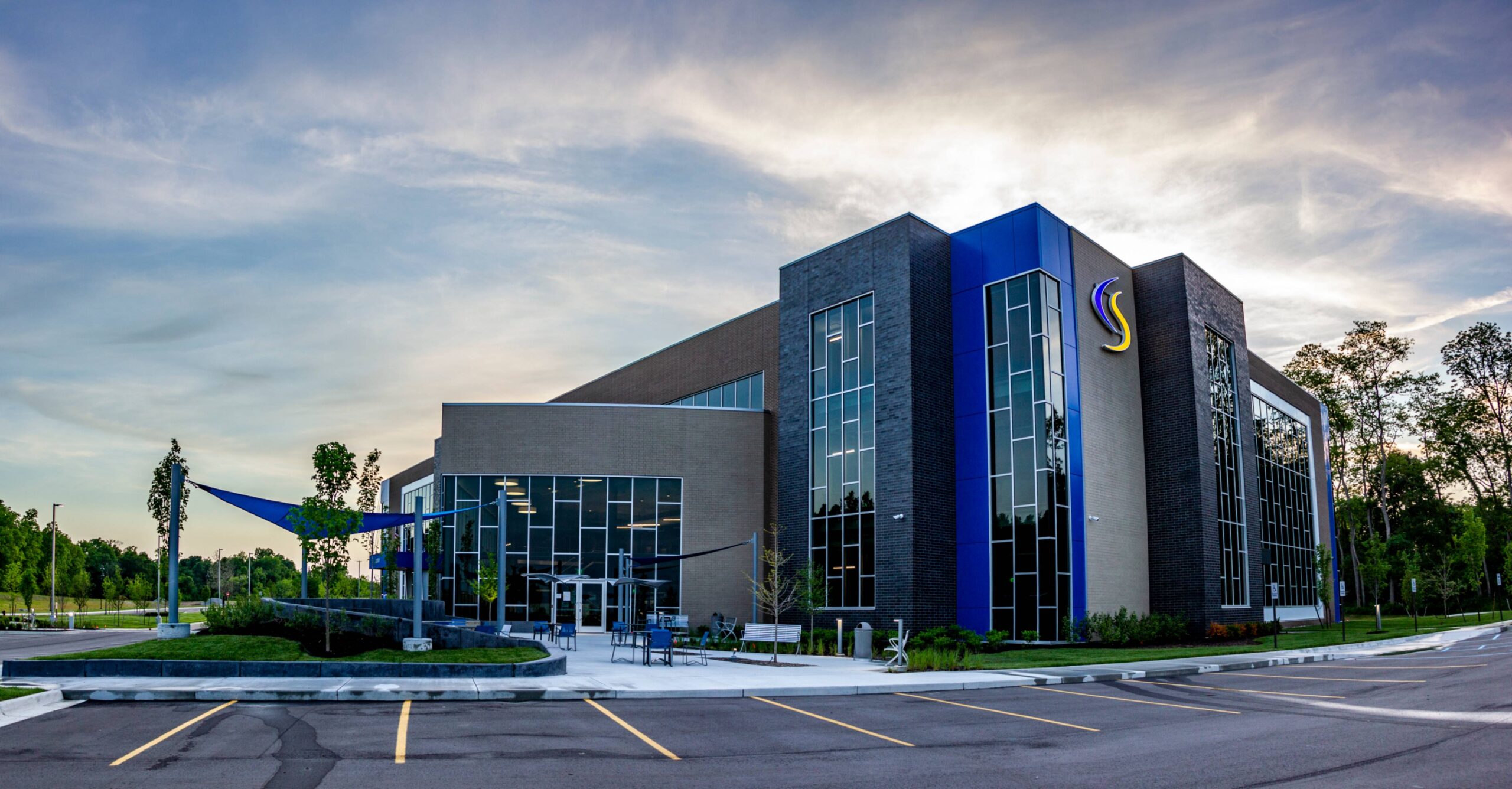 Related Lean/TWI evidence · not an LSS caseMeasured improvement across a multi-site programmeThe English case documents a European rollout stage with average productivity up 17.55% and deficiencies down 35.83%.Read the related implementation case →
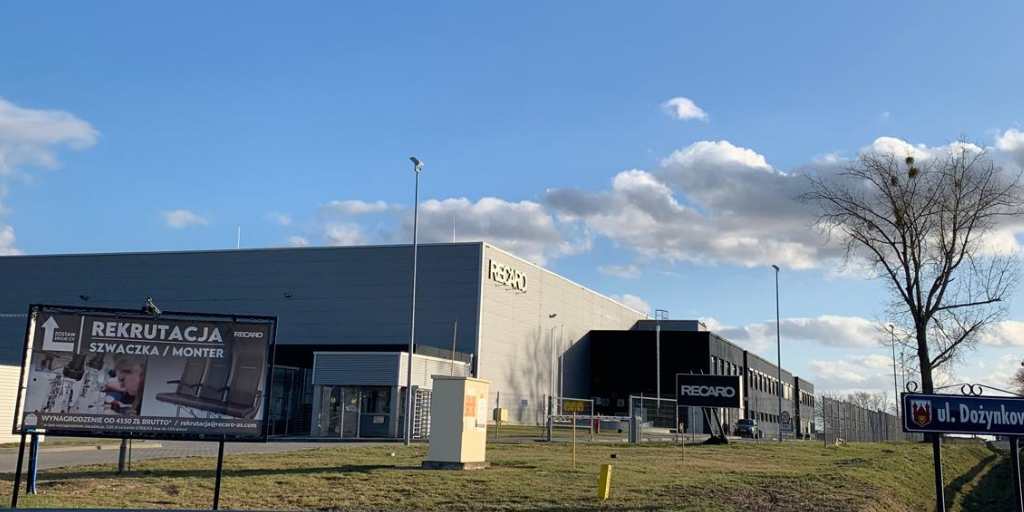 Related standard-work evidence · not an LSS caseFaster learning with fewer rework errorsThe programme reduced onboarding time by 50%, rework-related errors by 25% and training-process costs by 20%.Read the related implementation case →
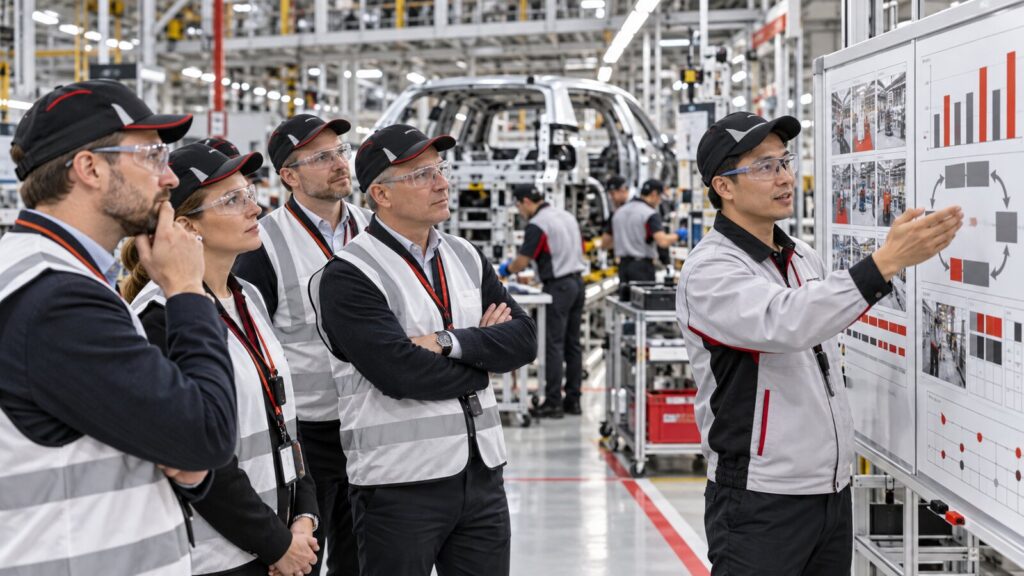 LeanTrix · evidence libraryImplementation evidence across industriesExplore documented Lean, TWI, TOC and operational-transformation programmes and the conditions that made the results sustainable.Explore the case-study library →
Signed client references and verified testimonials
See original client documents and named testimonials covering Lean, TWI, leadership development, quality and operational transformation.
People behind the work
Practitioners who connect analysis with implementation
The right support depends on the problem: process flow, measurement, quality, capability building and the management routines needed to sustain the result.

Rafał Wrona
LeanTrix practitioner combining TWI, SMED, Six Sigma, problem solving, TPM, VSM and material-flow experience.
View expert profile →
Dr Marcin Paska
Quality and management-systems practitioner working with ISO, IATF, risk, audit readiness and disciplined problem solving.
View expert profile →Connected capabilities
Continue with a related method
A strong operating system links flow, standard work, leader routines and problem solving instead of treating each method as a separate initiative.
FAQ
Lean Six Sigma — frequently asked questions
These answers separate the improvement method, Belt roles and certification pathway so that the organisation can choose an approach proportionate to the problem.
What is Lean Six Sigma?
Lean Six Sigma combines Lean methods for customer value, flow and waste reduction with Six Sigma methods for measuring and reducing variation. DMAIC provides the usual project sequence for improving an existing process.
What is the difference between Lean, Six Sigma and Lean Six Sigma?
Lean primarily improves flow and removes non-value-adding work. Six Sigma primarily reduces variation and defects using disciplined measurement and analysis. Lean Six Sigma uses both lenses within one improvement system.
What does DMAIC stand for?
DMAIC stands for Define, Measure, Analyse, Improve and Control. The phases clarify the problem, establish a trustworthy baseline, verify causes, test improvements and protect the new result.
Is Lean Six Sigma only for manufacturing?
No. The method can be used in services, logistics, administration, healthcare and other repeatable processes, provided the team can define the customer result, process boundary and meaningful measures.
Does every project require advanced statistics?
No. Use the simplest method that answers the project question reliably. Many projects rely on process observation, operational definitions, stratification, Pareto analysis and basic tests; advanced analysis is justified only when the decision needs it.
What is the difference between a Green Belt and a Black Belt?
A Green Belt usually leads scoped improvement projects alongside another role. A Black Belt normally leads more complex cross-functional projects and supports stronger analytical and deployment discipline. Exact requirements depend on the programme and certification body.
How long does a Lean Six Sigma project take?
Duration depends on the process cycle, data availability, scope and speed of experiments. Define the expected phase reviews and decision cadence at chartering rather than promising one universal timetable.
Is a certificate enough to prove practical competence?
No. A certificate can confirm completion of a defined learning and assessment pathway, but practical competence also requires a well-run project, sound reasoning, verified results and a sustained Control phase.
Can Lean Six Sigma work with Kaizen, PDCA and TWI?
Yes. PDCA and Kaizen support daily learning, while TWI helps convert improvements into teachable standard work. DMAIC is useful for selected problems that require a more explicit measurement and analysis path.
How should an organisation select its first project?
Choose a recurring problem with a clear customer or financial effect, an available process owner, measurable baseline and a scope that one team can influence. Avoid a project whose solution has already been prescribed.
Start with the business problem
Choose the first Lean Six Sigma project before choosing the tools
Bring the business problem, available evidence and process boundary. We will help assess whether DMAIC is proportionate, define a practical pilot and connect analysis with standard work and management routines.
Free consultation
We first understand the process, expected result and implementation conditions. Then we propose the right expert and a practical next step.
Discuss your challenge