

More content, fewer decisions
AI produces alternatives faster than the organisation can assess and use them.


Digitalisation and AI · LeanTrix × Trigger Mind
Better collaboration between people and AI begins with the quality of thinking. We diagnose cognitive work, reveal waste and design how tasks, checks and accountability should be shared between people and artificial intelligence.
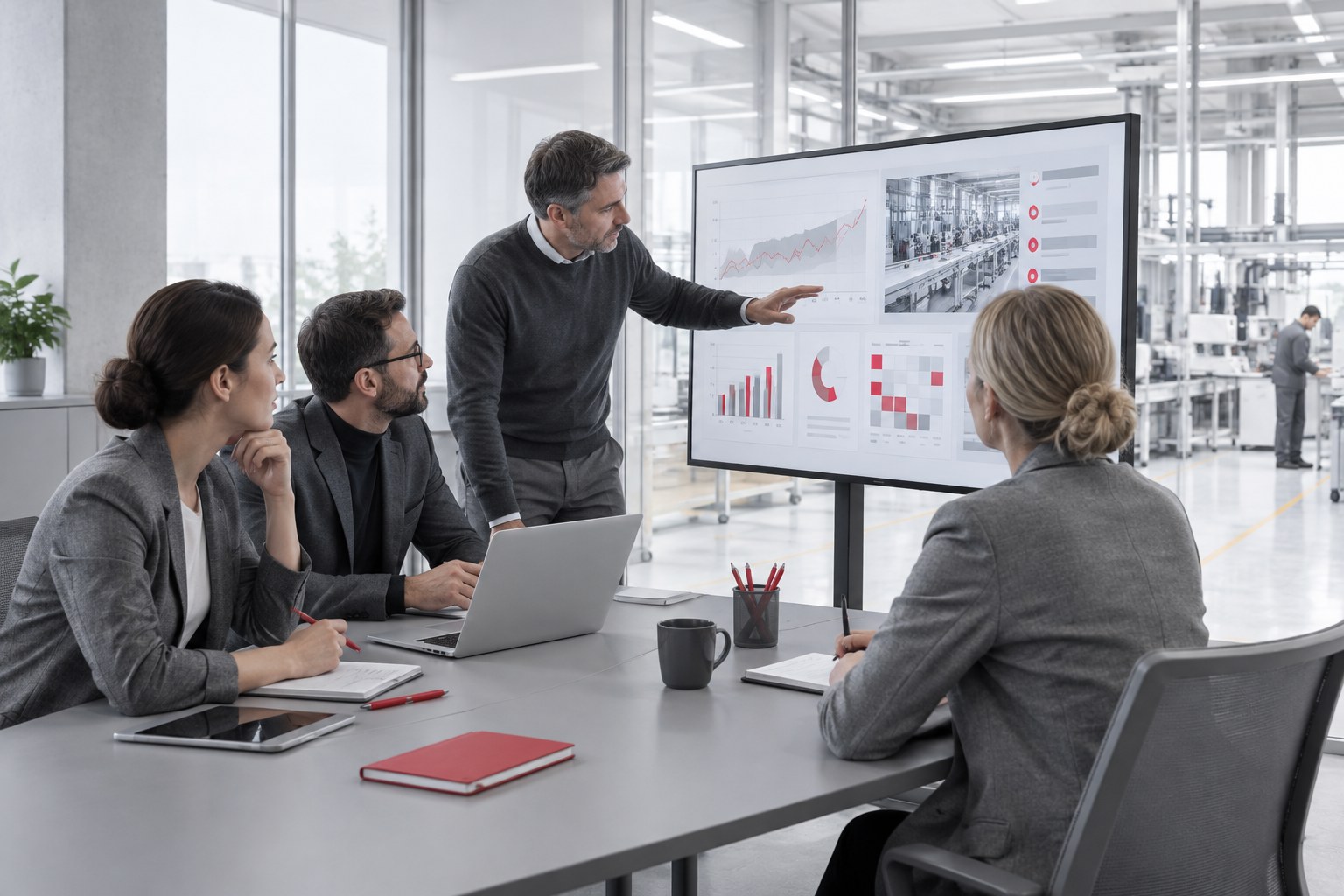
Faster does not always mean better
In many organisations, artificial intelligence is added to existing tasks without redesigning the full workflow. Teams generate more alternatives, reports and recommendations, yet have no clear verification rules, decision points or answer to a fundamental question: what should a person do, and what is worth delegating to AI?
This creates cognitive waste: effort, information and attention that do not improve the value of the result, understanding, decision quality or learning. It is difficult to see, but it appears as delays, rework, stress, context switching and dependence on a model's output.
“AI does not remove the need to think. It raises the standard of thinking.”
AI produces alternatives faster than the organisation can assess and use them.
It is not clear where AI assistance ends and human judgement and accountability begin.
Information moves between tools, conversations and versions without one coherent flow.
The team receives an answer without building the understanding required for the next decision.
Design the work system
This original approach, developed by Dr Iwona Burka and Trigger Mind, combines Lean and Kaizen with knowledge about cognitive work, human judgement and collaboration between people and AI.
The focus is on model functions, automation or prompts. The workflow, evaluation method and accountability often remain unchanged.
First define value and understand the real work. Then map the flow, identify waste, protect valuable thinking, and set roles, quality controls and a learning loop.

From value to Cognitive Kaizen
One clear process leads from defining value to a future way of working and a small experiment. The compass, waste categories, diagnostic lenses and countermeasures are used at the relevant stage.
Intent, exploration, critique, simplicity and reflection help teams select the right mode of thinking for the task.
A practical structure for observing losses in attention, information, processing and decision-making.
They expose a problem from Lean, cognitive, decision, ethical and organisational perspectives.
Diagnosis becomes rules for flow, verification, closing the learning loop and protecting human judgement.
Delivery model
We do not begin with a tour of every available tool. We select one important knowledge or decision process and take the team from diagnosis to a testable experiment.
We discuss the purpose, recipients of the output, current use of AI and the risk of error. We choose a process with business importance that can be observed.
During Cognitive Gemba, we map information, tasks, interactions with AI, decisions, loops and control points. The team sees the whole flow rather than a single prompt.
We identify cognitive waste, points where quality is lost and situations in which an AI recommendation may be mistaken for a decision. We define what should not be delegated.
We design the target flow, human and AI roles, verification criteria, quality gates and a minimum team standard.
We introduce one change within a controlled scope, test predictions, capture learning and observe side effects. The next step follows evidence rather than enthusiasm for a tool.
A practical way to begin
The two-day laboratory can be a stand-alone workshop or the start of a broader implementation. Participants work on one of their real processes, not merely on a demonstration exercise.
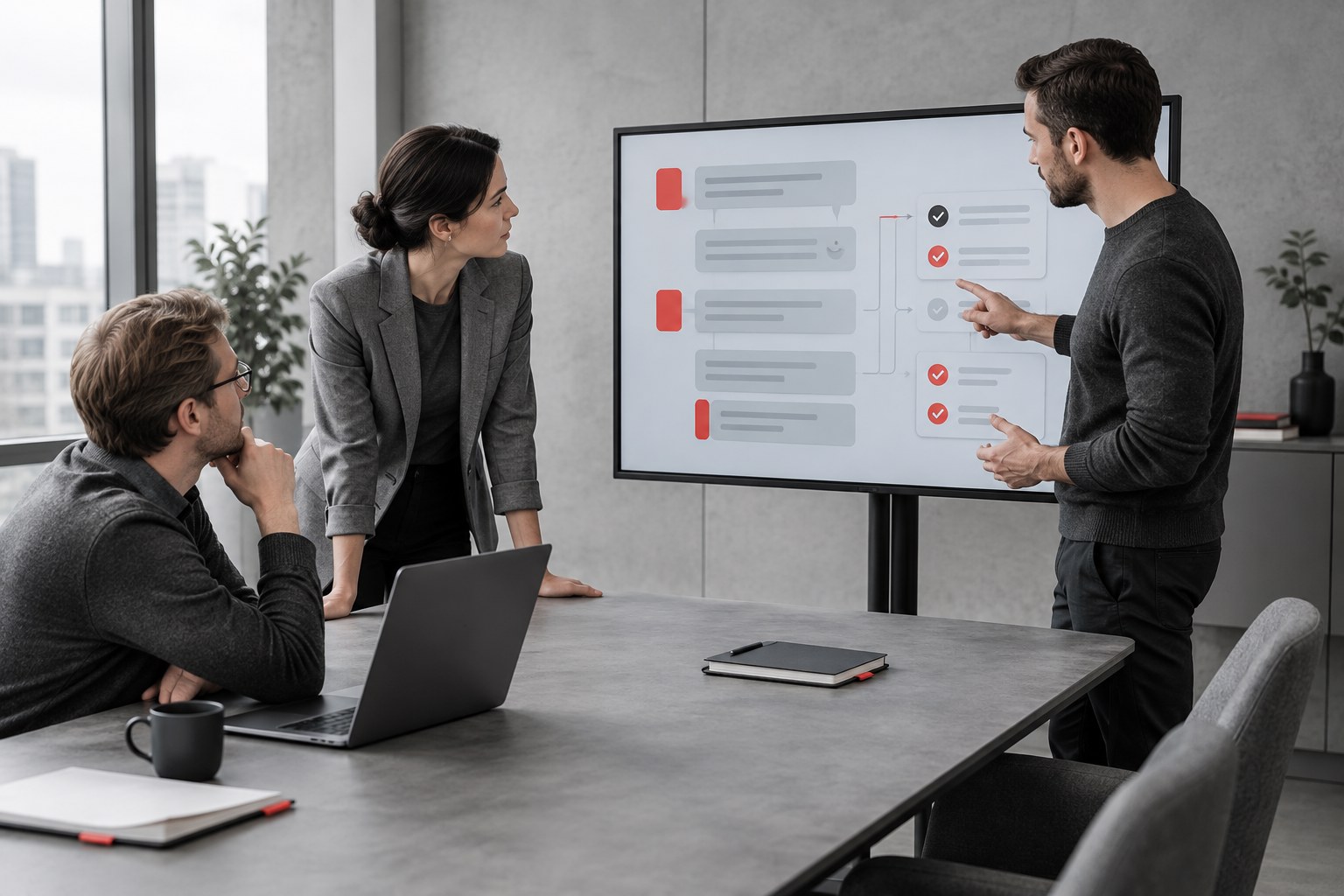
We tailor the scope after a conversation. Your organisation may begin with the LAB, a diagnosis of one process, or combine the workshop with a pilot and a structured review.
What remains after the engagement
The engagement produces agreed working artefacts that enable the team to continue improvement after the workshop.
A view of the present information flow, human work and interaction with AI.
Cognitive losses, quality risks and points that require human judgement.
Clear roles, the scope of AI assistance, accountability and verification.
Shared rules for intent, sources, controls, decisions and closing the learning loop.
A target flow with decision points, quality controls and reduced overload.
One hypothesis, a test boundary, expected outcome and review date.
Adoption and governance
Responsible adoption is not a policy stored in a folder. It is visible in the daily workflow: who may use AI, for what purpose, with which information, how an answer is checked and who owns the final decision.
Name the person who reviews the output, makes the decision and remains responsible for the consequence.
Define permitted data, reliable sources, context requirements and what must not be entered into a tool.
Set verification criteria, escalation rules and control points in proportion to the cost of error.
Review errors, surprises and useful patterns so the standard improves with experience.
Begin with one meaningful process, involve its users and expand only after the workflow has been tested.
Where required, the work can be connected to a separate AI governance and regulatory readiness stream.
Who it is for
Example processes
Knowledge partnership
We combine LeanTrix experience in process improvement and organisational transformation with Dr Iwona Burka's original approach to cognitive work quality and human–AI collaboration.
Academic lecturer, researcher, business trainer and innovator specialising in Lean Management, the quality of thinking, problem-solving and conscious collaboration between people and AI.
For more than 20 years she has combined research, education and business practice. She develops the Trigger Mind Project, the AI Co-thinking Compass, AI-Ready Mind and the Human-AI Cognitive Lean Thinking approach. Her work protects what should remain human: judgement, accountability, understanding and learning.
At LeanTrix, she leads diagnoses, workshops and the design of human–AI collaboration standards.

Evidence and trust
Human-AI Cognitive Lean Thinking is a focused service within the broader LeanTrix improvement ecosystem. Explore verified client feedback and documented improvement engagements.
Read feedback and see organisations that have worked with LeanTrix.
View references PracticeCase studiesSee documented examples of process and organisational improvement.
Explore cases PeopleOur teamMeet the practitioners who connect Lean, leadership, technology and change.
Meet the team TransformationLeanTrix Transformation LoopPlace an AI pilot within a coherent transformation and capability-building system.
See the modelA clear boundary: client references and case studies demonstrate LeanTrix delivery experience. They are not presented as quantified results of this specific Human-AI service unless a case explicitly states that scope.
A coherent Digitalisation and AI ecosystem
Human-AI Cognitive Lean Thinking complements technical deployment. It helps design how people should work before automation locks in a weak flow or unclear accountability.
Connect artificial intelligence with Lean thinking and continuous improvement.
Read the guide Technical capabilityPrompt EngineeringBuild better instructions, context and quality controls for model outputs.
Explore the service Operating modelAI OrchestrationCoordinate people, tools, agents, data and decisions across the workflow.
See the approach ScaleAI in the OrganisationMove from a controlled pilot to everyday team use with clear rules and risk assessment.
Plan the journeyFrequently asked questions
Key answers about the service, the LAB format and selecting a process.
No. Prompts may be one element, but the purpose is to design the full workflow: value, information, work allocation, human judgement, verification, decisions and learning.
It is an original approach developed by Dr Iwona Burka and Trigger Mind. It extends Lean and Kaizen logic to cognitive work performed jointly by people and AI, helping teams identify waste and design a better collaboration system.
A good candidate is a repeatable, business-critical knowledge or decision process: preparing a recommendation, reporting, planning, analysing offers, customer service, learning design or expert work.
No. The LAB is a practical starting format, but the scope may begin with a diagnosis of one process or expand into a pilot and review. We select the best option during a free consultation.
Typical outputs include a Current State map, a waste and risk register, human–AI work allocation, a minimum team standard, a Future State map and the design of one improvement experiment.
It includes operational guardrails such as accountability, information rules, verification criteria and escalation points. A broader governance or regulatory readiness stream can be connected where required.
That depends on the process and risk, but the service makes the decision owner explicit. AI output is treated as input to a defined workflow, not automatically as an approved decision.
We define a small experiment, expected outcome and review cadence. The team learns from actual use, improves its standard and scales only after the process has been tested.
A first step without obligation
During a short consultation with Dr Iwona Burka, we will select a process worth examining and recommend a suitable format: diagnosis, the Human-AI Cognitive Lean Thinking Lab, or a pilot with a review.