

Information moves between systems
Employees copy data between ERP, MES, CRM, email, spreadsheets and technical documents.


Digitalisation & AI · advisory and implementation
We connect people, specialised AI agents, data, tools and business systems in one controlled workflow. We begin with a business problem, build a measurable pilot and keep ownership of decisions and quality with people.

Quick definition
Starting point
The strongest value appears when a process crosses several roles and systems, relies on distributed knowledge, and contains decisions, exceptions or control points.
Employees copy data between ERP, MES, CRM, email, spreadsheets and technical documents.
The team repeatedly searches sources, compares versions, assembles reports and checks completeness.
People use several AI applications, but outputs do not move into the next process stage in a controlled way.
A simple rule cannot cover every case. Risk assessment, escalation or human approval is required.
The organisation must know which sources were used, what an agent did and who approved the outcome.
Instructions, procedures, expert experience and process data do not yet form one usable flow.
Choose the right level
We do not label every AI solution an “agent”. Different problems require different levels of adaptation, access and control.
| Approach | How it works | Best fit | Control mechanism |
|---|---|---|---|
| Rule-based automation | Executes predefined steps. | Stable, repeatable work with unambiguous data. | Rules, tests and error handling. |
| AI assistant | Helps a person prepare an answer, analysis or document. | Individual work, search, drafting and analysis. | A person reviews every output. |
| AI agent | Pursues a defined objective, selects steps and uses tools within a limited scope. | Variable tasks requiring context and a choice of action. | Permissions, limits, criteria and escalation. |
| AI orchestration | Coordinates multiple agents, tools, systems and decision points. | End-to-end processes crossing roles and applications. | Human-in-the-loop, logging, monitoring and governance. |
Manufacturing and services
These are directions for diagnosis, not a catalogue of automatic promises. The first use case is selected after reviewing data, risk, frequency and how clearly the result can be measured.
From process to implementation
Every phase has an owner, an exit criterion and evidence that the solution works in the real process.
We select a frequent, material process and establish a baseline for time, quality, rework, cost, service level or on-time completion.
We describe roles, systems, data, hand-offs, exceptions and the points at which a human decision is mandatory.
We design agent responsibilities, trusted knowledge sources, tools, integrations, memory, quality criteria and escalation rules.
We build the minimum viable workflow, test it with users and measure it against the previous way of working.
We configure permissions, limits, approvals, logging, resilience tests and the response to uncertain or incorrect outputs.
We document the operating standard, prepare process owners, define monitoring and build the roadmap. Only elements proven by the pilot are scaled.
Project outcome
The work does not end with a tool demonstration. The outcome is a designed and tested way of working, with explicit ownership and control.
Product experience and evidence
In the development of eTWI, we work with flows in which agents perform different tasks, pass results to one another and verify selected elements. Validation cannot rely only on another model's opinion: it must refer to source data, process rules and approval by the accountable person.
This product experience informs pilots for manufacturing and service organisations—from architecture and integration to security, monitoring and maintainability.
Explore eTWI →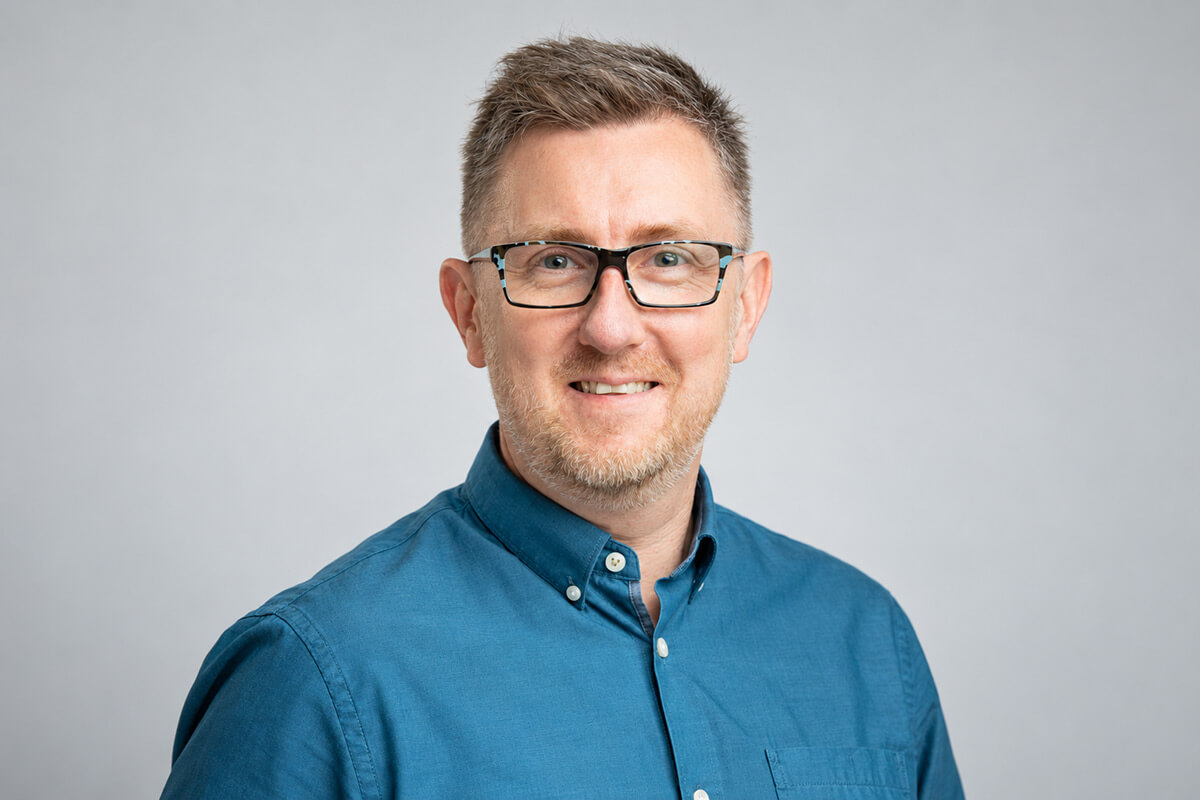
LeanTrix expert
Digitalisation, AI and IT transformation expert · CTO and co-founder of eTWI
Maciej combines business, product and technology perspectives. Since 2019, as CTO and co-founder of eTWI, he has been responsible for technology, architecture, infrastructure, security, AI and implementation of the digital work-instruction and competence-management solution.
He built the IT function at Selsey, led IT systems at Osadkowski and managed product and engineering areas at Trans.eu involving more than 40 people across five teams. His experience includes ERP, OMS and WMS, Dynamics 365, MuleSoft, Azure, integrations, networks and cybersecurity.
Build a coherent AI operating model
Frequently asked questions
Free consultation
During the conversation, we will identify the problem, available data, risk level and the measure that will show whether AI orchestration is the right approach.