
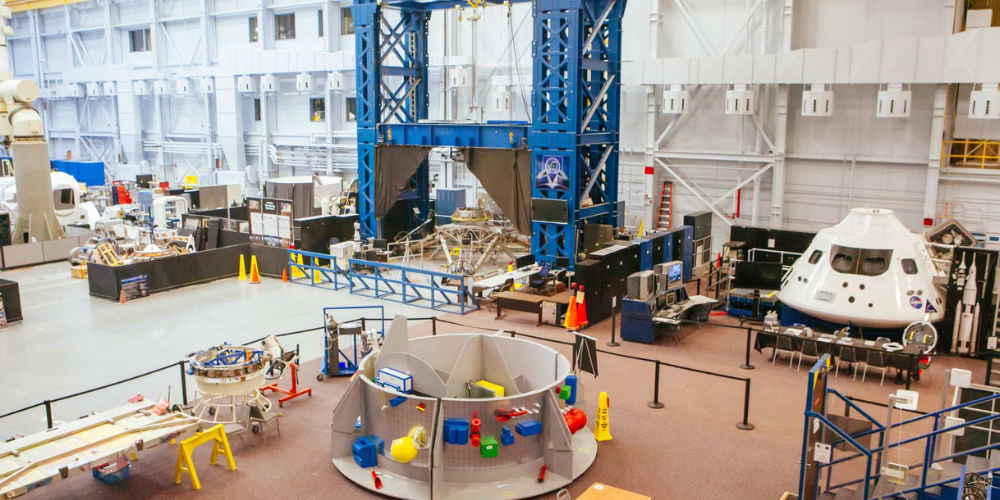




























DOJO Training Centre – Design and Implementation

Why do you need this service?

A DOJO training centre creates a safe environment for learning standards, practising tasks and onboarding employees away from the pressure of ongoing production.

DOJO training centre – practical onboarding and competence development

A well-designed DOJO reproduces critical operations, risks and quality requirements before an employee starts at the actual workstation. An instructor can therefore teach the standard, observe progress and correct the way work is performed without creating losses in the real process.

We connect the training centre with employee onboarding, TWI instructions and instructor development. Further methodological context is provided by eTWI.

We treat the DOJO training centre as part of a competence management system. After launch, we help define standards for using the space, updating training workstations, assessing employees and conducting regular audits.

DOJO training centre for practical employee onboarding
DOJO trainer leading a practical training session

What is our role?

  • We help design and build a DOJO space tailored to the organisation.
  • Together with your team, we create thematic corners for Safety, Quality, 5S and TWI, with practical materials and training games.
  • We design the structure and training path for employees, integrating the 70:20:10 model and TWI Job Instruction.
  • We prepare DOJO instructors and trainers to deliver training based on TWI standards.
  • We provide methodological and operational support at every stage of designing, building and launching the centre.
  • We help monitor and improve onboarding effectiveness after the DOJO Room is launched.

A handful of facts

0
Prepared DOJO centers in various organizations
0
Employees who have gone through the developed DOJO centers
0
Trained DOJO trainers who train employees

Implementation support

We provide support based on the Kata process, which allows us to adapt our activities to the specifics of your organization, taking into account the jointly set goals. The Kata process consists of four key elements that enable effective implementation of assumptions.

Determining the course of action

Designing a concept that responds to the organization's goals and challenges.

Determining the current state

Learning about the current situation and collecting input data to define the next step.

Determining the target state

Determining the desired and measurable end result and a plan for its implementation.

Experiments - consultations

Implementation of activities in accordance with the established cooperation model, based on PDCA cycles.

We operate according to PDCA

P

PLAN

  • Analysis of the current onboarding process and identification of areas for improvement.
  • Definition of DOJO implementation goals (e.g. reducing adaptation time, standardizing training, improving quality).
  • Adaptation of the DOJO concept to the structure and needs of the organization.
  • Planning the content and functions of each corner (Safety, Quality, 5S, TWI).
  • Planning the role of DOJO trainers, instructors, and line leaders throughout the process.
  • Development of the implementation schedule and role distribution.
  • Preparation of a toolkit to support onboarding (e-learning, checklists, Smart Onboarding, etc.).

D

DO

  • Creation of the physical DOJO Room space in the plant (e.g., adapting a room or designating a specific zone).
  • Building the four key thematic corners (Safety, Quality, 5S/Kaizen, TWI).
  • Developing and placing educational content and preparing games and practical simulations in each corner.
  • Creating or updating TWI work instructions as a training base in the TWI corner.
  • Preparing teaching materials: videos, checklists, guides, interactive exercises.
  • Conducting pilot onboarding training sessions using the new center.
  • Training DOJO instructors and trainers according to the TWI methodology.
  • Facilitating interaction between new employees, trainers, mentors, and other team members.

C

CHECK

  • Collecting feedback from training participants (surveys, interviews, feedback sessions).
  • Monitoring performance indicators: onboarding time, work quality, retention.
  • Assessing knowledge and skills levels after completing the DOJO (tests, observations).
  • Verifying the quality of work of DOJO instructors and trainers.
  • Comparing the effectiveness of implementation with the previous onboarding model.
  • Identifying challenges and barriers in the teaching and adaptation process.

A

ACT

  • Modification of the DOJO training program based on analysis and participant feedback.
  • Improvement of educational materials, demonstration workstations, and practical games.
  • Continuous development of DOJO trainers’ and TWI instructors’ competencies.
  • Implementation of a quality control system for training conducted in the DOJO.
  • Introduction of innovative training methods (VR, gamification, AI).
  • Scaling the DOJO concept to other plants or departments within the company.
  • Updating digital tools supporting onboarding (e.g., Smart Onboarding).

Want to learn more? Contact us!

    Name and surname *
    Email address *
    Phone number *

    What are you interested in? *

    Additional message (optional)

    * required fields


    Our clients

    Wedel
    Geberit
    Viessmann
    Lajkonik
    Sumito Electric
    Tarczyński
    Autoliv
    Stadler
    UPM Raflatac
    Jost
    BSH
    Danone
    e-obuwie
    Kompania Piwowarska
    Recaro
    Tenneco
    Titanx
    ABM Leantrix Lean Management TWI Toyota Kata TOC
    Amazon Leantrix Lean Management TWI Toyota Kata TOC
    blum Leantrix Lean Management TWI Toyota Kata TOC
    Ikano Leantrix Lean Management TWI Toyota Kata TOC
    Kruk Leantrix Lean Management TWI Toyota Kata TOC
    Lincoln electronic Leantrix Lean Management TWI Toyota Kata TOC
    Sanden Leantrix Lean Management TWI Toyota Kata TOC
    Serpol Leantrix Lean Management TWI Toyota Kata TOC
    Stock Leantrix Lean Management TWI Toyota Kata TOC
    Velux Leantrix Lean Management TWI Toyota Kata TOC

    Our Customers' Opinions